A Welcome That Never Comes Down
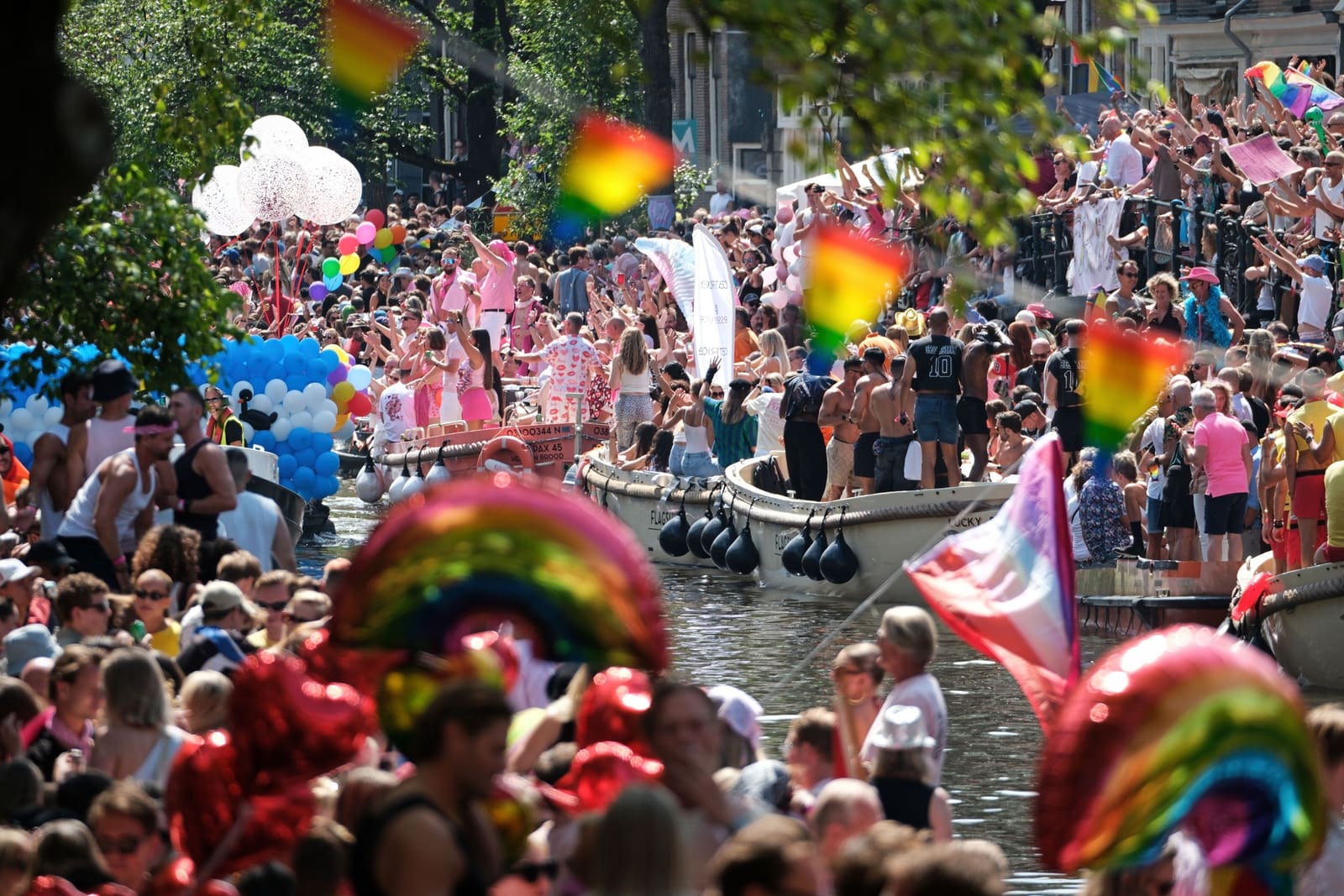
Progress Pride flags line Amsterdam's canals in every direction, snapping in the breeze along brick-paved walkways and arched bridges. For visitors arriving during WorldPride 2026, the rainbow display might seem like event decoration. For residents, it's simply August.
The flags stay up all year. Amsterdam's commitment to LGBTQ+ inclusion doesn't peak and fade with festival schedules. It's built into the architecture of daily life, from the bars that have served the community for decades to the museums now reexamining their collections through queer histories.
The Netherlands legalized same-sex marriage first in the world, on 1 April 2001, when Amsterdam Mayor Job Cohen officiated a series of midnight ceremonies. WorldPride 2026 marked 25 years of that legal recognition, but the celebration revealed something broader: how a city embeds acceptance into its identity, not just its event calendar.
History on Display
The New Church opened "Queer Amsterdam: the Pink City" in July 2026, an exhibition that will run through April 2027. The show makes a case for a permanent LGBTQ+ museum in the city, using art and artifacts to trace centuries of hidden and public queer life.
Jan Adam Kruseman's portrait of King William II hangs near the entrance. The accompanying text describes rumors of the king's same-sex affairs and his decision to accept constitutional reforms limiting royal power when those rumors threatened to become public. The label notes how taboos around sexuality forced political choices the king likely would not have made otherwise.
Abraham Storck's 1675 painting of Dam Square captures what was then a known cruising site. By the 18th century, the same square became a location for raids and prosecutions. Sodomy carried the death penalty in the Netherlands until 1811. A map in a nearby case shows gay bars and cruising spots between 1850 and 1940. Below it, Jaap van Leeuwen's handwritten diary records his sexual encounters in public urinals across the city from 1935 to 1947.
At the Rijksmuseum, the Queer Stories collection pulls similar threads through Dutch masterpieces, pairing historical paintings with contemporary accounts of love and persecution.
A City of Contrasts
More than 180 nationalities live in Amsterdam, and that diversity brings friction. At The New Church exhibition, a guide pauses in front of a photograph of a Pride flag that was set on fire in a city neighborhood. "Like much of Europe, the political shift is moving to the right," she says.
The comment carries weight in the wake of an incident at Berlin Pride earlier in the summer, when a driver plowed into a crowd of pedestrians. The exhibitions acknowledge this tension. They don't present Amsterdam as a solved problem, but as a city still negotiating what inclusion means when cultures and tolerances collide.
At Pulitzer Amsterdam, photographer Jasper Abels' exhibition "Velvet Scars: A Kingdom of Courage" ran through 9 August, hanging contemporary queer portraits alongside centuries-old paintings in the hotel's canal-house galleries. The juxtaposition made the point silently: these stories have always been here, whether or not they were acknowledged.
Learning from Animals
Artis Amsterdam, the city zoo, offered tours during WorldPride focused on sexual diversity in the animal kingdom. Guides detailed the reproductive habits of jaguars, elephants, giraffes, and penguins, making the case that same-sex behavior and gender fluidity appear across species.
The tone was educational but playful, with jokes about dark rooms and fetishes woven into explanations of multi-vagina wallabies and penguin pair-bonding. The tour reframed natural history as queer history, a reminder that diversity isn't a human invention.
Hospitality That Trains for Welcome
Sofitel Legend The Grand Amsterdam hosted its annual Pride Cocktail Party, an event that draws repeat guests year after year. The hotel was the first in the world to earn Booking.com's Travel Proud certification, an initiative that provides free LGBTQ+ awareness training to hospitality staff. More than 150,000 properties worldwide now participate in the program, according to Booking.com.
The Grand also holds a Gold Label from the SHe Travel Club, which recognizes hotels meeting standards for women travelers. In the hotel's courtyard, an international crowd mixed over wine and cocktails. Drag performers including Danny Beard and Courtney Act made appearances, and a Dorothy impersonator sang "Somewhere Over the Rainbow" to cheers from below.
The party's draw isn't spectacle alone. Guests cite the consistent welcome they receive as queer travelers, a signal that training and certification translate into lived experience.
The Canal Parade Scales Up
The Canal Parade has anchored Amsterdam Pride for years, with dozens of boats gliding past crowds packed along the waterways. For WorldPride 2026, organizers built the WorldPride Stadium on the Prinsengracht, adding nearly 10,000 seats along the canal.
Boats with booming sound systems sent spectators to their feet, while others sparked conversation. An inflatable sculpture of Putin and Trump kissing drew particular attention, a piece of political satire that made international headlines in the days after the parade.
The parade stretched into the night, with the city's queer nightlife districts filling up as boats docked. Reguliersdwarsstraat hosts a string of mainstream LGBTQ+ bars that stay open until the early morning. Kerkstraat caters to more niche crowds, while leather and fetish bars cluster in the Red Light District.
On Saturday, parties moved to the city outskirts. Club Raum, a queer-run cultural space, hosted Adonis, an event where phone cameras were covered with stickers and the dress code leaned toward skin. The party ran past sunset, a space built on anonymity and abandon.
What Lasts After the Crowds Leave
WorldPride brought tens of thousands to Amsterdam, but the infrastructure that supported them doesn't dismantle when the event ends. The exhibitions remain open for months. The bars and clubs continue their regular programming. The flags stay up.
The city's model is less about hosting a spectacular week and more about maintaining a baseline of visibility and safety every other week of the year. That consistency is what residents point to when they say the Pride flags aren't performative.
Amsterdam isn't without challenges. Rising right-wing sentiment, cultural clashes over gender and sexuality, and the pressures of tourism all complicate the narrative of a perfectly inclusive city. But the infrastructure of acceptance, built over decades and reinforced through law, culture, and daily practice, offers a template.
Twenty-five years after the first legal same-sex marriages, the city has moved past the question of whether to recognize LGBTQ+ lives. The question now is how to protect that recognition as political winds shift, and how to extend it to the marginalized communities still fighting for visibility. The exhibitions, the training programs, the year-round flags, they're all part of the answer.