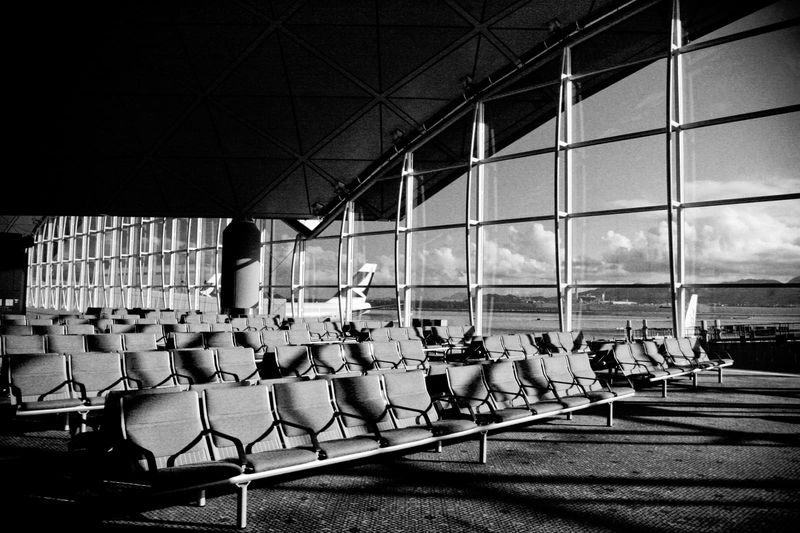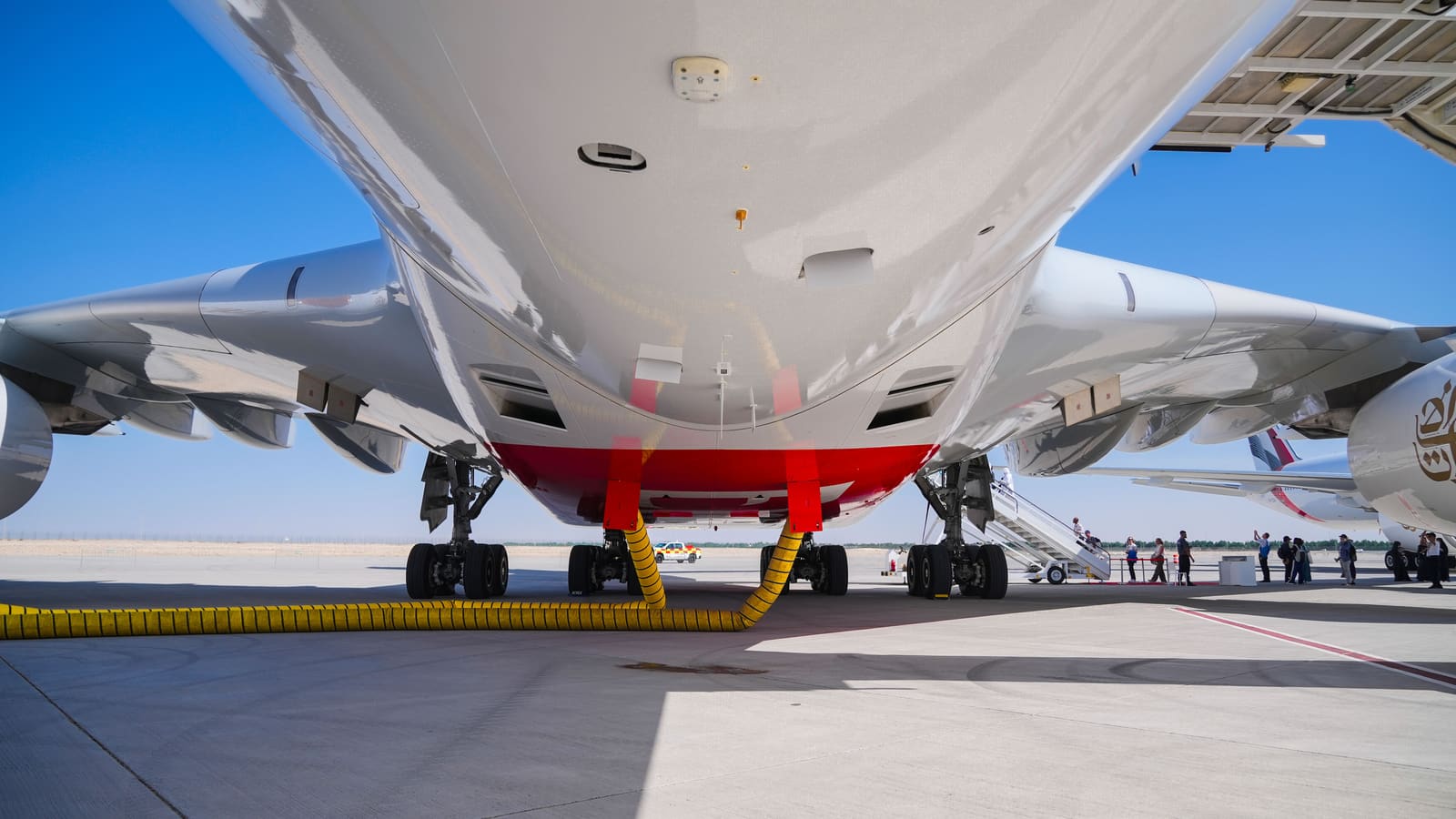
A Hub Running at Three-Quarters Capacity
Dubai International is projected to close 2026 with roughly 70 million passengers, a quarter fewer than the 95.2 million it handled in 2025. The decline follows the withdrawal of dozens of airlines after the outbreak of conflict between the United States and Iran earlier this year.
Figures released on Tuesday show the airport served 50.4 million passengers in the first nine months of 2026, down 28.1 per cent year on year. The third quarter alone saw 18.8 million travellers pass through, compared with 24.2 million in the same period last year - a drop of 22.1 per cent. August was the busiest single month of the quarter, recording 6.6 million passengers.
The airport now hosts 57 airlines, just over half the 108 that operated there in 2025. British Airways returned to the schedule this month, alongside Royal Air Maroc, SunExpress, and Cebu Pacific. Additional carriers are expected to resume flights in the weeks ahead, though the pace of recovery remains cautious.
Why Carriers Are Taking Their Time
The gradual return reflects a broader recalibration of risk among international airlines. Many pulled out when hostilities began, citing crew safety, insurance costs, and uncertain demand. Even as conditions stabilise, the decision to restart routes involves more than a simple all-clear signal.
Airlines must negotiate fresh insurance terms, reassign aircraft that have been redeployed elsewhere, and rebuild passenger confidence in a region that spent months in the headlines for the wrong reasons. For carriers with limited long-haul fleets, committing a widebody to Dubai means forgoing other opportunities - a calculation that becomes harder when load factors remain uncertain.
Linus Benjamin Bauer, founder and managing director of Dubai-based aviation consultancy BAA & Partners, described the return of British Airways as a confidence signal, but noted that airlines are rebuilding their presence with care. The implication is clear: even legacy carriers with deep Gulf ties are testing the water rather than diving back in.
The Transfer Traffic That Didn't Wait
Dubai International built its position as one of the world's busiest airports on a simple model: connect passengers between continents that lack direct flights. The airport's location makes it a natural stopover for journeys between Europe, Asia, Africa, and Australasia. But that model only works if passengers have no better option.
When foreign airlines suspended services, travellers heading to or through the Gulf had to find alternative routings. Competing hubs - Doha, Abu Dhabi, Istanbul, and others - absorbed much of that displaced traffic. Some of those passengers will return to Dubai once their preferred carrier resumes flights. Many will not, especially if they have found a new connection that works just as well or costs less.
The longer airlines stay away, the harder it becomes to reclaim that traffic. Transfer passengers are creatures of habit and fare, and loyalty to a particular hub is thin when there are half a dozen viable alternatives within a few hours' flying time.
What the Numbers Mean for the Airport
A 26 per cent drop in annual passengers translates into quieter terminals, lower retail and food-and-beverage revenue, and reduced landing fees - all of which flow through to the airport's operating performance. Dubai International does not publish detailed financials in real time, but the scale of the decline suggests a significant hit to the bottom line.
The airport's operator will also be watching the mix of traffic closely. A hub airport makes much of its money from international transfer passengers, who tend to spend more time - and more money - in the terminal than point-to-point travellers. If the 70 million passengers projected for 2026 include a higher share of local traffic and a lower share of connections, the revenue impact per passenger could be worse than the headline number suggests.
There is also the question of capacity. Dubai International was built to handle far more than 70 million passengers a year, and running well below design capacity raises questions about fixed-cost recovery. Airports are expensive to operate even when they are quiet, and the longer the recovery takes, the more pressure builds on the business model.
The Home Carrier Advantage, and Its Limits
Emirates, the Dubai-based carrier that is by far the airport's largest tenant, has continued to operate throughout the disruption. That has provided a floor under traffic levels and ensured that the airport has not faced the kind of collapse seen at hubs where the home carrier also pulled back.
But Emirates alone cannot restore Dubai International to its pre-conflict throughput. The airline's network is vast, but it is still one carrier. The airport's role as a global hub depends on dozens of foreign airlines feeding passengers into Emirates' flights and vice versa. Without that ecosystem, the hub loses much of its utility.
The return of British Airways and a handful of other carriers is a start, but the airport needs many more to come back if it is to approach 2025 traffic levels in 2027. Each airline that delays its return gives rival hubs another few months to entrench their position.
What Comes Next
The trajectory for the rest of 2026 and into 2027 will depend on two variables: how quickly the remaining airlines restart flights, and whether the passengers they used to carry are still willing to route through Dubai. The first is a matter of operational planning and risk appetite. The second is harder to control.
Dubai International's management will be hoping that the return of a few high-profile carriers triggers a cascade, as airlines see competitors re-enter the market and decide they cannot afford to stay away. But that assumes the market is still there to be won back - an assumption that will be tested in the months ahead.