A Different Louisiana
Louisiana's southwestern corner exists outside the usual New Orleans orbit. Lake Charles sits close to the Gulf of Mexico, surrounded by marshland and wildlife refuges. Lafayette lies about 120 kilometres inland, where Acadian descendants still speak French at home and boudin is sold from gas stations. Between them stretches a region where wetland ecology and cultural heritage overlap.
The area draws birdwatchers during spring and autumn migrations, anglers chasing redfish in brackish estuaries, and visitors looking for music and food that haven't been packaged for tour buses. It also draws hunters: teal season in September brings shooters into flooded rice fields before sunrise, and the rhythm of the sporting calendar still dictates parts of the social year.
Coastal Wetlands and Wildlife Corridors
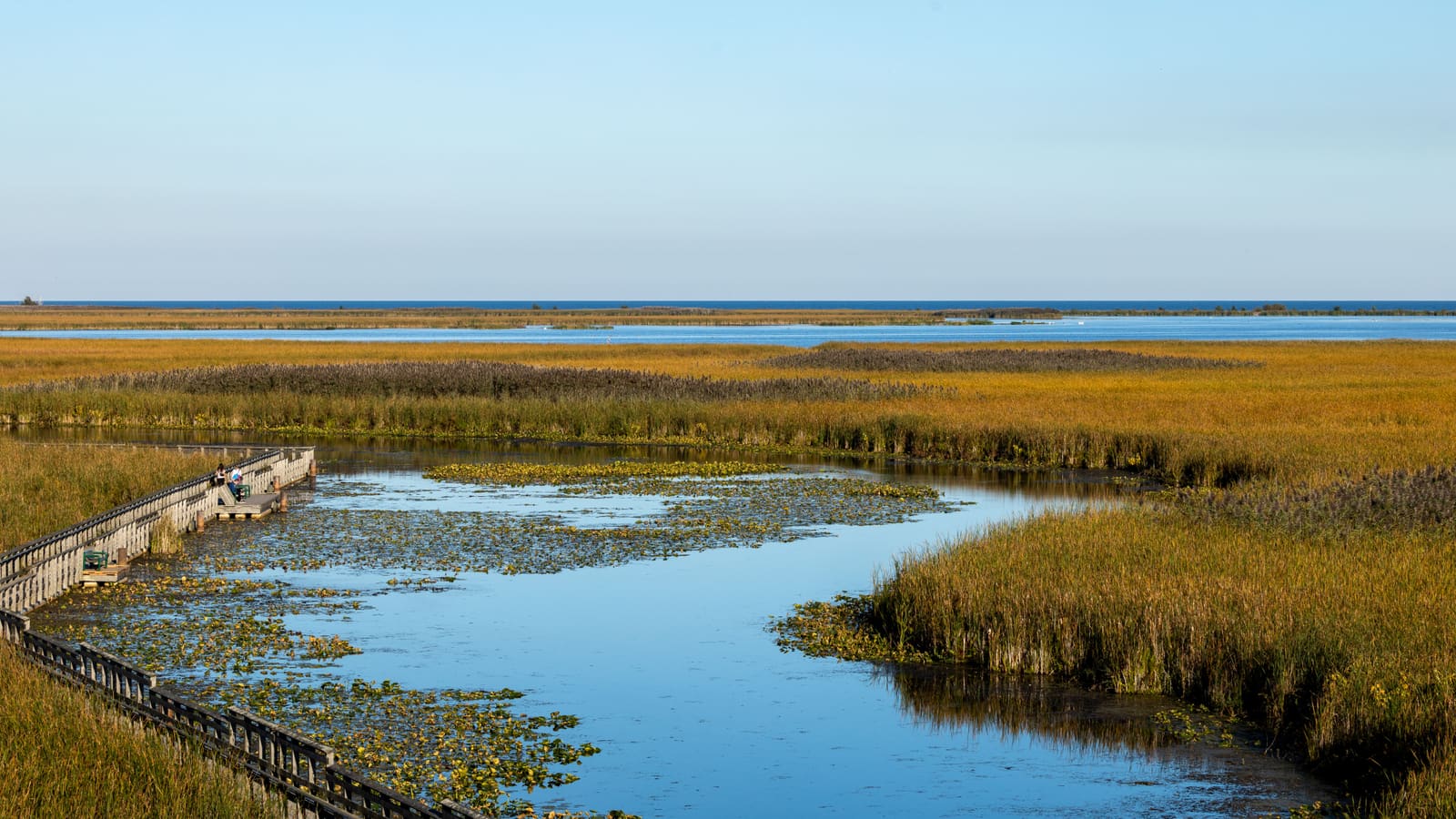
The Creole Nature Trail spans 290 kilometres through marsh, prairie, and beachfront. Sabine National Wildlife Refuge covers more than 10,500 hectares of freshwater impoundment and supports year-round bank fishing along Louisiana Highway 27. A raised walkway crosses part of the refuge, offering views of alligators, herons, and seasonal waterfowl without leaving dry ground.
Cameron Prairie National Wildlife Refuge runs a five-kilometre driving loop called Pintail Wildlife Drive. Visitors see different species depending on the month: migratory ducks in winter, nesting waders in spring, alligators throughout. The refuges sit on the Mississippi Flyway, one of four major bird migration routes in North America.
Holly Beach and Rutherford Beach are low-key Gulf Coast stops, valued more for solitude than amenities. Both remain lightly developed, with space for fishing, beachcombing, and watching shorebirds work the tide line.
Grosse Savanne Lodge caters to anglers and hunters looking for guided access to private wetlands. Catching redfish, speckled trout, and flounder in a single outing is known locally as a Cajun Grand Slam. The lodge has hosted Garden & Gun magazine's Cast & Blast event each September since 2018, pairing morning duck hunts with afternoon fishing trips and dinners built around regional game and seafood.
Recovery and Reforestation After Hurricane Laura
Sam Houston Jones State Park, established in 1944, occupies about 445 hectares of pine forest, cypress swamp, and hardwood stands just north of Lake Charles. Hurricane Laura destroyed roughly 80 per cent of the park's trees in August 2020. The park reopened in May 2022, but much of the canopy was gone.
In June 2026, Louisiana State Parks announced a six-year restoration project funded entirely by Woodside Energy, which committed USD 5 million to replant more than 320 hectares. Ecological restoration firm RES will remove invasive species, plant approximately 245,000 native trees and shrubs, and use controlled burns to encourage longleaf pine regeneration. McNeese State University is conducting biodiversity research as part of the effort, supporting four postgraduate students in the process.
The project is the largest corporate donation a Louisiana state park has received, according to the state. Visitors can track progress through a digital story map accessible via QR codes posted in the park.
Lake Charles Beyond the Swamp
The Mardi Gras Museum of Imperial Calcasieu opened in 2026 in a 560-square-metre space downtown. The collection includes costumes, headdresses, and artefacts from more than 60 krewes in the region, some of which have been active for over 70 years. One exhibit focuses on the Courir de Mardi Gras, a rural Cajun tradition involving masked riders, live chickens, and community gumbo.
Port Wonder houses two institutions: the Children's Museum of Southwest Louisiana and a nature centre run by the Louisiana Department of Wildlife and Fisheries. Aquariums display species native to bayous, coastal marshes, and the Gulf, while interactive exhibits explain barrier island formation and fisheries management.
Lake Charles' restaurant scene reflects waves of immigration. Area 337 serves Cuban, Spanish, Venezuelan, and Dominican dishes under one roof. Cousin's Lebanese Cuisine adds Louisiana ingredients to Middle Eastern recipes. Panorama Music House, rebuilt after hurricanes Laura and Delta, hosts live performances in renovated historic buildings.
Lafayette and the Acadian Heartland
Lafayette anchors Acadiana, the 22-parish region where French-speaking Acadians settled after being expelled from Canada in the 18th century. Rouler Bike Tours offers two guided rides: a 3.5-hour cultural tour (USD 95) and a shorter neighbourhood ride (USD 60). Both routes stop at murals, music venues, and historic markers that trace the city's Acadian, Creole, and Native American roots.
Vermilionville Living History Museum occupies nine hectares along Bayou Vermilion. The site interprets daily life in the region between 1765 and 1890 through restored buildings, costumed interpreters, and demonstrations of traditional crafts such as boat-building and spinning. Musicians perform Cajun and Creole songs on weekends.
Scratch Farm Kitchen started as a food truck at a farmers' market. Owner Jamie Harson sources produce from her family's farm in nearby Duson. The menu changes daily and is written on a board by the register. The Boudini, a biscuit layered with boudin sausage, egg, pesto, and kimchi, illustrates how Acadiana cooks update tradition without discarding it.
Into the Atchafalaya
East of Lafayette, the Atchafalaya Basin covers roughly 364,000 hectares of swamp, river, and hardwood forest. Airboats and flat-bottomed boats navigate the waterways, passing bald cypress draped in Spanish moss and occasional sightings of black bears, alligators, and river otters.
The basin also appears in local folklore. The rougarou is a werewolf figure in Louisiana French tradition, said to prowl the swamp at night. The feu follet, or will-o'-the-wisp, is a mysterious light that dances over the water, variously explained as swamp gas or the souls of unbaptised children.
The Atchafalaya National Heritage Area, designated by the US Congress in 2006, encompasses 14 parishes across south-central Louisiana. The region marks its 20th anniversary in 2026. More than 270 bird species have been recorded in the broader area, which also supports cotton and sugarcane agriculture alongside remnant stands of live oak and cypress.
Practical Considerations
Lake Charles and Lafayette sit about an hour apart by car. Both cities have regional airports, though most visitors fly into New Orleans or Houston and drive. Autumn offers the best balance of weather and wildlife activity: migratory birds arrive in September, teal hunting season opens in early September, and saltwater fishing peaks in October and November as flounder move through Calcasieu Lake.
Grosse Savanne Lodge requires advance booking for guided trips. Sam Houston Jones State Park has 10 cabins with screened porches; reservations open six months ahead. Vermilionville is closed on Mondays. Rouler Bike Tours operates year-round but recommends booking online.
The Creole Nature Trail can be driven in a day, but wildlife viewing improves with patience. Early morning and late afternoon are best for birds and alligators. Insect repellent is essential from May through October.
This part of Louisiana rewards slow movement. The wetlands change with the tides, the music varies by venue and night, and the food is best understood over multiple meals. Visitors looking for a quick highlight reel may find the region underwhelming. Those willing to spend time will find a culture still embedded in its landscape.