Beyond Navigation
Trekking through New Zealand's backcountry reveals a recurring pattern: the difference between a competent trip and a transformative one often comes down to who is leading it. Maps show elevation and distance. Guides convey what those contours mean when weather shifts, snow conditions change or a route that looked straightforward from the car park turns technical halfway up.
Bradey, a guide with more than forty years of experience in the Southern Alps, frames her work not as leading people to summits but as opening access to places and skills that would otherwise remain out of reach. Her approach reflects a broader philosophy common among New Zealand's mountain professionals: guiding is as much about building capability as it is about managing risk.
The distinction matters in an environment where conditions can shift quickly. New Zealand's alpine zones sit in the path of weather systems that move rapidly across the Tasman Sea, and terrain that appears benign in stable conditions can become hazardous within hours. Local knowledge - accumulated over decades of repeat trips - becomes a form of infrastructure that visitors cannot download or replicate in a single season.
What Guides Actually Do
The role extends well beyond route-finding. Lydia, another guide working in the region, notes that even climbers with significant experience in other mountain ranges benefit from someone who knows how local snow behaves, where rock quality changes and which valleys funnel wind in ways that alter safe passage.
Her clients span a wide range. Some arrive seeking reassurance, wanting an experienced hand to manage decisions in unfamiliar terrain. Others come to learn, treating the trip as an apprenticeship in reading weather, assessing avalanche risk or moving efficiently on mixed ground. Both approaches are valid, and both require different skills from the guide.
For visitors new to alpine environments, the learning curve is steep. Understanding how to assess snow stability, recognise changes in weather patterns or judge the difficulty of a route from below takes time. Guides compress that learning, offering real-time interpretation of conditions that would otherwise require seasons of trial and error to decode.
Mount Aspiring and the Weight of Repetition
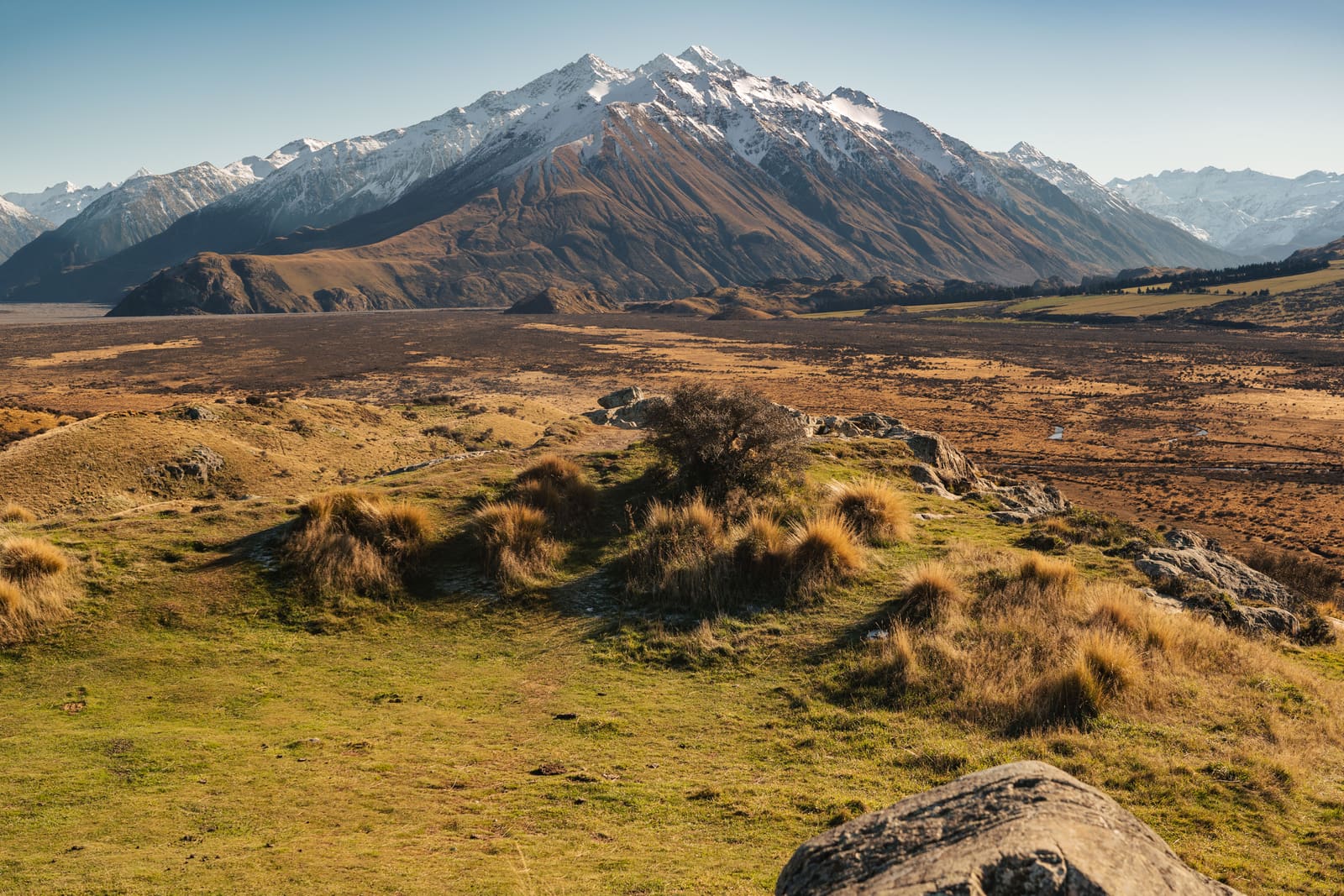
One peak that illustrates this dynamic is Mount Aspiring, known in Māori as Tititea. At just over three thousand metres, it is not New Zealand's highest summit, but it is one of its most technical and most sought-after. The mountain's glaciated slopes and exposed ridges demand competence in crampon technique, rope work and weather judgement.
Bradey first climbed Tititea at seventeen and has since guided it successfully more than twenty times. That repetition builds a granular understanding of the mountain's moods - how ice conditions vary by season, which routes hold up in marginal weather, where clients are most likely to struggle.
The mountain sits within Mount Aspiring National Park, part of the Te Wahipounamu World Heritage Area that protects a large swath of the South Island's southwest. The park sees around two hundred thousand visitors each year, though only a fraction attempt the peak itself. For those who do, a guide's familiarity with the terrain often determines whether the attempt succeeds or turns back safely.
Culture, Not Just Coordinates
The Māori name for Mount Aspiring, Tititea, translates roughly to "steep peak of glistening white," a reference to its glaciated appearance. The mountain holds cultural significance for Ngāi Tahu, the iwi (tribe) with ancestral ties to much of the South Island. Guides who acknowledge that history add a layer of context that enriches how visitors understand the landscape.
This is not incidental. New Zealand's conservation framework increasingly recognises Māori perspectives on land management, and tourism operators are expected to reflect that in how they present places. For guides, this means weaving in cultural knowledge alongside technical instruction - explaining not just how to climb a peak, but what that peak represents in the broader story of the region.
It is a form of interpretation that maps cannot provide. Coordinates locate a summit, but they do not explain why a mountain has the name it does, or how local communities relate to it. Guides who carry that knowledge shift the experience from a physical challenge to something more layered.
What Visitors Take Home
When asked what she hopes clients take away from a guided trip, Lydia emphasises respect first, then love for the natural world. The phrasing is deliberate. Respect implies understanding limits - recognising that mountains are not obstacles to conquer but environments to move through carefully. Love suggests something deeper: a willingness to return, to learn more, to advocate for protection.
That outcome depends on how the experience is framed. A guide who treats a summit as a checklist item produces a different result than one who uses the trip as an opportunity to teach observation, patience and humility. The latter approach takes longer and requires more engagement, but it leaves a more durable impression.
New Zealand's alpine tourism industry has grown significantly over the past two decades, driven in part by international interest in the country's dramatic scenery and relatively accessible peaks. That growth brings pressure - on infrastructure, on fragile ecosystems and on the guides themselves, who must balance commercial demand with environmental stewardship.
The Economics of Guiding
Guiding is not a lucrative profession in New Zealand. Most mountain guides work seasonally, supplementing income with other work during the off-season. The physical demands are high, and the risk is real. Yet the profession attracts people who value the work itself over financial return - a pattern common in outdoor industries but one that raises questions about long-term sustainability.
The cost of a guided ascent of Mount Aspiring typically ranges from NZ$2,000 to NZ$3,500 per person, depending on group size and duration. That fee covers not just the guide's time on the mountain but also logistics, permits, equipment checks and pre-trip consultation. For many visitors, it represents a significant expense, but one that provides access to terrain they would not otherwise attempt.
The economic model depends on a steady flow of clients, which in turn depends on New Zealand's reputation as a destination for alpine adventure. That reputation is maintained in part by the quality of its guiding community - a feedback loop that benefits both visitors and the local industry.
A Model Under Pressure
Climate change is altering the conditions that guides have spent decades learning. Glaciers are retreating, changing approach routes and increasing rockfall hazard. Snow conditions are less predictable, and weather windows are shifting. Guides are adapting, but the pace of change means that even long experience must be updated constantly.
This has implications for how guiding is taught and practiced. What worked twenty years ago may no longer apply, and the knowledge that guides pass on must account for a landscape in flux. It is a challenge that affects mountain regions globally, but New Zealand's relatively small size and concentrated guiding community make the shifts more visible.
The response has been a mix of adaptation and advocacy. Guides are adjusting routes, changing seasonal timing and communicating more actively with clients about the realities of a changing environment. Some are also speaking publicly about the need for stronger climate policy, using their platform to argue that the mountains they guide are worth protecting not just for tourism but for their intrinsic value.
The Value of Local Knowledge
The case for hiring a guide in New Zealand's backcountry is not purely about safety, though that is a significant factor. It is also about depth of experience - the difference between seeing a landscape and understanding it. Guides provide context, interpretation and skill development that transform a trip from a physical achievement into something more lasting.
That value is difficult to quantify, but it is evident in how visitors describe their experiences. Those who climb with a guide often speak not just of reaching a summit but of learning to read terrain, of gaining confidence in their own judgement, of feeling connected to a place in a way they had not anticipated.
In an era when information is abundant and routes are documented online, the role of the guide might seem diminished. But knowledge is not the same as wisdom, and familiarity is not the same as understanding. Guides offer both, built slowly over years of repetition in terrain that rewards patience and punishes haste.