A Flight Path Through Totality
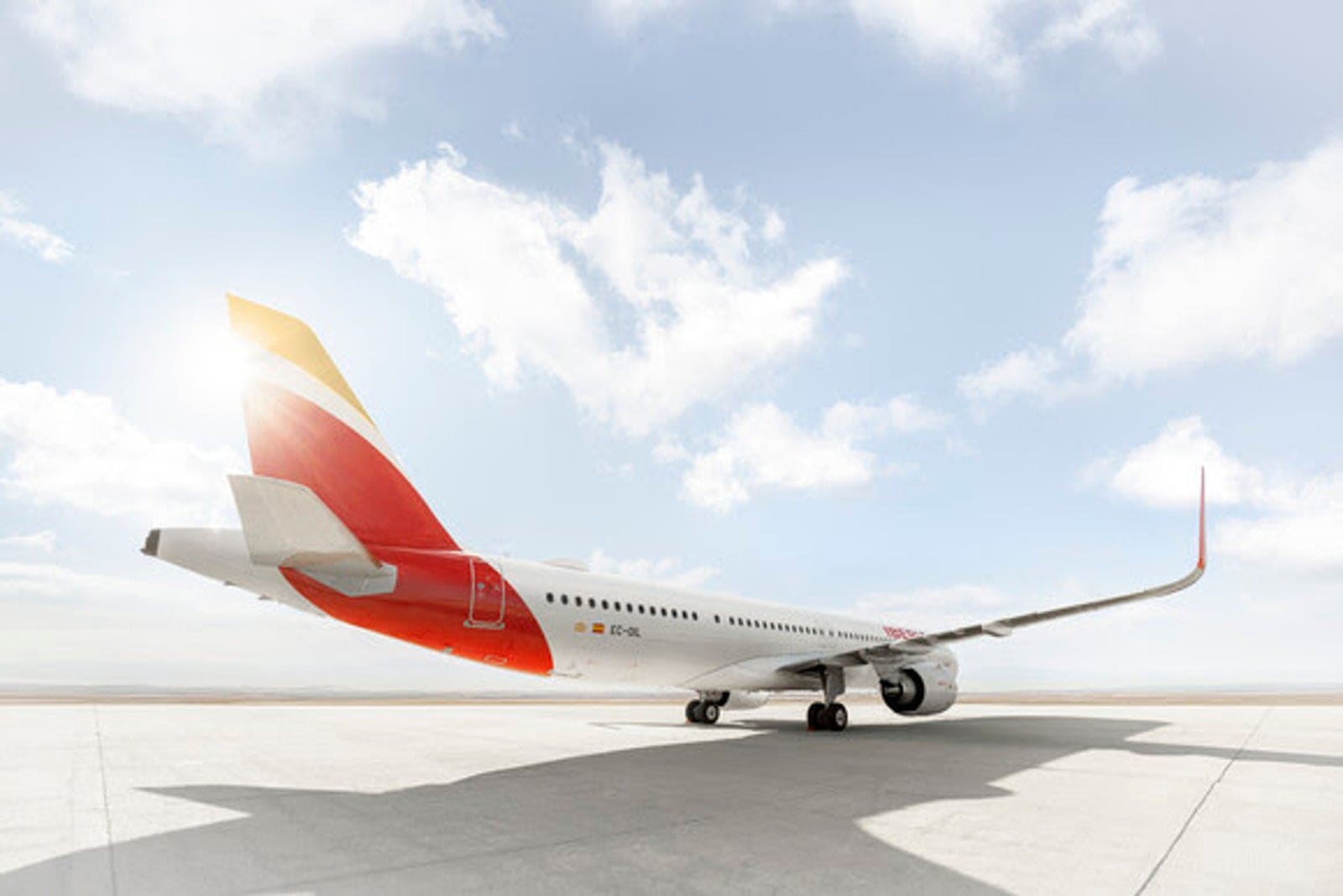
When the moon slides between Earth and sun on August 12, a chartered aircraft will climb above Madrid carrying scientists, cameras, and a test of how well satellite internet works at the edge of darkness. Iberia announced it will broadcast the total solar eclipse live from cruising altitude, making use of equipment recently installed across its fleet.
The flight departs Madrid at 6:45 p.m. local time, aiming to position itself within the narrow corridor where the moon blocks the sun completely. That path of totality will sweep from the Arctic Ocean across Greenland, Iceland, and Portugal before crossing into Spain. For the Iberian Peninsula, it marks the first total eclipse visible from the region since 1912.
The airline is not selling seats to the public. Instead, the cabin will host a research team led by astronomer Miquel Serra-Ricart, scientific director of Light Bridges and a researcher at the Institute of Astrophysics of the Canary Islands. According to Iberia, the group will use the vantage point to study the solar corona and nearby celestial objects, including Venus and Mercury, which become visible during totality.
Why Altitude Matters for Eclipse Observation
Serra-Ricart explained that observing from cruising altitude offers a clear advantage: the aircraft sits above most cloud cover and atmospheric interference that can obscure ground-based views. At 10,000 meters, the air is thinner, the horizon broader, and the chance of weather disrupting the observation drops significantly.
The timing and location also allow the researchers to extend their window of observation. While totality lasts only a few minutes from any single point on the ground, an aircraft can follow the shadow's path, stretching that window slightly longer.
For Iberia, the event doubles as a demonstration of its new high-speed internet service. The airline has been progressively rolling out Starlink connectivity, which relies on thousands of low Earth orbit satellites to deliver broadband in flight. The eclipse livestream will put that system through a high-profile test, broadcasting real-time footage from an aircraft traveling at hundreds of kilometers per hour.
Eclipse Tourism on the Ground and in the Air
The August 12 eclipse is drawing attention across Europe, particularly in regions that fall within or near the path of totality. Spain's northern and eastern areas, including the Balearic Islands, will experience either full or near-total coverage, with the event occurring between roughly 7:30 and 9:30 p.m. local time.
Passengers on scheduled flights crossing those regions during that window may catch a view, depending on their seat and the aircraft's heading. Iberia has not indicated whether it will adjust any regular flight paths to improve visibility, but the timing coincides with evening departures and arrivals across the carrier's network.
The rarity of the event adds to its appeal. Total solar eclipses occur somewhere on Earth roughly every 18 months, but any given location sees one only once every few centuries on average. The 114-year gap for the Iberian Peninsula underscores how unusual this alignment is.
Starlink and the New Standard for In-Flight Connectivity
Iberia's adoption of Starlink reflects a broader shift in airline connectivity. Traditional in-flight internet has relied on geostationary satellites positioned far above the equator, which deliver slower speeds and higher latency. Starlink's low Earth orbit constellation sits much closer, reducing lag and boosting bandwidth.
Several carriers have already signed on, drawn by the promise of streaming-quality connections that rival home broadband. For passengers, that means video calls, social media uploads, and real-time content without the frustration of buffering. For airlines, it means a competitive edge in an era when connectivity is increasingly expected, not optional.
The eclipse broadcast will offer a public proof of concept. If the stream holds steady while the aircraft maneuvers through the shadow, it sends a signal that the technology can handle demanding conditions.
What Comes After the Shadow
Once the eclipse passes, the research team will analyze footage and data collected during totality. The solar corona, the sun's outer atmosphere, becomes visible only when the bright disk is blocked, revealing structures and dynamics that are otherwise hidden. Scientists use these brief windows to study magnetic fields, temperature gradients, and the origins of solar wind.
For travelers, the event is a reminder that the view from an aircraft window can offer more than just clouds and coastline. As airlines invest in better connectivity and more flexible routing, the cabin becomes a platform for shared experiences that stretch beyond the usual rhythms of departure and arrival.
Iberia has not announced plans for additional eclipse charters, but the August 12 flight sets a precedent. If the broadcast succeeds and public interest runs high, other carriers may follow with their own airborne observation events, turning rare celestial mechanics into a new category of in-flight programming.