A Market Growing Faster Than the Rest
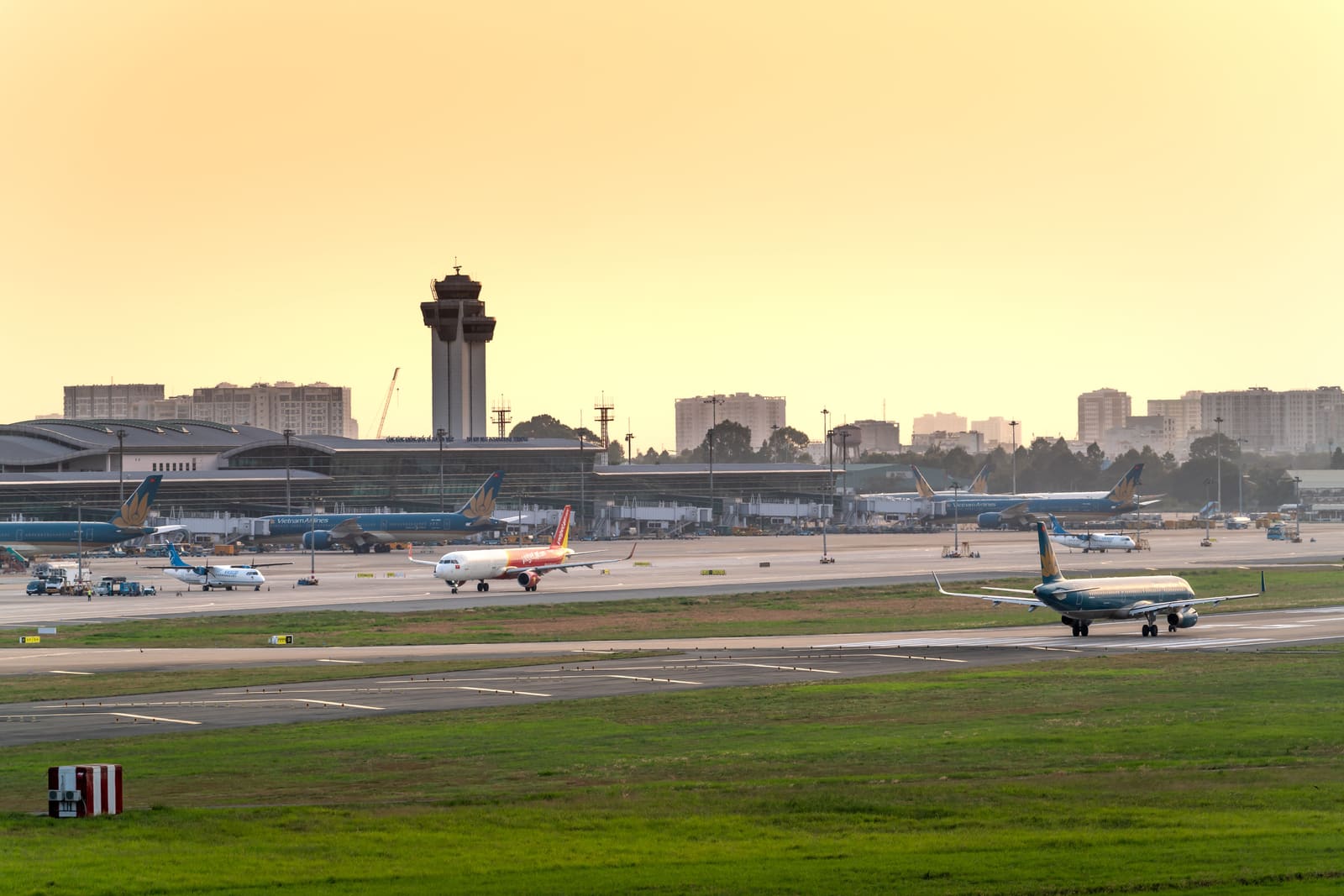
Vietnamese carriers are opening new routes and increasing frequency to India at a pace that reflects how quickly the market has shifted. Sun PhuQuoc Airways will begin flying between Ahmedabad and Phu Quoc from 3 December, while Vietnam Airlines will move its Delhi and Bengaluru services to daily operation starting 14 December. Vietnam Airlines had only recently added Ahmedabad to its network.
The expansion is a direct response to visitor data. Vietnam recorded 670,972 Indian arrivals in the first nine months of 2026, according to the National Statistics Office. That represents growth of 33 per cent over the same period a year earlier, more than double the 14.5 per cent increase Vietnam saw across all international visitors.
The trajectory has been steep. Indian arrivals stood at 138,000 in 2022, climbed to 507,000 in 2024, and reached 746,000 by the end of 2025. India is now Vietnam's sixth-largest source market for international visitors.
Three Carriers, Different Strategies
VietJet operates the most extensive network between the two countries. The low-cost carrier links Hanoi, Ho Chi Minh City, and Da Nang with six Indian cities, a footprint built over the past two years as demand accelerated.
Vietnam Airlines has taken a more measured approach, adding routes selectively and now moving to daily frequencies on its busiest connections. The shift to daily service on Delhi and Bengaluru suggests those routes have reached sustainable load factors.
Sun PhuQuoc Airways, the newest entrant, is targeting secondary Indian cities and leisure destinations within Vietnam. Ahmedabad to Phu Quoc is a direct play for Gujarat's outbound leisure market, bypassing the congested hubs that competitors already serve.
The competition is unfolding in a market where Vietnamese carriers hold a structural advantage: they control inventory on both ends of the journey and can bundle ground services in ways foreign airlines cannot. That matters in a segment where package tours and group travel remain the dominant booking pattern.
What Seats Alone Cannot Solve
Capacity is the easy part. Vietnamese carriers can add aircraft, adjust schedules, and open new city pairs with relative speed. The harder challenge lies in what happens after passengers land.
Indian travellers have specific expectations around food, guided services, and event infrastructure. Vegetarian meal options need to be widely available and clearly labelled, not an afterthought on a limited menu. Guides who understand cultural preferences and can communicate in Hindi or other regional languages remain in short supply outside the main tourist corridors.
Wedding and events tourism, a growing segment within Indian outbound travel, requires venues, planners, and vendors familiar with multi-day celebrations that involve large groups and specific ritual requirements. Vietnam has built much of its tourism infrastructure around other markets, and retrofitting that infrastructure takes time.
The gap is visible in online reviews and travel forums, where Indian visitors frequently note the difficulty of finding familiar food outside major cities or the lack of guides who can navigate dietary and cultural nuances. These are not insurmountable problems, but they require investment in training, supply chains, and service design that moves slower than airline schedules.
Regional Context and Competitive Pressure
Vietnam is not the only Southeast Asian destination chasing Indian visitors. Thailand has long held a dominant position, with established infrastructure and direct flights from more than a dozen Indian cities. Malaysia and Singapore have also expanded capacity and tailored services to Indian travellers in recent years.
Vietnam's advantage lies in its relative newness. The destination offers beaches, heritage sites, and urban experiences that feel distinct from the well-trodden Thai and Malaysian circuits. Visa policies have also eased, reducing friction for short-term visitors.
But that novelty window is finite. If the gap between airline capacity and ground-level service quality persists, repeat visitation will suffer. First-time visitors may tolerate limited vegetarian options or language barriers; returning travellers and word-of-mouth referrals depend on smoother experiences.
The competitive pressure also comes from within. As three Vietnamese carriers add routes and frequencies, yields will come under pressure unless total demand continues to grow at the current pace. The risk is that airlines overshoot, flooding the market with seats before the infrastructure to support those visitors is fully in place.
What Comes Next
The immediate outlook is more capacity. Vietnam Airlines' move to daily frequencies signals confidence that demand will hold, and Sun PhuQuoc Airways' entry suggests smaller carriers see room to compete. VietJet's six-city network gives it scale, but also exposes it to yield pressure if competitors undercut on price.
The longer-term question is whether Vietnam's tourism sector can build the services that turn a one-time visitor into a repeat customer. That requires investment in training for hospitality workers, diversification of food supply chains, and partnerships with Indian event planners and tour operators who understand what their clients expect.
Airlines can create the access, but they cannot create the experience on the ground. Vietnam's ability to capture the full value of this growing market will depend on how quickly hotels, restaurants, tour operators, and local governments close the gap between seat capacity and service delivery.
For now, the race is on. Indian travellers are coming in larger numbers, and Vietnamese carriers are betting that the infrastructure will catch up. Whether that bet pays off will become clearer over the next year, as the new routes mature and the market tests whether supply and demand are truly in balance.