A New Leader in July
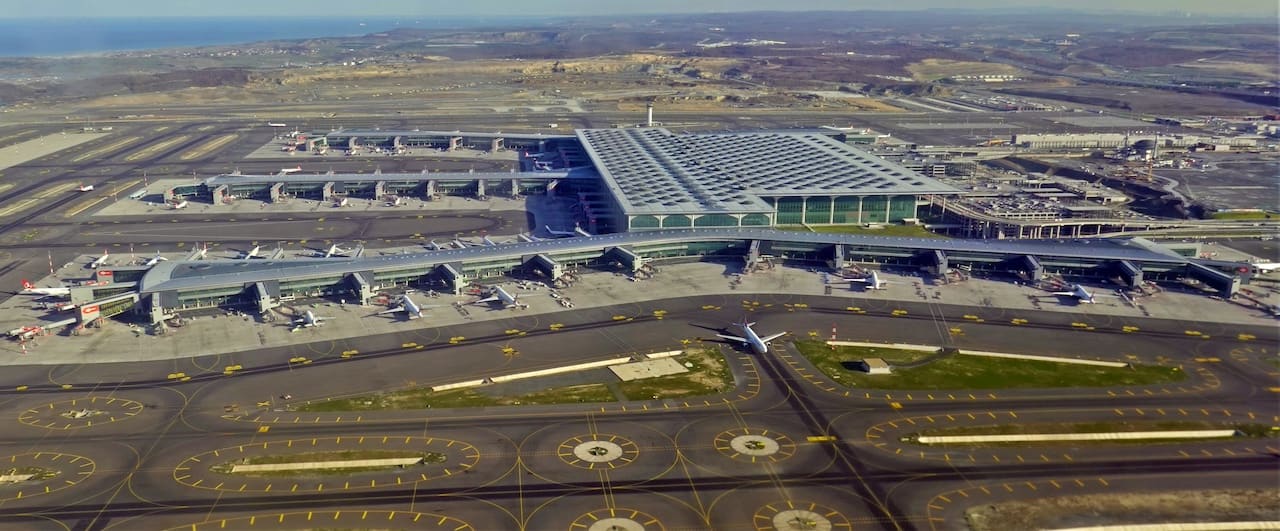
Istanbul Airport processed 8.15 million passengers in July 2026, nudging past London Heathrow's 7.86 million and claiming the top spot among European airports for the month. The gap of roughly 300,000 travelers marks a notable turn in a race that Heathrow dominated for decades. According to Airports Council International, Heathrow held the title of Europe's busiest airport every year from 1996 through 2019, lost it during the pandemic, and reclaimed it in 2023. Now the lead has changed hands again.
Heathrow's July traffic slipped 1.5 percent compared with the same month in 2025, while Istanbul recorded growth of 2.3 percent year on year. The British hub still logged its busiest single day of 2026 on July 19, when 267,000 passengers moved through its terminals as the summer holiday season picked up. New carriers including ITA Airways, Alaska Airlines, and Riyadh Air began service to Heathrow in July, a sign that airlines continue to seek slots at the capacity-constrained airport.
Middle East Disruption Weighs on Heathrow
One factor dragging on Heathrow's numbers was a sharp drop in Middle East traffic. Passenger counts on routes to the region fell 20.2 percent in July, reflecting disruption tied to conflict involving Iran, Israel, and the United States. That decline accounted for a significant share of the airport's overall contraction for the month.
The dip stands in contrast to Heathrow's performance the previous summer, when it became the first European airport to handle more than eight million passengers in a single month. In August 2025, 8.04 million people passed through, and the airport finished the year with 84.46 million passengers. Heathrow has repeatedly said that its two runways now operate near full capacity, limiting further growth.
The Third Runway Debate
Heathrow has seized on Istanbul's rise to press its case for a third runway, a project that has been debated for decades. The airport argues that expansion is essential if the United Kingdom wants to maintain a leading international hub and the trade, investment, and tourism that come with greater connectivity. The proposed £33 billion project would lift capacity to 150 million passengers a year, well above current levels.
Chief executive Thomas Woldbye has framed the question in competitive terms, pointing to rivals that are adding capacity while Heathrow remains boxed in. Planning costs alone for the third runway are projected to exceed £1 billion. The airport has sought permission to recover expansion-related spending through higher passenger charges, which were previously expected to climb from £28.46 to £33.26 by 2027.
The British government has been advancing the planning framework for the project, but the proposal remains contentious. Concerns center on environmental impact, financing, and the concentration of infrastructure investment in London. Legal and political hurdles have slowed progress for years, and the outcome remains uncertain.
Istanbul's Structural Advantages
Istanbul's climb reflects fundamentally different operating conditions. The current Istanbul Airport opened in late 2018 on a large new site outside the city, gradually replacing Atatürk Airport as the main international gateway. Unlike Heathrow, which is hemmed in by dense residential neighborhoods in west London, Istanbul has ample room for expansion and can operate around the clock.
The airport's geographic position between Europe, Asia, and the Middle East has helped it grow as a connecting hub, supported by the extensive network of Turkish Airlines. Istanbul Airport chief executive Selahattin Bilgen noted that the facility can operate three independent runways simultaneously, 24 hours a day, allowing it to avoid the capacity constraints that limit many major hubs. A fourth runway is expected to open by the end of 2026, adding further room for growth.
The contrast is sharp. While Istanbul continues to add runway capacity, Heathrow is still trying to secure approval for a third runway after years of debate. The British hub's two runways are surrounded by built-up areas, and night flights are restricted, limiting the hours available for operations.
Growth Elsewhere in the UK
July was a record month for other British airports. London Stansted welcomed 3.1 million passengers, up 6.3 percent year on year, while Manchester handled 3.4 million. Both airports have room to grow within their existing footprints, though neither is positioned to challenge Heathrow's role as the country's primary long-haul gateway.
What Matters for Hub Status
The shift in July's rankings illustrates how physical constraints and operating flexibility shape the competition for hub dominance. Passenger demand alone does not determine which airports can grow. Space to build additional runways, the ability to operate at night, and location relative to connecting markets all play a role.
Heathrow's legacy as a major hub is not in question, but its ability to expand capacity is. Istanbul's rise shows what happens when an airport has room to build and the regulatory freedom to operate without time restrictions. The battle for Europe's leading hub is increasingly a question of infrastructure, not just traffic. As Istanbul adds a fourth runway and Heathrow waits for political approval to add a third, the gap in capacity will only widen.