A Launch Six Decades in the Making
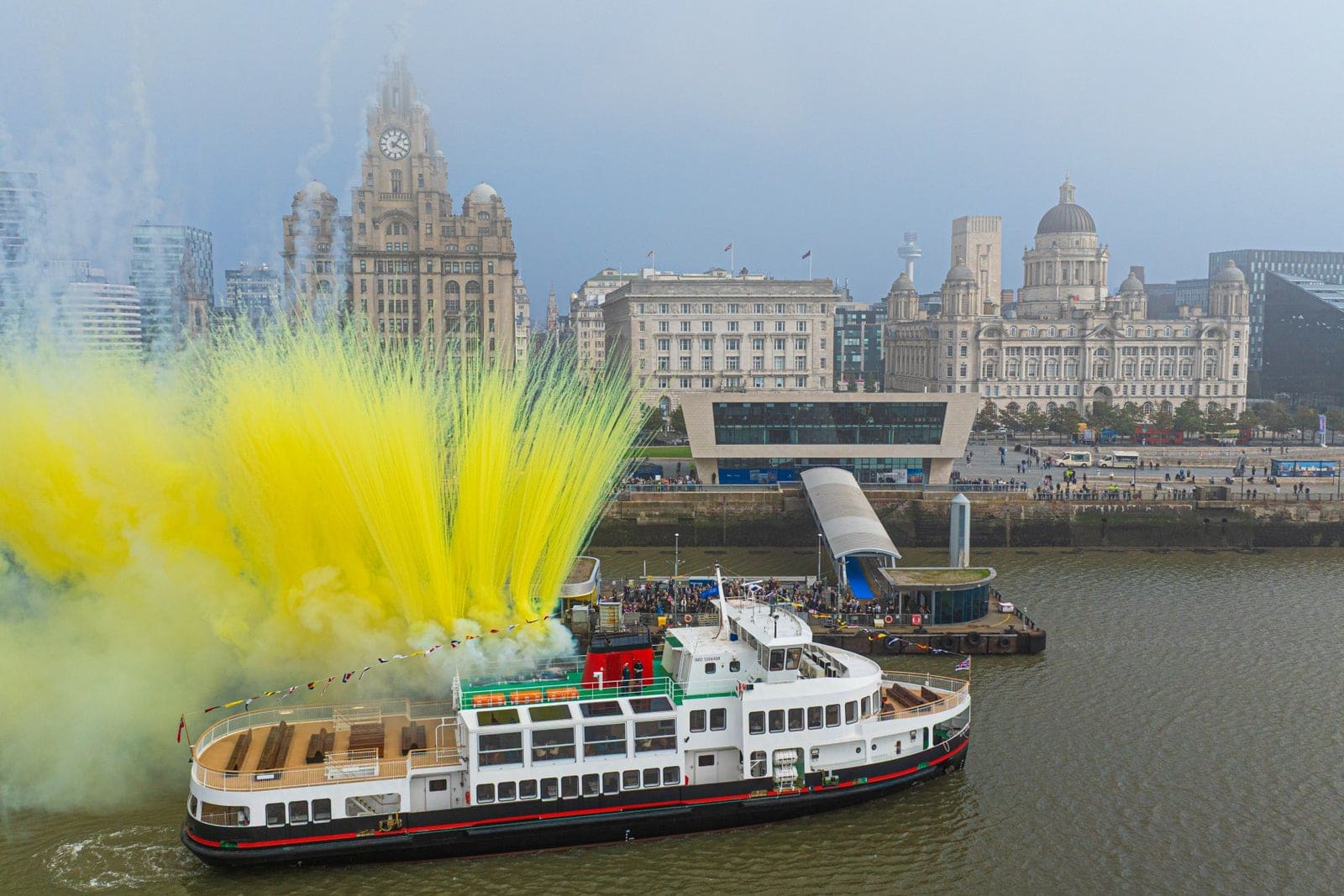
A bottle shattered against the hull of the Royal Daffodil on 22 September, marking the ceremonial launch of Liverpool's first new Mersey ferry since the 1960s. The £26 million vessel represents the most significant addition to the cross-river fleet in a generation, built at the Wirral's Cammell Laird shipyard, now operating as Balaena Birkenhead.
The timing is deliberate. Mersey Ferries has operated the same ships for six decades, serving weekday commuters travelling between Seacombe and Liverpool whilst also running sightseeing cruises along the waterway. The Royal Daffodil is designed to do both, straddling the line between functional transport and tourist experience.
Its exterior follows tradition, painted in the historic red, white and black colours that have defined the Mersey Ferries brand. But step inside and the design shifts towards contemporary expectations: a modern lounge, open-plan decks with adjustable panoramic windows, and storytelling boards that contextualise the river's history as passengers cross it.
Built for Daily Use, Not Just Nostalgia
The Royal Daffodil is a working vessel first. USB charging points, baby-changing facilities, an onboard café and dedicated cycle parking on the main deck acknowledge the practical needs of regular commuters. Two staircases and a lift connect the decks, ensuring accessibility across the ship's layout.
The upper deck offers something different: traditional timber beach seating for open-air viewing. It's a nod to the ferries' role as a sightseeing draw, particularly for visitors unfamiliar with the Mersey's industrial and cultural landmarks. The adjustable windows on lower decks allow passengers to choose between sheltered comfort and fresh air, depending on weather and preference.
The vessel is expected to begin passenger service in early autumn, though a confirmed date has not been announced. A ballot selected passengers for a special inaugural cruise on Saturday, offering a preview ahead of the official launch.
Part of a Broader Transport Overhaul
The Royal Daffodil sits within a wider programme of transport investment across the Liverpool City Region. The Liverpool City Region Combined Authority has committed to hundreds of new buses, a £50 million train fleet, new railway stations, contactless ticketing and the region's first franchised bus services in St Helens.
Steve Rotheram, Mayor of the Liverpool City Region, framed the ferry as more than a vessel. "We haven't just spent £26 million on a new ferry," he said. "We have invested in the people and the capability to build one right here on the banks of the Mersey."
The decision to build locally matters. Cammell Laird has a history of shipbuilding stretching back over a century, and the Royal Daffodil contract kept expertise and employment within the region. It's a signal that infrastructure investment can double as industrial policy, particularly in areas where manufacturing capacity still exists but needs sustained work to remain viable.
A Service With Cultural Weight
Mersey Ferries carry a symbolic load that exceeds their functional role. They feature in Gerry Marsden's 1964 song "Ferry Cross the Mersey," which cemented the service in popular culture. Liverpool's Pier Head ferry terminal was renamed after Marsden in 2023. Rotheram referenced him at the launch, noting, "I wish he could have been here today."
That cultural resonance complicates the Royal Daffodil's task. It must serve commuters efficiently whilst also meeting the expectations of tourists who arrive with a specific image of what a Mersey ferry should be. The design attempts to balance both: heritage colours and timber seating alongside USB ports and cycle racks.
Whether the Royal Daffodil becomes a template for future vessels depends on how well it performs across those dual roles. For now, it represents a rare moment when a piece of regional transport infrastructure is treated as both practical necessity and cultural artefact, with investment to match.