The Push for a Revival
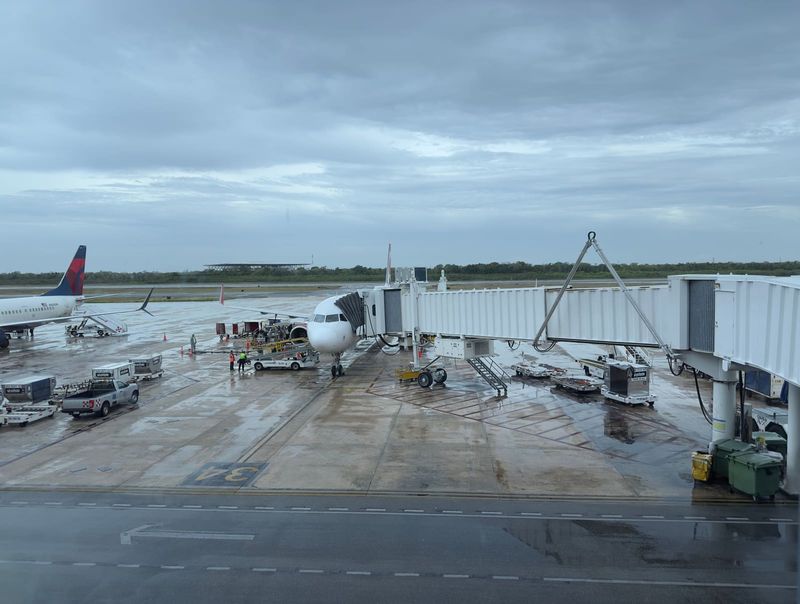
Macao's government is working on a proposal to restore air service to Lisbon, a connection that ended in late 1998 when TAP ceased operations after years of mounting losses. Chief Executive Sam Hou Fai confirmed the airport company was pursuing the idea during a Legislative Assembly session on 17 November, responding to questions about how the territory planned to strengthen its international aviation network.
Sam acknowledged the difficulty. "It's not easy. We're trying, and the international airport is working on it," he said, adding that Portugal also supported the idea. He offered no timeline for when a decision might be reached or when flights could begin.
The original TAP service operated twice weekly until 31 October 1998, when the airline withdrew after accumulating losses that reached around 200 million Macanese patacas, equivalent to approximately €22.5 million. That route included intermediate stops, first in Brussels and later in Bangkok, rather than operating as a direct flight. The financial strain ultimately proved unsustainable.
The Commercial Reality
The question now is whether the economics have changed enough to make a Lisbon route viable. Macao's Civil Aviation Authority has been clear about the challenge: a direct long-haul service to Portugal would face significant commercial hurdles. Any airline considering the route would need to be convinced that passenger demand could cover the cost of operating it.
The authority has suggested that improving connections through regional airports might be a more practical way to give travellers access to long-haul destinations, rather than attempting to support direct intercontinental services from a relatively small aviation market. Macao's airport handled 10.7 million passengers in 2019, before the pandemic; current traffic levels remain below that peak, though they have been recovering.
Several lawmakers have proposed financial support to help launch a Lisbon service. In December 2025, Ip Sio Kai suggested that the government consider subsidies and develop tourism packages to attract visitors. Two months later, Song Pek Kei called for incentives to encourage airlines to open more international routes, particularly to Portuguese-speaking countries. The proposals reflect a broader debate over whether public funding should be used to underwrite routes that might not otherwise be commercially sustainable.
A Market Dominated by Two Sources
The renewed interest in a Lisbon link is part of a wider effort by Macao to diversify its visitor base. Preliminary police figures put total arrivals at a record 40.06 million in 2025, an increase of 14.7 per cent compared with the previous year. Yet the source markets remain highly concentrated: mainland China accounted for 72.4 per cent of arrivals, Hong Kong for a further 18.2 per cent, and foreign nationals for just 6.9 per cent.
That narrow mix leaves Macao vulnerable to shifts in regional travel patterns and underscores the strategic case for attracting more visitors from outside Asia. A route to Lisbon would offer a direct gateway to Europe, but it would also need to draw sufficient traffic in both directions to justify the investment.
Portugal will be a focus of Macao's tourism promotion in March, when the territory appears as the International Guest Destination at Lisbon's BTL 2027 trade fair, running from 3 to 7 March. The Macao Government Tourism Office plans to work with tour operators on itineraries that link Macao and other parts of China with Portugal and the wider European market. Whether that promotional push can generate enough demand to support scheduled air service remains to be seen.
What Has Changed Since 1998
Several factors have shifted since TAP withdrew nearly three decades ago. Aircraft range and fuel efficiency have improved, making direct long-haul flights more feasible from an operational standpoint. Macao's tourism infrastructure has expanded considerably, with large integrated resorts and a broader range of attractions beyond gaming. The territory has also invested in positioning itself as a gateway between China and Portuguese-speaking countries, a role that could in theory support business and leisure traffic on a Lisbon route.
Yet the fundamental economic question persists: is there enough demand? The original service included intermediate stops, which allowed the airline to pick up additional passengers and spread costs across multiple markets. A direct flight would simplify the journey but would also need to fill more seats from a single origin-destination pair.
Lisbon has strengthened its own position as a European hub in recent years, with TAP expanding its network and other carriers adding transatlantic and African routes. That growth could make a Macao connection more attractive as part of a wider network, particularly if an airline saw potential for onward connections to other European cities or to Portuguese-speaking destinations in Africa and South America.
The Role of Subsidies
The debate over subsidies touches on a broader question about how governments support aviation connectivity. Many airports and regions offer financial incentives to airlines to launch new routes, particularly in the early stages when passenger numbers are still building. These subsidies can take various forms, including discounts on airport charges, marketing support, or direct payments tied to the number of flights operated.
Critics argue that such subsidies distort the market and can lead to routes that are unsustainable once the funding ends. Supporters counter that they help overcome the chicken-and-egg problem of building demand: passengers will not book a route that does not exist, but airlines will not operate a route without evidence of demand.
For Macao, the question is whether public funds should be used to support a Lisbon service that the market has not yet generated on its own. The territory's government has not publicly committed to subsidies, but the calls from lawmakers suggest that some form of financial support may be necessary to make the route attractive to airlines.
What Comes Next
Sam's comments indicate that discussions are ongoing, but no concrete steps have been announced. The airport company would need to find an airline willing to operate the service, negotiate terms, and secure the necessary regulatory approvals. That process could take months or longer, depending on the level of interest from carriers and the availability of aircraft.
Any airline considering the route would need to weigh the financial risk against the potential benefits, including access to a new market and the opportunity to serve a niche segment of travellers. The historical link between Macao and Portugal offers a cultural and linguistic connection that could help build demand, but it is not clear whether that connection alone is sufficient to support a viable commercial service.
For now, the proposal remains at the exploratory stage. Whether it advances to a firm commitment will depend on whether the economics can be made to work, nearly three decades after they proved too difficult the first time.