Attacks Trigger Expanded Airspace Restrictions
European aviation safety regulators have widened the area of Saudi Arabian airspace where airlines are advised not to operate, following missile attacks on Riyadh's King Khalid International Airport that left three Saudi nationals dead and several injured on 8 October.
The European Union Aviation Safety Agency updated its conflict zone bulletin on 9 October, adding a section of northwestern Saudi Arabia to its advisory. According to EASA, the Houthis have demonstrated both capability and intent to strike targets deep within Saudi territory, including the capital. The Yemen-based group, which has Iranian backing, claimed responsibility for the airport strikes and said it used two cruise missiles in the operation.
EASA's revised guidance cited the combined danger of recurring missile and drone attacks, the activation of Saudi air-defence systems, and the heightened risk of civil aircraft being misidentified during interception activity. Falling debris from defensive operations adds another layer of hazard.
By early afternoon on 9 October, flight tracking data showed 131 departures and arrivals at Riyadh had been scrapped, adding to hundreds of cancellations the previous day.
Industry Group Issues Stronger Warning
OPSGROUP, a membership organisation representing close to 10,000 aviation professionals worldwide, went further than EASA. On 9 October it sent members a "do not fly" recommendation for all Saudi airspace, warning of sustained missile attacks and the possibility of misjudgement in defensive responses.
The group advised against using Saudi airports even as diversion alternates on long-haul routes, a significant operational constraint for airlines flying over or near the Arabian Peninsula.
Carriers Pull Back from Riyadh
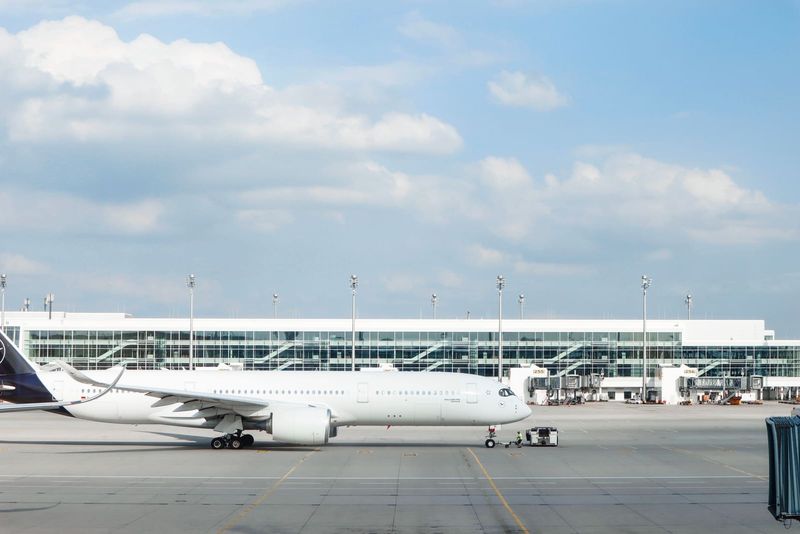
Lufthansa Group announced it would suspend flights to Riyadh scheduled for the coming days. Three Indian carriers followed suit, though none named specific resumption dates.
King Khalid International is Saudi Arabia's second-busiest airport after Jeddah. Data from the kingdom's General Authority for Statistics show it handled 296,800 flights in 2025, averaging roughly 813 movements per day. The suspension of services by multiple international carriers represents a notable disruption to that volume.
Renewed Houthi Threats
The Houthis have issued fresh warnings to airlines operating flights to Saudi Arabia, signalling the attacks may not be isolated incidents. The group has previously targeted Saudi infrastructure during Yemen's protracted conflict, but strikes on a major international airport used by hundreds of thousands of passengers raise the stakes considerably.
Saudi Arabia's civil aviation authority confirmed the casualty figures and damage from the 8 October attacks but has not yet announced changes to airport operations or airspace management.
What This Means for Travellers
Passengers booked on flights to Riyadh in the near term should expect disruption. Airlines affected by the suspensions are likely to offer rebooking or refunds, though the timeline for resuming services remains unclear.
For carriers still operating to the kingdom, the expanded EASA advisory and OPSGROUP recommendation may prompt further route changes or cancellations. Travellers connecting through Middle Eastern hubs should monitor their itineraries closely, particularly if Riyadh is a stopover or if the flight path crosses Saudi airspace.
The situation also underscores a broader risk calculus for airlines operating in or near conflict zones. Misidentification of civilian aircraft, stray ordnance, and reactive air defences have all featured in past aviation incidents, and regulators are erring on the side of caution.
How quickly flights resume will depend on the security situation on the ground and whether the Houthis carry out further strikes. For now, one of the Gulf's busiest airports remains in the crosshairs, and the travel industry is responding accordingly.