Space as a Revenue Lever
Airlines have long known that not all seats are equal. What has changed is the intensity with which they are acting on it. Carriers across continents are expanding the share of their cabins devoted to higher-fare seating, redesigning interiors around the proposition that square footage, when sold to the right passenger, generates more profit than packing in extra rows.
The arithmetic is straightforward. A business-class seat occupies roughly the same floor space as four economy seats, yet commands a price five or six times higher, according to Volodymyr Bilotka, an aviation economist at Purdue University. That density trade-off delivers a margin gain that becomes especially attractive when fuel costs climb and when filling economy cabins at profitable fares proves harder.
American Airlines illustrates the shift in concrete terms. Premium products account for approximately 30 per cent of the carrier's seats but generate around half its ticket revenue. In its most recent quarter, revenue from premium cabins grew 18.5 per cent year on year, four percentage points faster than the main cabin. The figures suggest that airlines can grow revenue without adding flights, simply by changing what they sell inside the aircraft they already operate.
A Hedge Against Volatility
The premium focus takes on added significance when external shocks hit. Emirates recorded a pre-tax profit of AED 3.7 billion (€904 million) in the first half of its 2026-2027 financial year despite carrying 22 per cent fewer passengers, a result shaped by conflict and rising oil prices in the Middle East. Cargo income and fuel hedging contributed substantially, but sustained demand in premium cabins provided a revenue floor that helped absorb the drop in passenger numbers.
The pattern points to a structural advantage: higher-paying customers tend to be less elastic in their travel decisions. Corporate travel, milestone trips and long-haul routes with limited competition all support demand at the top end, even when leisure bookings soften. That resilience makes premium cabins a hedge of sorts, smoothing revenue when the mass market turns unpredictable.
It also explains why airlines are prepared to commit capital now, in a period when economic forecasts remain mixed. The investment is a bet not only on current demand but on insulation from the next downturn.
What Passengers Are Buying
The amenities being installed go beyond the traditional markers of business class. Singapore Airlines is spending S$2 billion (approximately €1.4 billion) on a cabin overhaul covering all four classes, with work scheduled to begin in the third quarter of 2027. Business-class passengers will receive fully flat beds and sliding privacy doors. In first class, paired seats will convert into what the airline describes as the largest double bed available in commercial aviation.
The emphasis on privacy and sleep reflects a shift in what passengers value. On long-haul flights, the ability to work undisturbed or arrive rested translates into tangible benefits that justify a fare premium. Airlines are designing cabins around those outcomes, treating the seat as a workspace or bedroom rather than simply a place to sit.
United has more than doubled its premium-seat capacity between 2015 and 2026. Its planned upgrades include an Economy Plus option that reserves the middle seat on selected flights from late 2026, allowing passengers to buy extra space without committing to a business-class fare. The move creates a new price point between standard economy and full premium cabins, capturing travellers who want specific comforts but not the full package.
The strategy recognises that willingness to pay varies by need. A solo traveller on a daytime flight may want legroom but not a flat bed. A family on a red-eye may prioritise guaranteed space over meal service. By segmenting the cabin into finer increments, airlines can extract revenue from preferences that a two-class configuration would miss.
Niche Plays and Charter Models
Specialist products are emerging alongside the mainstream push. Jet2 has converted a Boeing 737-800 into a 76-seat, all-business-class aircraft for private group charters, based in Liverpool. The configuration targets groups seeking flexibility and seclusion, offering a product that sits outside the airline's regular holiday routes.
The charter model underscores a broader point: premium does not require a single definition. Some passengers want privacy, others want flexibility, still others want predictability. Airlines that can tailor cabins to different motivations stand to capture demand that a one-size-fits-all approach would leave unmet.
The trend also opens questions about fleet allocation. If premium charters prove profitable, other carriers may follow with dedicated aircraft, splitting operations between volume routes and high-margin niche services. The economics of narrowbody business-class charters remain unproven at scale, but the experiment suggests that airlines are willing to test configurations that would have seemed uncommercial a decade ago.
The Trade-Off for Economy Passengers
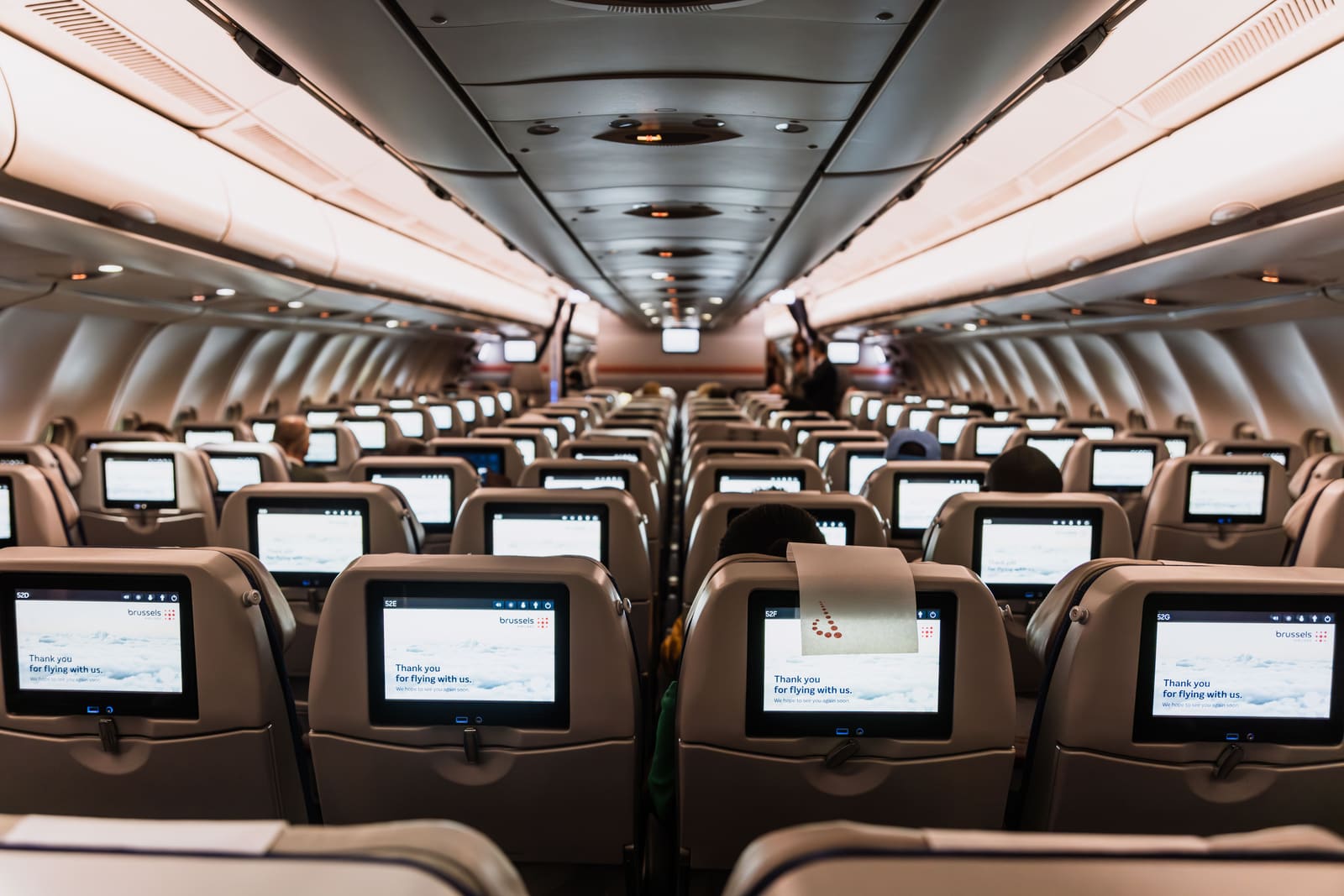
The expansion of premium seating has a corollary: fewer standard economy seats. As airlines reconfigure cabins, the available inventory at the lowest fare shrinks. For passengers travelling on tight budgets, that reduction can mean fewer options, higher prices or both.
The shift is not uniform. Low-cost carriers continue to operate high-density configurations, and routes with strong leisure demand still support large economy cabins. But on long-haul and business-heavy routes, the balance is tilting. Airlines are making a calculated choice about which passengers to prioritise, and that choice has consequences for accessibility.
The question is whether the premium bet holds. If corporate travel rebounds strongly and affluent leisure demand remains robust, the strategy will look prescient. If economic conditions weaken and premium demand softens, airlines will find themselves with expensive cabins and limited flexibility to revert to higher-density layouts.
What the Investment Signals
The scale of capital being committed suggests confidence. Singapore Airlines' S$2 billion overhaul, United's decade-long expansion of premium capacity and American's reliance on premium cabins for half its ticket revenue all point to a structural shift rather than a cyclical adjustment.
Airlines are not simply adding a few flat beds. They are redesigning the economics of the aircraft, treating the cabin as a portfolio of products with different margins and different demand profiles. The investment reflects a judgment that the future of airline profitability lies in selling fewer seats at higher prices, rather than filling every row at the slimmest margin.
For passengers, the result is more choice at the top end and less at the bottom. For airlines, the test will be whether enough travellers keep paying for the upgrades to justify the capital outlay. The cabins being built today will shape the industry's revenue mix for the next decade, and the bets are already placed.