The Race for Premium Passengers
Singapore Airlines has committed S$2 billion to a fleet-wide cabin overhaul that will introduce what the carrier describes as the largest double bed available in commercial aviation. The move comes as airlines across the globe pour billions into premium-cabin upgrades, targeting travellers who routinely spend upwards of £10,000 for a one-way ticket.
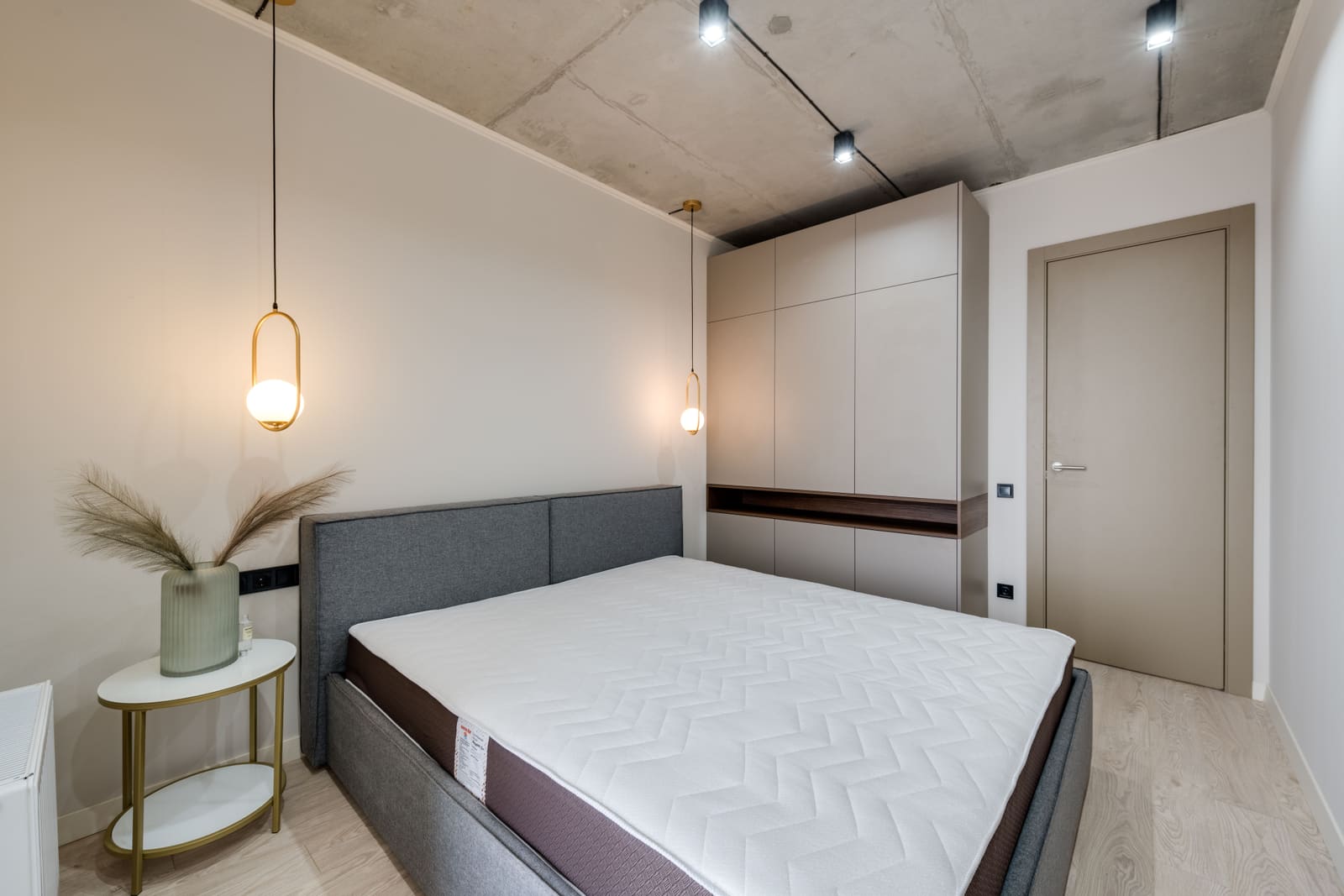
The retrofit will debut in the second half of 2027 and will touch every cabin class, though the most dramatic changes are reserved for first class. The centrepiece is a double bed spanning two adjoining seats, measuring 203 centimetres in length and 152 centimetres in width. For context, a standard double mattress in the United Kingdom is 190 centimetres long and 135 centimetres wide, making the airline's offering genuinely larger than what many people sleep on at home.
The bed will be fitted with a mattress topper supplied by Paradies, a German luxury bedding specialist, along with a duvet and a selection of pillows. Select business-class seats will also convert into double beds, though the airline has not specified how many rows will offer this configuration.
Privacy and Technology
Beyond the bed itself, the first-class cabin will feature curved sliding doors designed to give passengers more seclusion. Ultra-high-definition 4K touchscreens will replace the current generation of in-flight entertainment displays, and all passengers across all classes will gain access to onboard internet via Starlink, the satellite network operated by Elon Musk's SpaceX.
Economy passengers will see more modest but tangible improvements: additional legroom, a redesigned storage layout for personal items, an expanded meal selection, and the same entertainment and connectivity upgrades rolling out to premium cabins.
A Broader Industry Shift
Singapore Airlines is hardly alone in chasing the ultra-premium segment. The carrier was named the world's best airline by Skytrax, the aviation research firm, in 2026, yet it has watched rivals chip away at its market share through aggressive investment in cabin products.
Emirates launched a $5 billion retrofit programme in 2022, refreshing its first-class suites with more space and updated technology across its fleet. Air France introduced la Première this year, a redesigned first-class cabin that the airline positions as comparable to a private jet experience. British Airways is developing a new first-class product for its Airbus A380 aircraft, though it has not announced a launch date.
The scale of spending reflects the economics of premium travel. A single first-class passenger can generate as much revenue as a dozen economy seats, and carriers are betting that even a small increase in market share in this segment will justify the capital outlay.
Why Singapore Airlines Is Moving Now
The timing of the investment is tied to two factors: competitive pressure and a favourable shift in passenger flows. While Singapore Airlines has maintained its reputation for service, its cabin hardware has aged relative to competitors who have rolled out newer products in recent years. The airline's first-class suite, introduced in 2017, was once considered the industry benchmark but has since been matched or exceeded by rivals.
At the same time, the carrier has benefited from a geographic advantage. Rising fuel prices, driven in part by instability in the Middle East, have pushed up airfares across the industry. Yet Singapore Airlines has seen an uptick in passengers routing their journeys between Asia and Europe through Singapore rather than taking connecting flights through Gulf hubs such as Dubai or Doha. This shift has delivered higher load factors on key long-haul routes, providing the revenue cushion needed to fund the retrofit.
The Economics of Ultra-Luxury
The investment underscores a broader trend in aviation: the bifurcation of the passenger experience. While budget carriers continue to squeeze seats closer together and charge for every ancillary service, full-service airlines are moving in the opposite direction at the top end, offering private suites, gourmet dining, and amenities that would not be out of place in a five-star hotel.
The question is whether the market can sustain this level of investment. Premium travel has historically been volatile, with demand closely tied to corporate budgets and the health of financial markets. A downturn in either could leave carriers with expensive cabins and empty seats.
For now, though, airlines appear confident that the pool of ultra-wealthy travellers is large enough and growing fast enough to justify the spending. The rise of new wealth in Asia, the Middle East, and Latin America has expanded the customer base beyond the traditional centres of London, New York, and Hong Kong.
What It Means for Passengers
For those who can afford it, the new Singapore Airlines first-class cabin will offer a level of comfort that rivals or exceeds most hotel rooms. The double bed, in particular, is a significant step beyond the single suites that have been the standard in premium cabins for the past decade.
For everyone else, the impact is more indirect. The revenue generated by premium passengers helps subsidise the cost of operating routes that might not otherwise be profitable, keeping fares lower in economy than they would be on a carrier without a strong premium product. The trickle-down upgrades to economy class, such as better entertainment systems and improved connectivity, are a direct result of the same investment cycle.
The broader question is whether this arms race in luxury will continue or whether airlines will eventually hit a ceiling on what passengers are willing to pay for incremental improvements. For now, at least, the answer appears to be that there is no ceiling in sight.