The Gap Between Luxury and Access
Sleeper trains are having a moment. New premium services launched this year charge more than business-class airfare for private suites with full bathrooms and chef-prepared meals. The pitch is compelling: board in one city, wake up in another, skip the hotel night entirely. But the price tags have climbed so high that many travelers wonder if overnight rail has left them behind.
It hasn't. While luxury operators capture headlines, a network of accessible sleeper routes still crisscrosses Europe and the UK. You won't find marble showers or Michelin-star breakfasts, but you will get a bed, a door that closes, and a journey that costs less than a mid-range hotel room. Some berths start below £20. Others hover around £100 for a private cabin. The trade is straightforward: fewer frills, same destination, money left over for the trip itself.
European Sleeper brought back the Paris to Berlin night train in March, with shared compartment tickets from €69.99. Nox, a Berlin startup, plans to launch overnight services across Europe in 2027 with single rooms starting at €79. Both are betting that demand exists for the middle ground between cramped airline seats and five-star rail suites. The routes below suggest they're right.
Austrian Railways Across the Continent
ÖBB Nightjet connects over 25 cities, including Vienna, Amsterdam, Hamburg, Zurich, Graz, and Berlin. The service offers three accommodation tiers: seated carriages, couchettes, and sleeper cabins. Higher-category sleepers include private showers, toilets, and made beds, with breakfast available à la carte.
Pricing starts low. A six-berth couchette costs €19.90, a four-berth €29.90. Double sleepers begin at €69.90, and single-bed cabins at €114.90. The Vienna to Amsterdam route runs regularly, as do connections between Graz and Berlin and Zurich and Hamburg. For travelers willing to share space, Nightjet remains one of the most affordable ways to cover long distances overnight.
The network's strength is breadth. You can cross multiple borders in a single journey, waking up in a different country without the early-morning airport shuffle. Couchettes are basic but functional. Sleeper cabins offer privacy and a real bed, though not the size or softness of a hotel. It's transport first, accommodation second, priced accordingly.
London to Cornwall Without Flying
The Night Riviera runs six nights a week from London Paddington to Penzance, arriving at 7:50 AM after a 23:45 departure. The service offers seated carriages and single or shared cabins. Super off-peak return tickets cost around £150. Sleeper berths add £49 for a single cabin, which includes a plug socket, sink, wardrobe, and a bottom bunk that converts to a sofa.
Cabin guests get lounge and shower access at Paddington, Penzance, and Truro, plus complimentary breakfast delivered to the room. An onboard bar serves drinks and snacks. It's not glamorous, but it works for travelers who want to maximize time in Cornwall without losing a day to travel or paying for a London hotel before an early train.
The cabins are compact. If you're tall or claustrophobic, the space may feel tight. But for solo travelers or couples comfortable in close quarters, the Night Riviera offers a direct route to the southwest coast without the hassle of connecting trains or dawn alarms.
Arctic Landscapes from Stockholm
The SJ Night Train runs daily from Stockholm Central to Narvik, Norway, an 18-hour journey through arctic terrain. Departure is around 6 PM, arrival just before 12:40 PM the next day. Three accommodation types are available: ensuite cabins for two with breakfast, three-person compartments with corridor showers and toilets, and six-person couchettes.
Beds in shared sleeping compartments start from 2,865 Swedish Krona (around £233) each way. Ensuite cabins cost more, but the price includes breakfast and private facilities. The route passes through landscapes that justify the long journey: forests, frozen lakes, mountains that rise straight from the tracks. It's a trip that makes sense as an experience, not just a transfer.
The train is popular in winter, when travelers head north for skiing, northern lights, or the novelty of deep cold. Summer brings endless daylight and hiking season. Either way, the journey itself is part of the itinerary. This isn't a train you take to save time. You take it because the view from the window matters.
The Caledonian Sleeper to the Highlands
The Caledonian Sleeper connects London Euston to Scottish cities and rural destinations, including Aberdeen, Edinburgh, Glasgow, Inverness, and Fort William. As of January, the service added a stop at Birmingham International. It runs every night except Saturday.
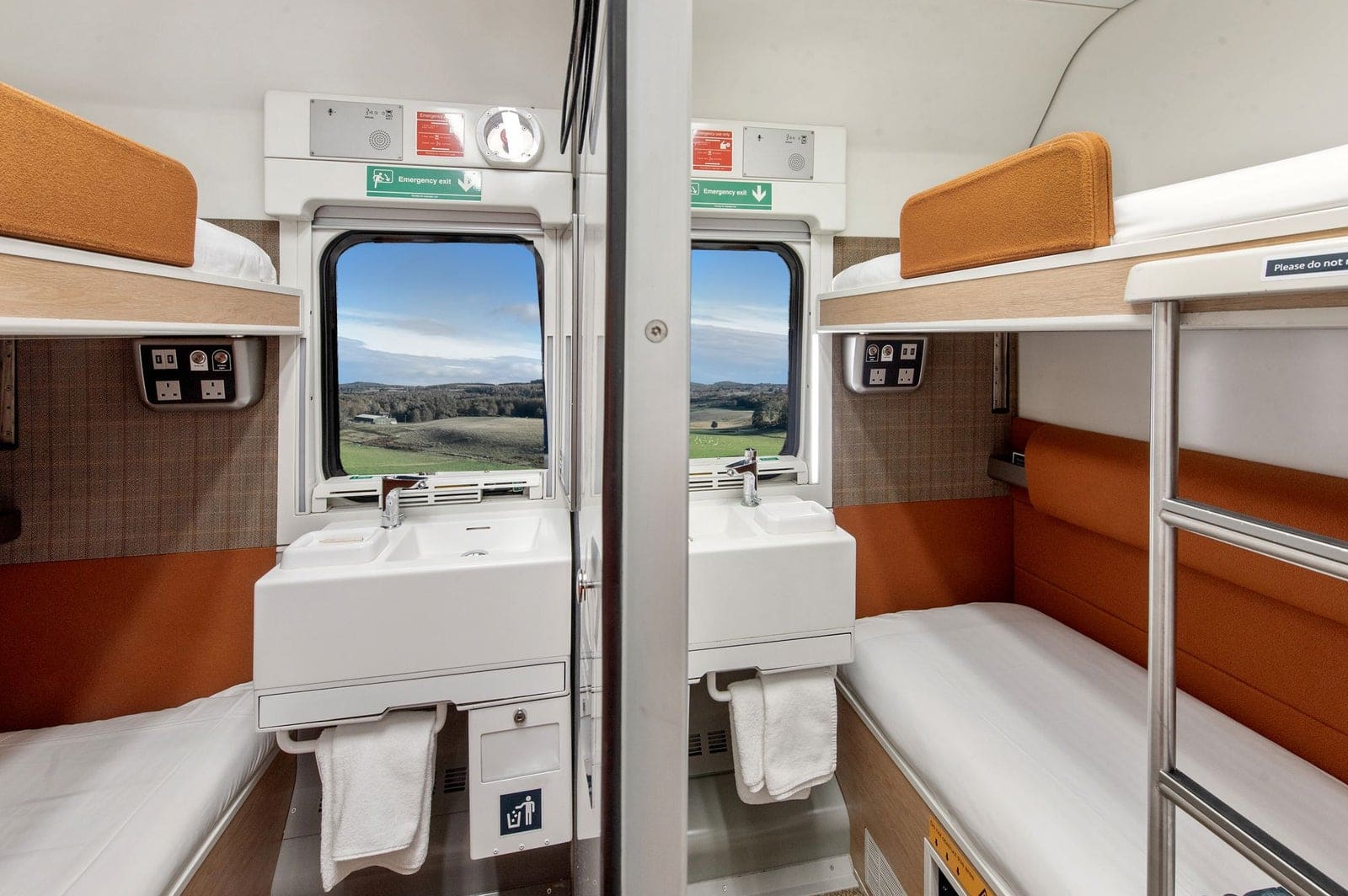
Five room types are available, from reclining chairs to double ensuite cabins. Basic seating ranges from £54 to £100. A classic single or twin room to Fort William costs between £210 and £405, depending on date and demand. The Club Car serves dishes made with Scottish ingredients and offers a bar for late-night drinks.
The Caledonian Sleeper is more expensive than most European options, but it replaces both transport and a hotel night in London or Scotland. For travelers heading to the Highlands, it saves a connection in Glasgow or Edinburgh and delivers you to Fort William in the morning, ready to start the day. The pricing reflects the UK market, where rail fares run higher than on the continent.
Cabins are modern, with better finishes than older European stock. The Club Car adds a social element missing from some overnight trains. But value depends on your route. For short hops to Edinburgh, a daytime train may make more sense. For Fort William or Inverness, the sleeper justifies the cost.
Santa Claus Express to Lapland
VR Finnish Railways operates a direct sleeper from Helsinki to Rovaniemi, passing through Tampere and Oulu. The double-decker Santa Claus Express runs up to 12 hours, with basic bunkbed cabins for two. Shared or private shower and toilet facilities are available.
Private cabins without showers start at €49. Cabins with ensuite showers begin at €74.30. Rovaniemi markets itself as Santa's official hometown, which draws family traffic in winter. But the train also serves travelers heading to Lapland for hiking, skiing, or aurora viewing. The cabins are simple but clean, and the price undercuts flying when you factor in a hotel night.
The scenery is similar to the Stockholm to Narvik route: boreal forest, frozen rivers, the slow transition from urban to wilderness. The train is slower than flying, but it's also calmer. You board in the evening, sleep through the night, and wake up in the far north without airport stress or baggage fees.
Sleeper Trains Through Italy
Trenitalia's InterCity Notte connects northern and southern Italy, with routes from Milan and Rome to Palermo, Sicily, and from Turin to Naples. The train to Sicily is transported by ferry across the Strait of Messina, a process that adds time but also a unique element to the journey.
Accommodation includes seats, couchettes, and sleeper cabins. Single, double, or triple occupancy sleepers come with air conditioning, a washbasin, power sockets, and continental breakfast. Private sleeper cabins start at €122.
Italy's sleeper network isn't as extensive as Austria's, but it covers key north-south corridors that would otherwise require flights or long daytime trains. The ferry crossing is a novelty, though passengers usually sleep through it. The cabins are older than those on Nightjet or the Caledonian Sleeper, but they function well enough for an overnight trip.
For travelers moving between Rome and Sicily, or Milan and the south, InterCity Notte offers a practical alternative to budget airlines. The breakfast is modest, the beds narrow, but the math works if you're already planning to spend a night somewhere along the route.
What You're Actually Paying For
Budget sleeper trains strip out the extras. No turndown service, no welcome champagne, no designer toiletries. What remains is a bed, a door, and forward motion. The trade-off is financial and experiential. You save money and gain time, but you sacrifice comfort and space.
These services work best for travelers who value efficiency over luxury, who see the journey as part of the trip rather than an interruption. They also work for people who would otherwise book a budget hotel and an early train, or a late flight and a taxi at midnight. The sleeper train consolidates those expenses into one ticket and lets you wake up where you need to be.
The market for accessible overnight rail exists because not everyone wants or can afford the luxury option. European Sleeper and Nox are betting on that gap. The routes above prove it's been there all along.