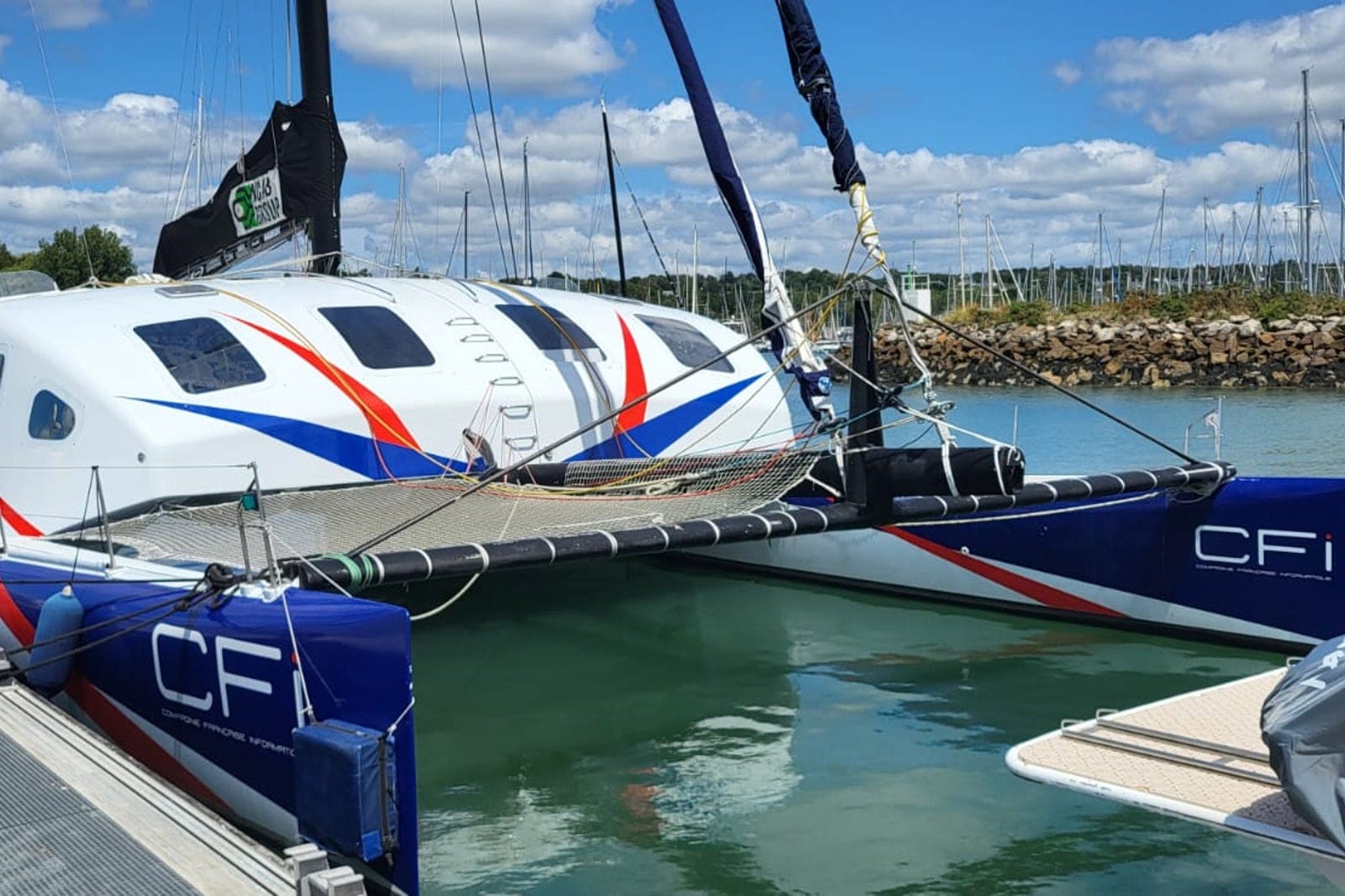
A Six-Day Experiment
Next month, a high-performance catamaran will begin test runs between Shoreham in West Sussex and Fécamp in Normandy, carrying twelve passengers per crossing over eight hours. SailLink, which already operates a wind-powered service between Dover and Boulogne-sur-Mer, announced the trial will run from 8 to 13 September at £220 per one-way ticket.
The pilot phase uses the Mer Agitée, an 18-metre catamaran built from salvaged ocean-racing components. The vessel can store up to eight bicycles inside, with bike passage priced at £10. Passengers can book return trips for £440 through SailLink's booking system.
If the September results prove viable, the company plans to work with both ports to establish a second scheduled cross-Channel route. The trial represents an expansion of SailLink's model beyond its existing Dover-Boulogne operation, which the company describes as the first scheduled wind-powered ferry service on this route.
Why This Route Matters
The Shoreham-Fécamp connection targets a specific traveler: cyclists and bikepackers looking to link long-distance routes across the Channel without relying on conventional ferries or trains. England's National Cycle Route 2 runs through Shoreham, while Fécamp sits on La Vélomaritime, part of the EuroVelo 4 network, and the GR21 coastal path.
Beyond cycling, both ports offer practical onward links. Shoreham lies 40 minutes by train from Gatwick Airport, making it accessible for travelers flying into London's second-busiest hub. Fécamp serves as the home port for New Towt, a sail-powered cargo company that recently began offering passenger berths on transatlantic routes to North and South America.
Passport checks happen at the pontoon in each port, mirroring the process SailLink uses on its Dover-Boulogne service. The setup avoids the larger terminal infrastructure of major ferry ports, though it also means fewer amenities and tighter schedules.
Testing Demand for Sailing Ferries
SailLink founder and skipper Andrew Simons framed the trial as proof of concept. The company launched to demonstrate that wind-powered ferries could function as reliable scheduled services, not one-off demonstrations. Expanding to a second coast with a different boat and skipper tests whether the model can scale beyond Dover.
The eight-hour crossing time is significantly longer than conventional ferries, which complete the Dover-Calais route in roughly 90 minutes. But SailLink's pitch is not speed. It is lower emissions, a quieter journey, and an appeal to travelers who prioritize sustainability or simply prefer sailing over diesel engines.
The trial's capacity is small by ferry standards. Twelve passengers per crossing limits revenue and accessibility, though it also keeps operational complexity low during the testing phase. If demand justifies it, SailLink could explore larger vessels or more frequent departures on the route.
What Comes Next
September's six-day window will give SailLink and the two ports data on passenger interest, weather conditions, and logistical friction points. The company has not specified what metrics would trigger a full launch, but sustained bookings and smooth operations would likely be prerequisites.
For now, the trial is a niche offering. Cyclists with flexible schedules and a willingness to spend eight hours at sea will find it appealing. Whether that audience is large enough to support a year-round service remains an open question. But as aviation and shipping face mounting pressure to reduce emissions, experiments like this one test whether slower, wind-powered travel can carve out a commercial foothold.