A Crisis Without Modern Precedent
The scale of destruction unfolding across southwestern Europe has few parallels in recent memory. Authorities in both Spain and France are grappling with wildfires that have forced more than 300,000 people from their homes, with officials now considering a complete evacuation of Bordeaux, a city of nearly 260,000 residents in its urban core. French Prime Minister Sebastien Lecornu described the situation bluntly: the intensity of these blazes exceeds anything the country has witnessed before.
The fires have prompted national emergency declarations and drawn military resources into firefighting efforts. The European Union has mobilized additional aircraft and helicopters to assist ground crews already stretched thin across multiple active fire zones. For travelers with plans in the region, the disruption extends well beyond temporary road closures or smoky skies. This is a humanitarian emergency that has fundamentally altered conditions across large swaths of two of Europe's most visited countries.
What Is Happening on the Ground
In Spain, the Madrid region and the province of Ávila are bearing the brunt of what Isabel Díaz Ayuso, Madrid's regional president, has called the worst fire in the area's recorded history. The convergence of extreme heat, sustained winds, and multiple blazes merging into larger fire complexes has created conditions that overwhelm standard suppression tactics. Spain's national government has declared a state of emergency in response.
France is facing similarly dire circumstances. The Gironde department, home to celebrated wine country and Atlantic beach towns, has seen evacuations around Saumos, Le Porge, and Lège-Cap-Ferret. Campsites and tourist lodgings have been emptied on short notice. A separate fire front is active in the Landes department, affecting Biscarrosse and surrounding communities. Roads are closing with little warning as fire behavior shifts, and access to entire zones has been restricted.
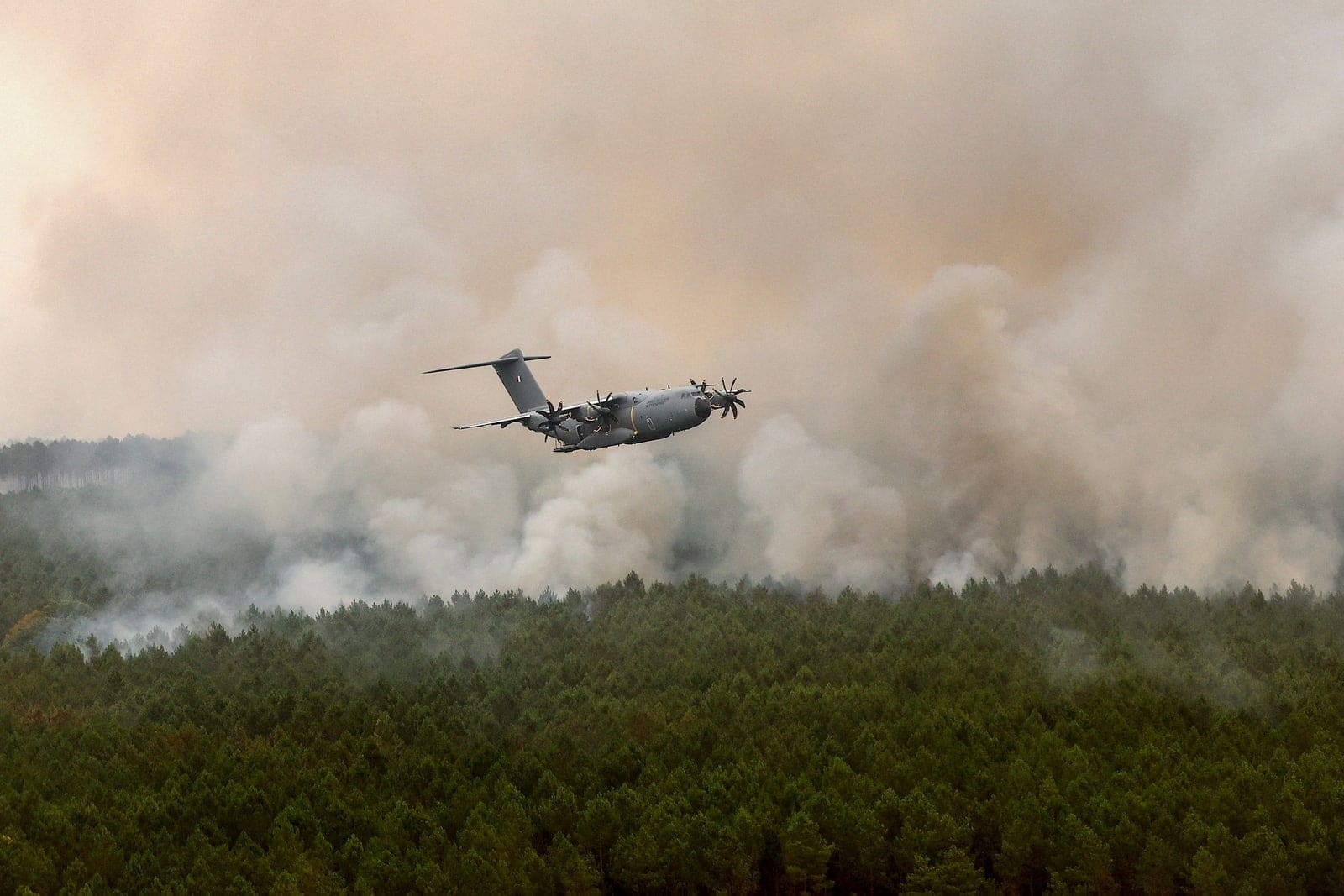
The French military has been called in to support civilian firefighting operations, a measure that underscores both the severity of the crisis and the limits of existing emergency infrastructure. Water bombers are making repeated runs over active fire lines, but the sheer geographic spread of the blazes means resources are constantly being reallocated.
Practical Implications for Travelers
UK government travel advisories now explicitly warn against moving through fire-affected areas in Madrid and Ávila. Those already in Spain are urged to follow instructions from local authorities at all times, avoid affected zones, and monitor updates from emergency services. The emergency number 112 remains the contact point for anyone requiring immediate assistance.
For those in or traveling to France, the advice centers on flexibility and vigilance. The Prefecture of Gironde has established a public information line, reachable from 9 a.m. to 5 p.m. at +33 (0)9 70 80 90 40, with option 1 dedicated to fire-related inquiries. French authorities also maintain a live wildfire map that tracks active blazes in real time, a tool that has become essential for anyone navigating the region.
Travelers planning to cross between France and Spain, whether by road or rail, face compounded uncertainty. UK advisories recommend checking guidance for both countries before departure. Those approaching Spain via Gibraltar are similarly advised to review conditions along their intended route.
The disruption is not limited to those already en route. Hotels, campsites, and short-term rental operators in affected areas are fielding cancellations and rebooking requests at unprecedented volume. Some properties have been evacuated entirely, leaving guests to find alternative accommodation on short notice and often at higher cost. Travel insurance policies are being tested, particularly those with exclusions for natural disasters or government-issued travel warnings.
Why This Season Is Different
Wildfires are not new to Mediterranean Europe. The region has long experienced seasonal fire risk, particularly in late summer when vegetation is dry and temperatures peak. But the 2026 season has broken from historical patterns in both timing and intensity. The fires in Spain and France have erupted earlier than typical peak fire months, and their rapid spread suggests fuel loads and weather conditions are aligning in ways that challenge established firefighting protocols.
Climate scientists have documented a lengthening of the fire season across southern Europe over the past two decades, with hotter, drier conditions creating longer windows of vulnerability. The convergence of multiple large fires, as seen in Madrid, is a phenomenon that strains response capacity and increases the likelihood of catastrophic outcomes. When fires merge, they can generate their own weather systems, producing erratic winds that make containment nearly impossible.
The human toll is immediate. Displacement of more than 300,000 people represents not just a logistical challenge but a social and economic disruption that will ripple through affected communities for months. Tourism-dependent areas in Gironde and Landes face a lost season, with campgrounds and coastal resorts sitting empty at what should be the height of summer demand.
What Comes Next
For travelers, the short-term calculus is straightforward: if your plans take you through Madrid, Ávila, Gironde, or Landes, assume disruption. Roads may close, accommodations may be unavailable, and air quality may deteriorate rapidly as wind patterns shift. The broader question is whether this season represents a new baseline for fire risk in southern Europe, one that will require travelers to factor wildfire season into trip planning the way they already account for hurricane season in the Caribbean or monsoon season in South Asia.
The fires are still burning. Containment estimates remain fluid, and weather forecasts show little immediate relief in the form of rain or cooler temperatures. French and Spanish authorities are coordinating with EU partners, but the scale of the crisis has already exceeded the capacity of any single nation to manage independently. The deployment of military assets and cross-border aid reflects both the gravity of the situation and the recognition that this is not a problem that will resolve quickly.
For now, the advice from officials is consistent: stay informed, follow local guidance, and be prepared to change plans on short notice. The fires have already rewritten the summer for hundreds of thousands of residents. For travelers, the message is clear: this is not a season to assume conditions will hold steady.