A Four-Week Display at Departure Gates
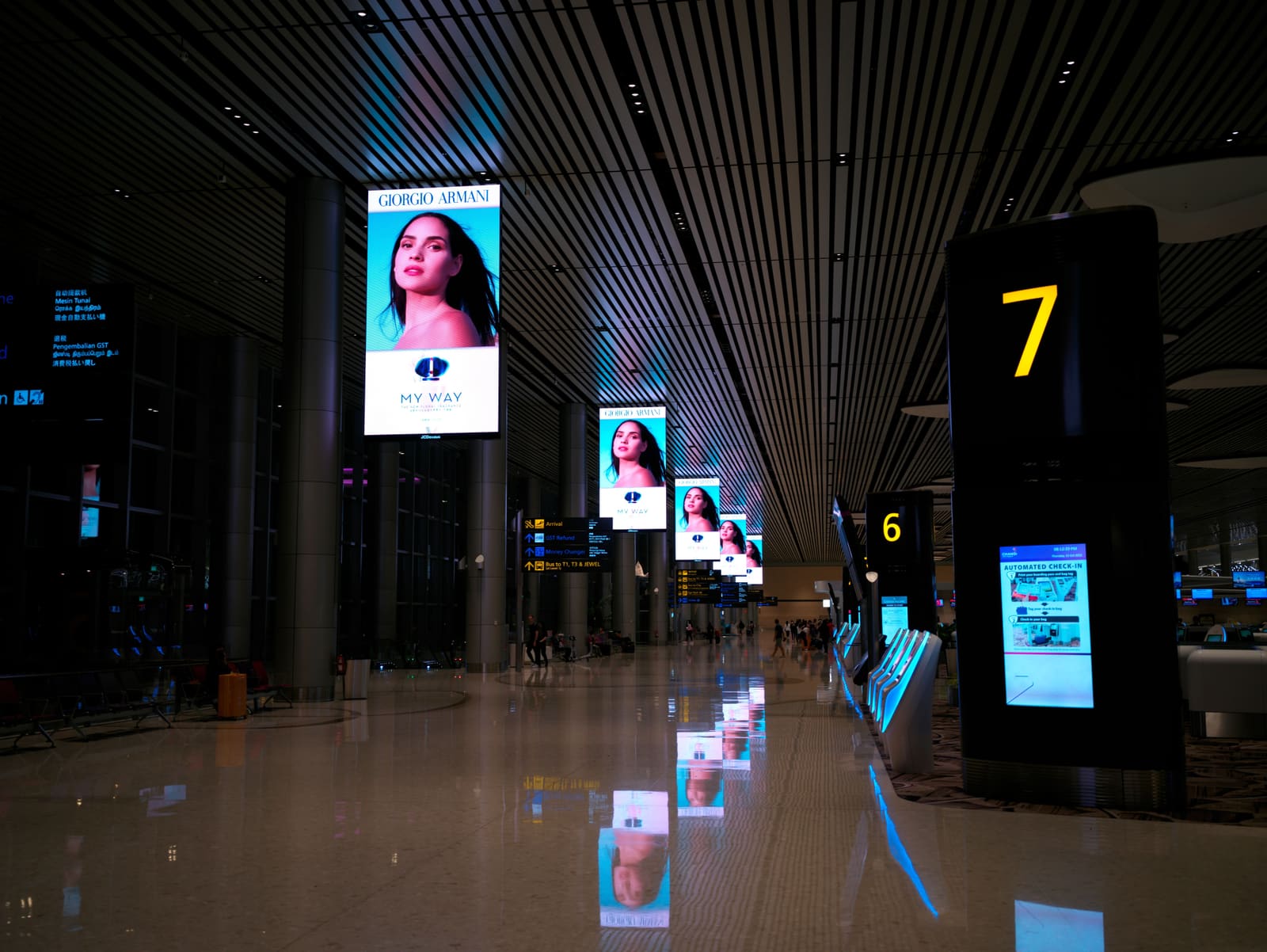
On 27 October, China's mission to the European Union opened a month-long display in Brussels Airport's departure zones. The installation uses photographs and messaging to remind outbound passengers that 25 EU member states now fall under a unilateral waiver allowing ordinary passport holders to stay in China for up to 30 days without submitting applications or paying fees.
Ambassador Cai Run, who heads the Chinese mission, led the opening ceremony. Attendees included Eduardo Santander of the European Travel Commission, European Parliament member Ondřej Dostál, Piet Steel from the Europe-Asia Center, and Li Yan, the acting head of China's embassy in Belgium.
The timing coincides with a period of route expansion. Brussels gained direct links to Beijing, Chengdu, Chongqing and Hong Kong over the past 18 months, giving passengers more one-stop options to different parts of China. Pairing new flights with simplified entry procedures can reduce the friction between initial interest and an actual booking.
How the Waiver Works
The exemption applies to citizens of Austria, Belgium, Bulgaria, Croatia, Cyprus, Denmark, Estonia, Finland, France, Germany, Greece, Hungary, Ireland, Italy, Latvia, Luxembourg, Malta, the Netherlands, Poland, Portugal, Romania, Slovakia, Slovenia, Spain and Sweden. That leaves Czechia and Lithuania as the two EU states not covered by this particular arrangement.
According to China's mission to the European Union, eligible travellers may enter for tourism, business meetings, family visits, exchanges or transit. The waiver does not cover paid work, formal enrolment in educational programmes or journalism, all of which require the standard visa process. Anyone planning to remain beyond 30 days must also apply in advance.
Border officials retain discretion at entry points, and Chinese authorities recommend carrying hotel confirmations, onward tickets or invitation letters to show the purpose of the trip. The passport must remain valid for the intended duration.
The scheme began in December 2023 with six countries and a 15-day limit. Belgium joined in March 2024, and the permitted stay doubled to 30 days in November 2024. The current arrangement runs until 31 December 2026.
Why Simpler Entry Matters
Removing the application step and the associated fee makes short trips more feasible, particularly for travellers deciding between multiple destinations or weighing the administrative burden of a journey. A 30-day window also accommodates longer itineraries that combine business stops with personal travel or multi-city tours.
Cai Run said the goal is to encourage Europeans to experience China's cultural sites, varied geography and hospitality, and to deepen mutual understanding through face-to-face contact. Eduardo Santander, who has visited China repeatedly, said he hopes the policy will prompt more Europeans to make the journey and that European authorities will eventually offer comparable ease of access for Chinese visitors.
Santander also argued that the value of tourism should be measured by its impact on local communities rather than raw arrival figures or spending totals. He described travel as a force for dialogue and economic development, especially when geopolitical tensions run high.
Flight Networks Fill the Gap
The display at Brussels Airport arrives as the city's connectivity to China has grown. Cathay Pacific restarted Brussels-Hong Kong service in August 2025. Hainan Airlines added Chongqing later that year, and Air China launched Beijing and Chengdu routes in March 2026.
Santander called for even stronger links to secondary and tertiary Chinese cities, citing his own trips to Harbin and Urumqi as examples of destinations that remain unfamiliar to most European travellers. Expanding the network beyond gateway hubs can distribute visitor flows more evenly and open up regions that see fewer international arrivals.
For airlines, the combination of waived entry requirements and pent-up interest after the pandemic creates an opportunity to rebuild schedules. For travellers, more direct options reduce connection times and broaden the range of places within practical reach.
Cultural Exchanges and a Proposal for 2028
The airport campaign follows a year of events marking the 50th anniversary of diplomatic ties between China and the European Union in 2025. Recent activities in Brussels have included an exhibition on Zhejiang's heritage, with live demonstrations of traditional crafts, and a table tennis tournament in September 2026 that paired Chinese and European players in mixed teams.
Santander proposed another EU-China Tourism Year in 2028, which would coincide with the European Travel Commission's 80th anniversary and mark a decade since the 2018 edition. He said he plans to raise the idea during a visit to Beijing early next year, emphasising the need to communicate the importance of the relationship to citizens at large, not only political or business leaders.
The Brussels display extends that focus to a broader audience, placing information about the waiver in front of passengers as they prepare to board flights. Whether the campaign translates into measurable increases in bookings will depend on factors beyond awareness, including fare levels, the appeal of competing destinations and the ease of navigating payment systems and language barriers once travellers arrive.
For now, the message is straightforward: eligible Europeans can pack a bag and go, with one less form to fill and one less fee to pay.