Staffing Decisions Signal Cautious Optimism
Hotels across Dubai have begun reversing workforce decisions made at the height of the U.S.-Iran conflict, with properties now recalling employees who were temporarily transferred to other markets. Indian Hotels Company, the operator behind the Taj brand, has started returning team members to its Dubai portfolio as business volumes improve, according to Saurabh Tiwari, vice president of operations for the Middle East, Maldives, and Sri Lanka.
The company reassigned staff to properties within its regional network when international arrivals slowed sharply earlier this year. Now, operational departments including front desk, housekeeping, food service, and kitchen teams are being replenished as guest numbers climb back. The move reflects a measured bet that demand will hold through the final quarter of 2026, though industry observers note that the pace of rehiring varies widely by brand and location within the United Arab Emirates.
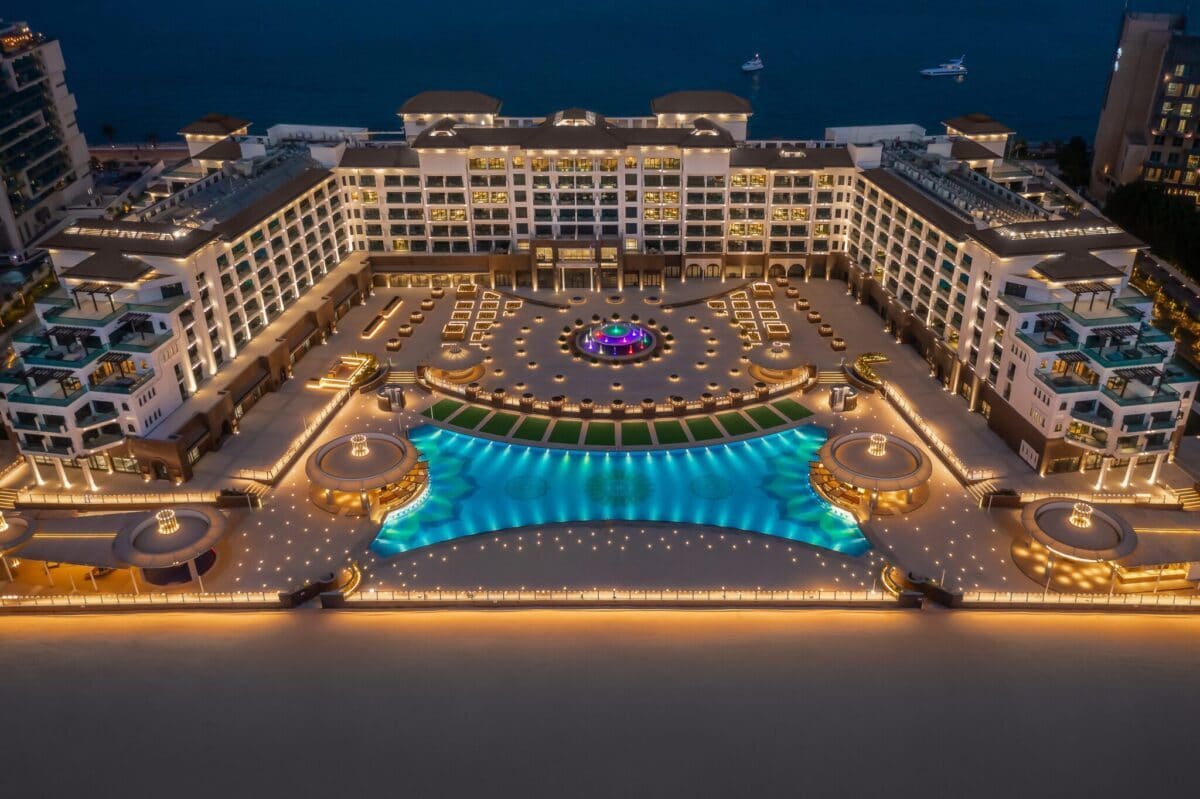
Taj Dubai has sustained occupancy rates in the upper 70-percent range over the past two months, while Taj Exotica at The Palm has climbed from roughly 36 percent in June to 50 percent in July, with projections placing August above 60 percent, according to Tiwari. Much of that uptick has come from travelers in the United Kingdom and continental Europe, markets that have shown resilience even as long-haul Asian demand remains subdued.
A Partial Rebound, Not a Full Revival
The figures suggest a recovery underway, but one that remains far from complete. Occupancy in the mid-to-high 70s would have been considered soft by Dubai's pre-conflict standards, when many full-service properties routinely ran above 85 percent during the summer months. The fact that a resort on The Palm is projecting 60 percent for August, traditionally a slower period, indicates that leisure demand is returning faster than business travel.
What is less clear is whether this momentum will carry into the fourth quarter, when Dubai typically sees a surge in corporate events, conferences, and winter leisure bookings from Europe and Asia. Some operators remain hesitant to expand payrolls until forward bookings for October and November firm up. The conflict disrupted not only immediate travel plans but also the longer booking cycles that underpin group business and incentive travel, segments that generate higher revenue per available room.
Dubai's hotel supply has also shifted during the disruption. A number of properties used the downturn to accelerate renovations that had been postponed, taking rooms offline and compressing the denominator in occupancy calculations. As those rooms return to inventory in the coming months, the sector will face a clearer test of whether demand has genuinely recovered or whether recent gains are partly an artifact of constrained supply.
Regional Divergence Within the Emirates
Abu Dhabi's hotel market has weathered the conflict with notably less volatility than Dubai's. The capital's mix of government-related business, energy sector activity, and a smaller reliance on discretionary leisure travel has provided a more stable base of demand. Several operators have reported that Abu Dhabi properties maintained occupancy levels closer to historical norms throughout the disruption, even as their Dubai counterparts saw double-digit declines.
This divergence has implications for staffing strategy across the region. Hotels with portfolios spanning both emirates have had more flexibility to redeploy employees internally, smoothing out revenue shocks without resorting to layoffs. Single-asset operators in Dubai, by contrast, faced sharper choices: reduce headcount, compress hours, or absorb higher labor costs against falling revenue.
The short-term rental sector has added another layer of complexity. Apartments and holiday homes, which proliferated across Dubai in recent years, offered landlords a way to pivot toward domestic and regional guests when international arrivals stalled. That shift siphoned some leisure demand away from traditional hotels, particularly in the mid-market segment where price sensitivity is highest. As international travel resumes, the question is whether those guests will return to hotels or whether behavioral shifts during the conflict will prove sticky.
What Conditions Need to Align for Full Recovery
A sustained return to pre-conflict performance will require more than occupancy gains. Average daily rates, which softened as properties competed for a smaller pool of guests, need to recover in tandem. Revenue per available room, the industry's core profitability metric, remains below 2025 levels at most Dubai properties, even as occupancy inches upward. That gap reflects both lower rates and a shift in guest mix toward shorter stays and lower-spending segments.
International connectivity is another variable. While European routes have rebounded relatively quickly, long-haul traffic from East Asia and Australia remains constrained by insurance costs, routing complications, and lingering traveler caution. Dubai's role as a global hub depends on those connections, and a full recovery will be difficult to achieve if key source markets stay on the sidelines into 2027.
The broader geopolitical environment also weighs on forward bookings. Even as immediate hostilities have eased, the perception of risk lingers, particularly among corporate travel managers and group organizers who need to justify destination choices to boards and participants. Dubai's hotel sector has navigated regional volatility before, but the current episode has been notable for its duration and the extent to which it disrupted the emirate's reputation as a stable transit and leisure hub.
Implications for the Broader Gulf Market
The phased return of hotel staff in Dubai offers a window into how the Gulf's hospitality sector is managing workforce planning in an era of heightened uncertainty. The ability to move employees across properties and markets within a single corporate network has emerged as a competitive advantage, reducing the need for outright layoffs and preserving institutional knowledge that would be costly to rebuild.
Other hotel groups operating in the region are watching closely. If Taj's rehiring proves premature and demand falters again in the fourth quarter, the cost of bringing employees back only to redeploy them again will be substantial. Conversely, if the recovery accelerates and competitors delay their own rehiring, they risk losing market share during a critical rebound period as service levels suffer and guest satisfaction declines.
For now, the signals are mixed. Occupancy is rising, but from a low base. European demand is returning, but Asia remains quiet. Properties are reopening renovated wings, but that will test whether the market can absorb additional supply. The decisions being made in August will shape how Dubai's hotel sector enters 2027, and whether the disruption of the past year proves to be a temporary shock or a more lasting reset.