A Different Kind of Country House
A knock on the cabin door. Two staff members arrive with a wooden crate marked "BAR," preparing a blackberry-infused gin cocktail while holding an umbrella against the downpour. One jokes that the ritual is more enjoyable in July. An hour later, a golf cart ferries guests to the manor house for dinner: Cornish mussels in thyme and apple cider broth, roasted guinea fowl, wine-led conversation.
This is Wildhive Callow Hall, a 35-acre estate in Derbyshire that has reimagined the English country house format. The property sits near Ashbourne, at the southern gateway to Peak District National Park, roughly 70 minutes by car from Birmingham or Sheffield, 90 from Manchester, three hours from London. At its centre stands a Victorian manor that served as a private residence for over a century before conversion to a hotel in the 1980s. The Wildhive team, which also operates Eshott Hall on the Northumberland coast, took over in 2018 and redesigned the interiors in a contemporary, rustic style: natural materials, clean lines, bold but restrained colours. Room numbers are discreet; common areas with fireplaces feel residential rather than transactional.
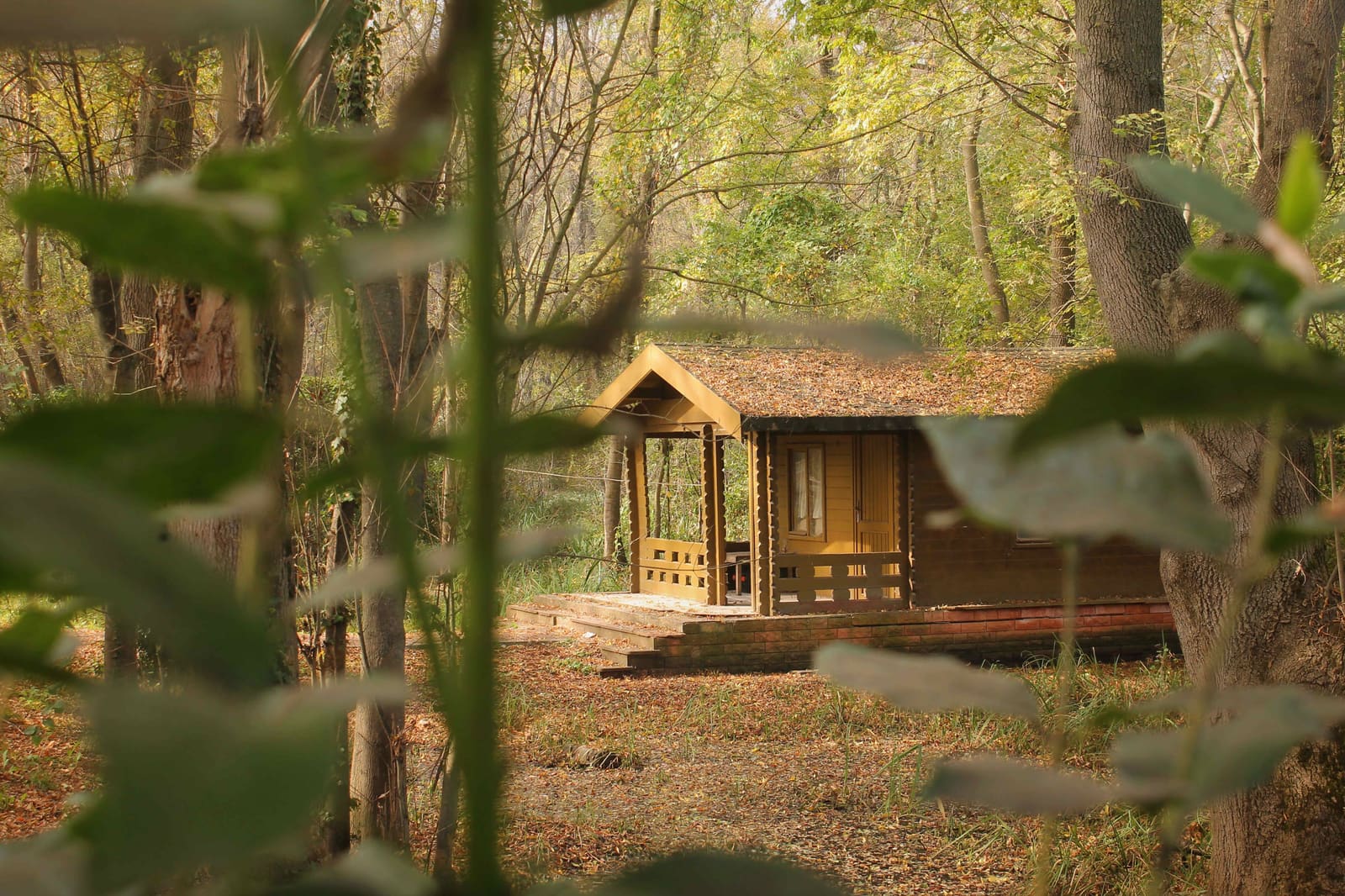
Surrounding the manor are manicured gardens, wild pastures, and woodland where the property's "Hives" and "Treehouses" stand. The Hives are compact two-person cabins with king-size beds, showers, and kitchenettes; each has a deck for stargazing and marshmallow roasting. Treehouses are larger, with two bedrooms, open-plan kitchens, and wraparound decks fitted with outdoor bathtubs.
Rooms and Accommodation Options
The manor house holds fifteen individually designed rooms across three tiers. Cosy Rooms are smaller, intended for couples, with king-size beds and either a shower or bath. Lovely Rooms have emperor-size beds, high ceilings, and can accommodate two adults and one child. Fabulous Rooms are the most spacious, with meadow views, showers, and freestanding tubs. All include complimentary coffee, tea, WiFi, and smart televisions.
The woodland cabins offer a different experience. Hives have king-size beds, showers, and basic kitchenettes with microwaves and mini-fridges. Treehouses, despite the name, sit on the ground beneath a canopy, with two bedrooms and full kitchen-living areas. The outdoor bathtub on the wraparound deck is a draw for those seeking immersion in the landscape without sacrificing comfort.
Dining and the Garden Room
The Garden Room restaurant anchors the property's food offering. Executive chef David Bukowicki oversees a rotating menu built around sustainably sourced local ingredients: Cornish mussels, Scottish scallops, guinea fowl, duck, Derbyshire lamb and beef, British cheeses. The kitchen serves breakfast (with hamper delivery to cabins), lunch, afternoon tea, dinner, a late-afternoon snack, and a special Sunday lunch. The wine list is extensive; the bar stocks ingredients for a range of cocktails.
Private dining is available in the Dovedale Room or outdoors under lantern-lit canopies. For families, the menu includes a Children's Afternoon Tea and kid-friendly options.
The limitation: it is the only restaurant on site. Guests staying more than a few days may find the repetition notable. The nearest pubs are a 20-minute walk or short drive away in Ashbourne.
Wellness and Activities
A converted coach house now holds a gym, yoga studio, and treatment rooms offering facials, massages, sound therapy, light therapy, and sensory sessions. Thermal therapies include halotherapy, saunas, and cold plunges in a "vitality cabin."
For children aged 9 to 12, the property runs a Forest Camp programme with crafts and outdoor activities. Rental bikes are available in children's sizes.
The estate lacks a swimming pool and sits far from nightlife. The appeal is retreat, not variety.
The Peak District and Beyond
The immediate surroundings offer the 13-mile Tissington Trail, part of a larger cycling network in Peak District National Park. Traditional and electric-assisted bicycles are available for rent.
The park's name derives not from mountains but from the Pecsaetan, an Anglo-Saxon tribe. The landscape mixes green meadows, rolling hills, and rugged formations like Stanage Edge, a gritstone escarpment popular for hiking, mountain biking, rock climbing, and paragliding, roughly an hour north of the property.
Ashbourne, the nearest town, has pubs, cafes, restaurants, and The Clayrooms, a pottery studio offering hands-on classes. A half-hour drive brings visitors to Haddon Hall, a manor house in continuous use for over nine centuries, open to tourists and frequently used as a filming location for BBC productions and period dramas.
What Works, What Doesn't
Wildhive Callow Hall succeeds in making guests feel like house visitors rather than hotel patrons. The staff are notably friendly; the dressing drink service, even in pouring rain, exemplifies the tone. The decor feels fresh without abandoning country-house character. The woodland cabins provide immersion without discomfort.
The trade-offs are inherent to the format. One restaurant means limited dining variety. No pool, no nearby nightlife, no bustle. The property is designed for those seeking total retreat from urban life, and it delivers on that promise. For guests wanting more options within walking distance, or a base for active exploration rather than stillness, the fit may be less natural.
Wildhive Callow Hall is a rethinking, not a reinvention. The manor-house bones remain; the additions are cabins in the woods, a contemporary design sensibility, and a focus on local ingredients. The Peak District provides the backdrop. The experience depends on whether you want to be there for the landscape, the quiet, and the occasional blackberry gin cocktail delivered to your door in the rain.