The First Pieces of a Massive Puzzle
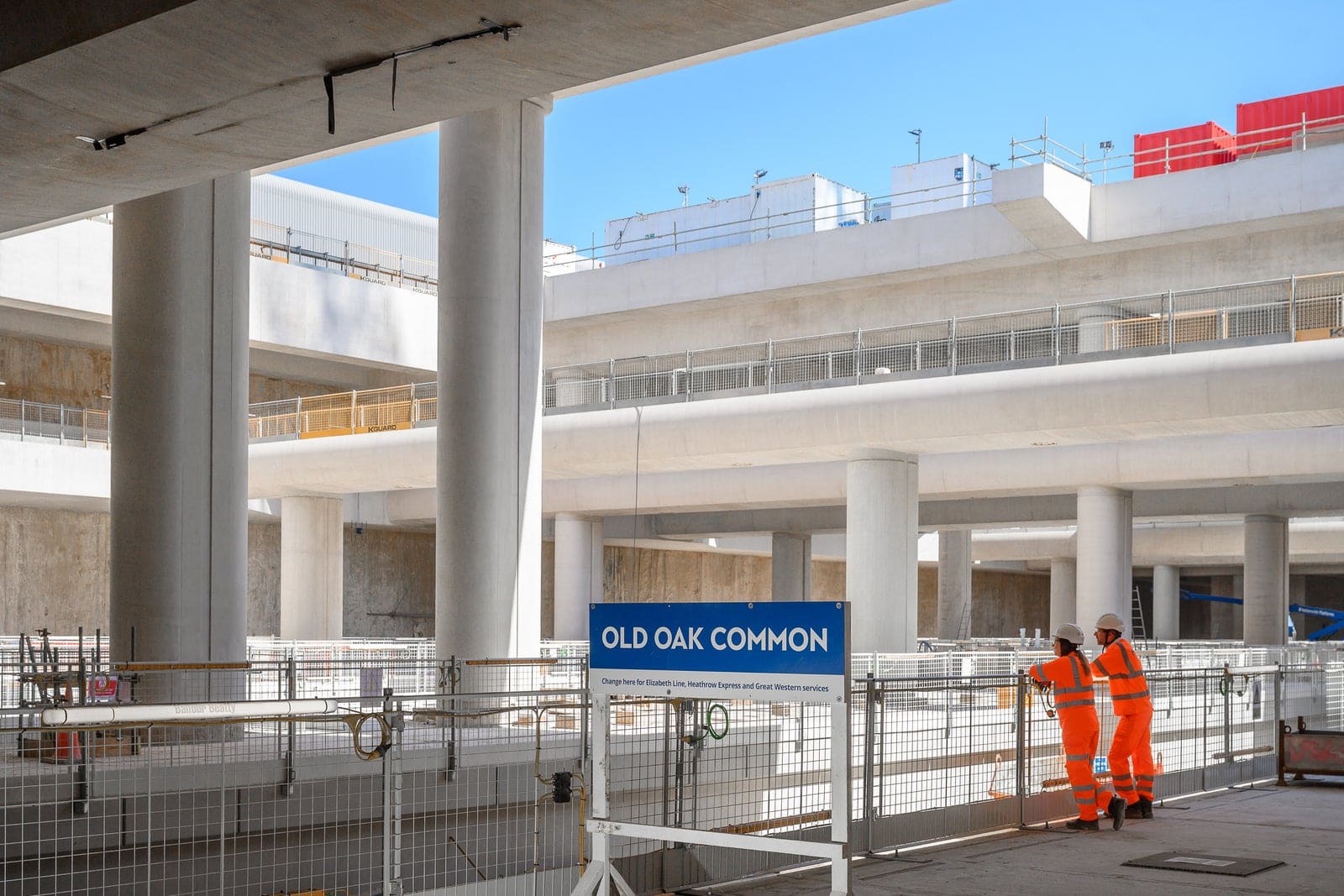
Deep beneath west London, six platforms now sit finished, 450 meters underground. They are the first completed sections of Old Oak Common, a station that will eventually handle a quarter of a million passengers every day. The platforms were unveiled in mid-August, a tangible milestone in a project that has been more promise than structure for years.
The underground platforms will serve high-speed trains running north to the Midlands, Manchester, and eventually Scotland. Above them, eight more platforms will be built at ground level for conventional services: the Elizabeth line, Great Western routes, and Heathrow Express. That makes fourteen platforms in total, more than most London terminals currently operate.
A Hub Built on Connections
Old Oak Common is not a destination station. It is a transfer point, designed to knit together high-speed and conventional rail in a way that Britain has not attempted before. Passengers will be able to step off a high-speed train from Birmingham and connect directly to the Elizabeth line without leaving the building. The same applies to Great Western services heading west, or Heathrow Express trains heading to the airport.
According to HS2, the organization building the high-speed network, the station will eventually link passengers to more than 100 destinations. That figure relies on the existing West Coast Main Line and Great Western network, which Old Oak Common will plug into. The Elizabeth line, which opened in stages between 2022 and 2023, will add Old Oak Common as its 42nd stop.
The projected passenger count of 250,000 per day would make Old Oak Common busier than London's current heaviest stations. For context, Waterloo, Britain's busiest station by footfall, handled around 94 million passengers in 2019, averaging roughly 260,000 per day. Old Oak Common is expected to approach that level, though it will serve a different function: less a terminus, more a junction.
What Comes Next
Construction on the underground platforms began in April 2025. Now that the first six are finished, work will shift to the surface. Engineers expect to start installing platform slabs for the eight ground-level platforms later this year. The station roof, which will cover both levels, is scheduled to begin installation in early 2027.
Kim Kapur, HS2's area director for Old Oak Common, described the underground space as visually striking. Standing inside the completed box, it is possible to see where passengers will board and alight, even if the trains themselves are not yet running. The scale is large, but the work remaining is larger.
Tunnels on either side of the underground box still need to be finished. The surface platforms need to be built. The roof needs to go up. And beyond the station itself, the surrounding area is being reshaped. A new neighborhood is planned around Old Oak Common, part of a broader regeneration effort in this corner of west London that has historically been light industrial and rail yards.
The Bigger Picture
Old Oak Common is the most visible piece of HS2's London terminus plans, but it is not the whole story. The original plan called for high-speed trains to continue east from Old Oak Common into central London, terminating at Euston. That segment has been subject to repeated delays, budget reviews, and political uncertainty.
If Euston is eventually completed as planned, Old Oak Common will serve as an interchange rather than the end of the line. If not, it becomes the de facto London terminus for high-speed services. Either way, the station will carry significant traffic.
The station's success will depend on how well it integrates with the rest of London's transport network. The Elizabeth line gives it a direct link to central London, Canary Wharf, and Heathrow. The Great Western Main Line connects it to Reading, Bristol, and South Wales. The West Coast Main Line, accessed via high-speed services, reaches Birmingham, Manchester, Liverpool, and Glasgow.
But integration is not just about rail connections. It is about how people move through the station, how long transfers take, and whether the surrounding area develops in a way that makes Old Oak Common feel like part of the city rather than an isolated hub. Those questions will not be answered until the station opens, which is still several years away.
A Station Without Trains
Old Oak Common is now a construction site with finished platforms but no trains. The high-speed rolling stock that will eventually serve these platforms is still being tested and delivered. The tunnels that will carry them are still being bored. The conventional platforms above are still being built.
What exists now is a glimpse of what the station will become: a deep, concrete space designed to move large numbers of people quickly between different types of trains. It is functional rather than grand, a piece of infrastructure built to do a job rather than make a statement.
The station is expected to open in the early 2030s, though exact dates remain uncertain. When it does, it will mark a shift in how London's rail network operates, moving some of the load away from central terminals and into a new hub on the western edge of the city. Whether that shift works as planned will depend on factors beyond the station itself: the completion of the high-speed network, the reliability of connections, and the willingness of passengers to transfer rather than travel direct.
For now, Old Oak Common is a set of platforms waiting for trains, and a promise that Britain's rail network is being rebuilt for higher speeds and greater capacity. The platforms are real. The rest remains to be seen.