A Different Way Across
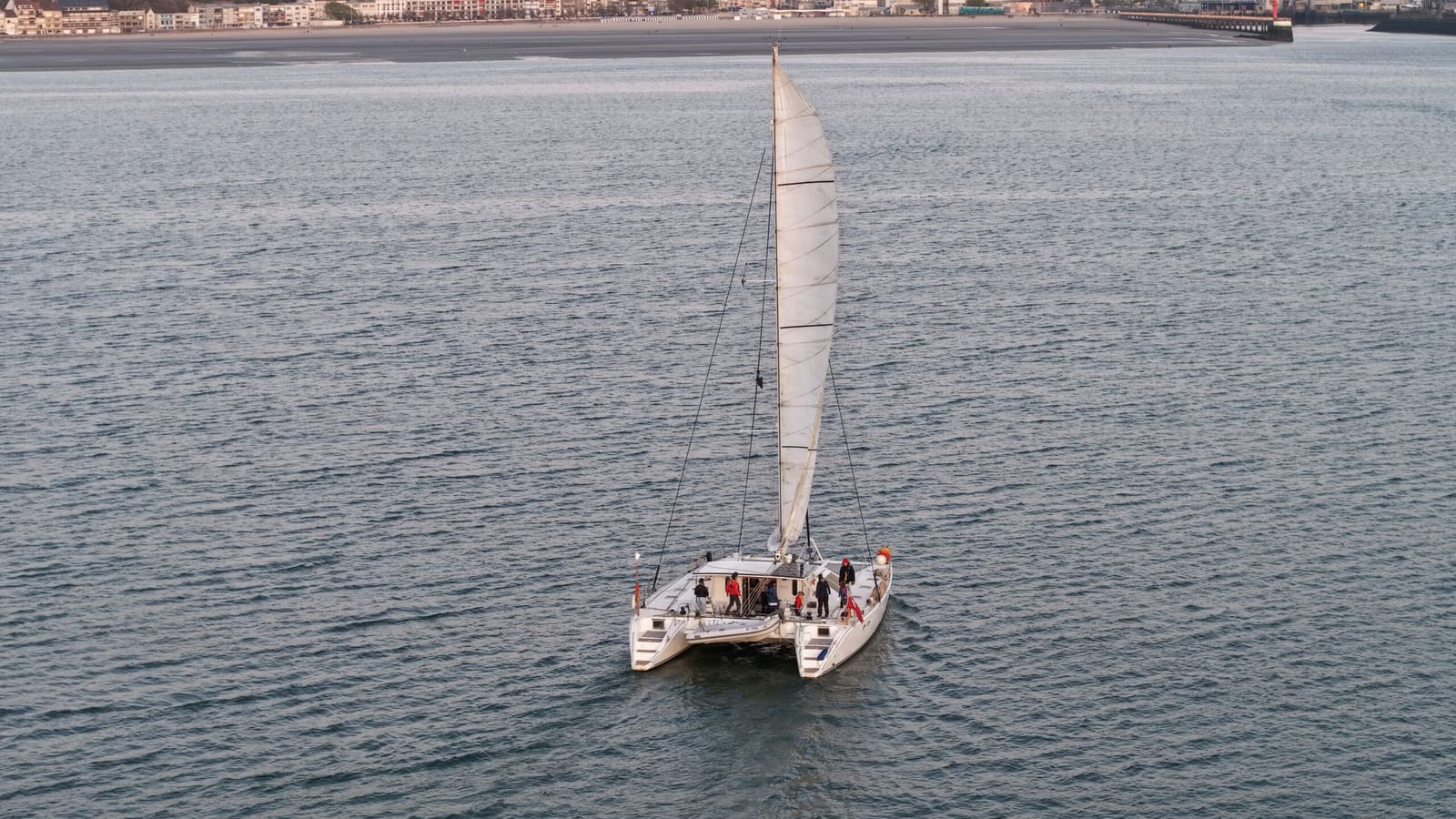
Crossing the English Channel usually means large ferries, crowded terminals, and rows of fluorescent-lit shops selling spirits and chocolate. A new trial route takes a different approach. SailLink, a company that already runs a wind-powered service between Dover and Boulogne-sur-Mer, has launched a second crossing linking Shoreham-by-Sea on England's south coast with Fécamp in Normandy. The vessel is an 18-metre catamaran called Mer Agitée, built from salvaged ocean-racing parts and carrying up to 12 passengers plus bicycles. The trial runs from 8 to 13 September 2026.
The crossing is slower than a conventional ferry and depends on weather, but it offers something ferries don't: open decks, close contact with the water, and views of the chalk cliffs on both sides of the Channel. For anyone tired of the commercial churn of standard crossings, it is a deliberate step backwards.
Who Sails It
The skipper is Michel Desjoyeaux, a French sailor who has won the Vendée Globe twice. That race involves sailing solo around the world non-stop, often in severe conditions, and is considered one of the most gruelling endurance tests in competitive sailing. SailLink founder Andrew Simons co-sails the boat.
Mer Agitée was assembled from recycled racing components, including a 23-metre mast and rudders taken from one of Desjoyeaux's former IMOCA 60 race boats. The catamaran carries 165 square metres of sail and is rigged for speed rather than comfort, though passengers sit on deck rather than below.
How It Works in Practice
SailLink's existing Dover to Boulogne route carried 465 passengers and 135 bicycles in the past year, according to the company. Nearly 70 percent of those crossings were completed under sail alone. Engines are used when wind drops or when manoeuvring in and out of harbour.
The new Shoreham to Fécamp route follows the same model. Passengers board from marinas rather than ferry terminals, and passport checks happen at the pontoon. There are no departure lounges, no announcements over loudspeakers, no queues at duty-free counters. The experience is closer to boarding a private yacht than a public ferry, though it is a scheduled service open to anyone willing to pay.
Capacity is limited to 12 passengers and eight bicycles per crossing. That scale keeps things quiet but also makes the service vulnerable to cancellations if bookings are thin or weather turns poor.
Who It Appeals To
Cyclists are an obvious audience. Shoreham-by-Sea sits on National Cycle Route 2 and the Downs Link, making it easy to pedal onward into the South Downs or along the coast. Fécamp connects to La Vélomaritime, part of the long-distance EuroVelo 4 route, and the GR21 coastal trail along Normandy's Alabaster Coast. Both towns are small enough that a bicycle is practical for getting around.
For non-cyclists, Shoreham has a direct rail line along the coast and is 40 minutes by train from Gatwick Airport. Fécamp is less connected but reachable by bus or car from larger Norman towns. The route is not designed for speed or convenience in the traditional sense. It is designed for people who want the crossing itself to be part of the trip, not a gap to endure between destinations.
What It Costs
Fares start at £220 for a one-way ticket and £440 for a return, according to SailLink. Bicycles cost an additional £10 each way. That is considerably more expensive than a standard ferry ticket on a commercial operator, where foot passengers can often cross for under £50 return and cyclists pay a modest supplement.
The premium reflects the small scale, the reliance on wind, and the niche appeal. It is not a budget option, but it is not marketed as one. The comparison is less with a Eurotunnel ticket and more with a skippered yacht charter, except that this version runs on a schedule and does not require you to know anyone with a boat.
The Bigger Picture
SailLink's two routes are part of a broader push to reduce emissions in short-sea transport. Ferries are diesel-heavy, and the Channel is one of the busiest shipping lanes in the world. Wind-powered passenger vessels will not replace conventional ferries, but they can offer a lower-carbon alternative for travellers willing to adjust their expectations around speed and schedule.
The trial period for the Shoreham to Fécamp route is short, and SailLink has not yet announced timetables or whether the service will continue beyond September. If demand is strong enough, the company has said it will make the route permanent. That decision will depend on how many people are willing to trade convenience for wind, deck space, and a quieter crossing.
Tickets are available through SailLink's website. The company has not disclosed how many bookings have been made so far.