A Seasonal Event Turns Permanent
Since 2011, beaches across the Caribbean, Central America, South Florida and the Gulf of Mexico have been receiving visitors they didn't ask for: massive piles of brown sargassum seaweed. What used to be a predictable seasonal occurrence has shifted into something more stubborn. Coastlines that once cleared naturally now stay covered for weeks or months at a time, and the smell of decomposing seaweed, often compared to rotten eggs, lingers in resort towns and fishing villages alike.
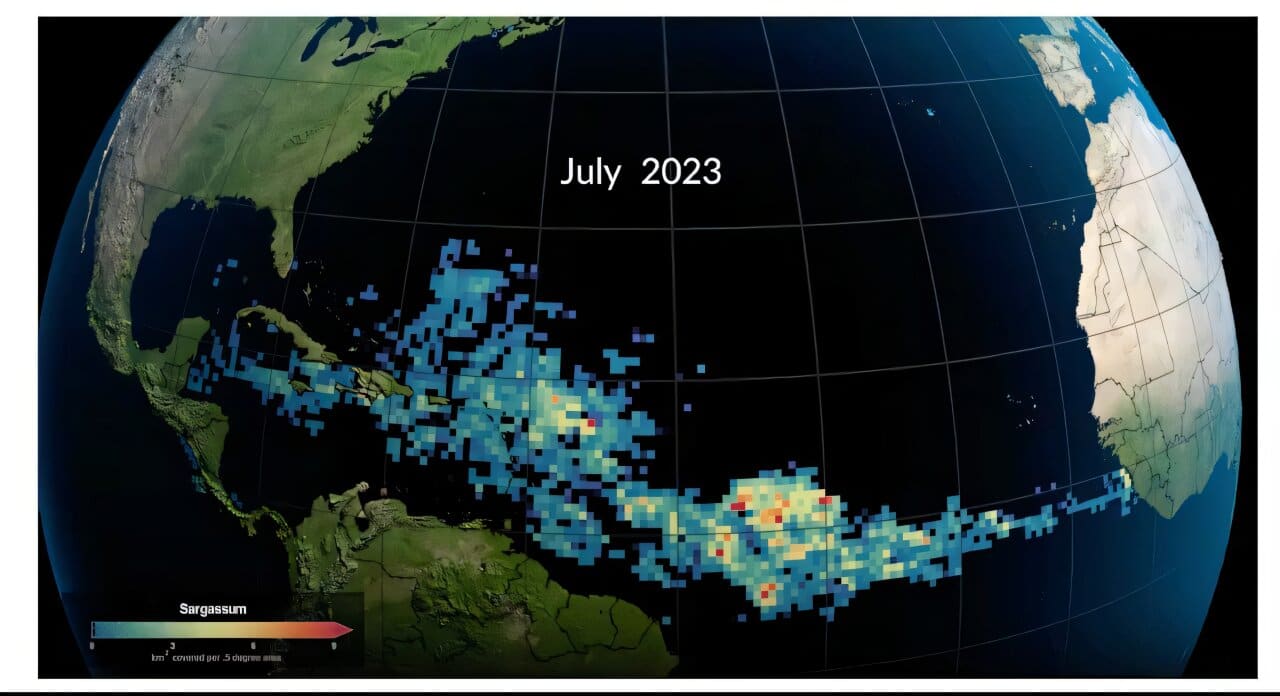
Recent research into the Great Atlantic Sargassum Belt suggests the problem may have crossed a threshold. According to scientists studying the phenomenon, the floating seaweed appears to have developed a feedback loop, recycling its own nutrients to fuel future growth. The implication is straightforward: this may not be a phase that passes.
For places built around beach tourism, the shift is more than cosmetic. Hotels face complaints, fishing boats navigate around floating mats, and local governments spend money on cleanup efforts that need repeating every few weeks. The seaweed itself isn't toxic, but in large volumes it changes how coasts function, how they look, and how they smell.
What Sargassum Actually Does
In open water, sargassum plays a useful role. Floating mats provide shelter and feeding grounds for fish, shrimp, crabs and other marine species. The Sargasso Sea, a region of the North Atlantic known for its drifting seaweed, supports a distinct ecosystem. Researchers describe these mats as floating cities, dense with life and constantly on the move.
The trouble starts when too much seaweed reaches shore. As it decomposes in shallow water, it releases hydrogen sulfide, creating the rotten-egg odor that drives beachgoers away. Oxygen levels drop in the water, threatening marine life. Coral reefs, already under pressure from warming seas and pollution, face additional stress when decomposing seaweed clouds the water and smothers shallow areas.
Javier Pizaña-Alonso, who manages coastal programs in Cozumel for the nonprofit CORAL, has watched the problem grow. Travelers complain about the smell and the sight of brown piles replacing white sand. Fishers lose access to harbors when seaweed clogs the entrances. Under ideal conditions, sargassum can double in size in roughly 18 days, according to Pizaña-Alonso, making it difficult for cleanup crews to keep pace.
Why the Blooms Keep Coming Back
For years, scientists examined several potential triggers: nutrient runoff from agriculture washing into the ocean, rising water temperatures, shifts in ocean currents, even dust blown across the Atlantic from the Sahara Desert carrying iron and other nutrients. Each factor seemed plausible, and together they likely helped spark the first major blooms more than a decade ago.
But new research points to a different mechanism sustaining the blooms today. Scientists now believe sargassum has developed a self-reinforcing cycle. Animals living in and around the floating mats consume organic material and excrete nutrients back into the water. As older seaweed breaks apart, it releases additional nutrients that support new growth. The system feeds itself.
To test this idea, researchers built a mathematical model incorporating the biological and physical processes that influence sargassum growth. The model successfully recreated bloom patterns from 2011 through 2022, then accurately predicted blooms in 2023 and 2024. The consistency suggests the seaweed belt has become entrenched.
NASA satellite imagery has tracked the scale of the problem. The belt stretches across thousands of miles of ocean, and its size fluctuates with seasons and conditions, but it no longer disappears.
Turning Waste Into Resource
Some researchers are asking whether the seaweed could be turned into something useful. Sargassum is being studied as a potential input for biofuels, natural fertilizers and construction materials. In Barbados, scientists have experimented with mixing collected sargassum with wastewater from rum distilleries to produce biofuel. In Mexico, entrepreneurs have tested building materials that incorporate the seaweed.
These projects remain small-scale, and the logistics of collecting and processing vast amounts of wet seaweed present their own challenges. Still, the idea of a blue economy, using ocean resources sustainably while protecting ecosystems, is gaining traction in regions where sargassum arrives by the ton.
Even if harvesting becomes economically viable, it's unlikely to eliminate the blooms entirely. The belt is too large, and the seaweed grows too quickly. But converting a waste problem into a resource could offset some of the costs coastal communities face.
What Comes Next
Better forecasting may offer the most practical near-term help. Early warning systems could give destinations a few weeks' notice before a major arrival, allowing them to organize cleanup efforts, adjust tourism messaging and protect sensitive marine areas. Some Caribbean islands already monitor satellite data to anticipate when seaweed will hit their shores.
The challenge is balancing the ecological role sargassum plays in open water with the damage it causes when it reaches land in excessive amounts. Floating mats support marine biodiversity. Decomposing piles on beaches and in shallow bays do not.
What was once dismissed as a seasonal nuisance now looks like a permanent feature of Caribbean coastal life. Destinations that depend on clear water and clean sand are adapting, but the adaptations come with costs. For travelers, the experience of a beach holiday in the region has quietly changed. For coastal communities, the question is no longer whether the seaweed will arrive, but how much, and what to do with it once it does.