A New Captain at the Controls
Willie Walsh started work as IndiGo's chief executive on August 3, 2026, the day after wrapping up his tenure at the International Air Transport Association. The airline announced his appointment back in March, and he steps into a role that Managing Director Rahul Bhatia held on an interim basis following Pieter Elbers' departure earlier this year.
Walsh's arrival comes as IndiGo marks two decades of flying in India. The timing is deliberate. The carrier dominates at home but sees its next chapter overseas, and Walsh's résumé reads like a blueprint for exactly that kind of expansion.
Why Elbers Left
Elbers stepped down in March 2026 after a rough patch. IndiGo suffered widespread operational disruptions in December 2025, leading to thousands of cancelled flights and drawing scrutiny from regulators. Bhatia took the reins temporarily to steady things while the board searched for a permanent leader.
The disruptions were a rare stumble for an airline that built its reputation on reliability and low fares. They also underscored the operational complexity of running more than 2,000 daily flights across a vast and varied country.
What Walsh Brings
Walsh has spent more than forty years in aviation. He started as a pilot at Aer Lingus, later becoming its CEO. He then ran British Airways from 2005 to 2011 and led International Airlines Group, the parent of BA and Iberia, from 2011 to 2020. Most recently, he steered IATA through the pandemic and the industry's uneven recovery.
His reputation is built on cost discipline and network strategy. Some in the industry call him "Slasher" for his willingness to make tough financial decisions, but the results often speak for themselves. Under his leadership, IAG became one of Europe's most profitable airline groups.
IndiGo operates more than 430 aircraft and serves over 95 domestic destinations and around 40 international ones. It holds a market share above 60 percent at home, a dominance that few carriers anywhere can claim. But the airline's international footprint remains modest compared to its domestic muscle.
The Agenda Ahead
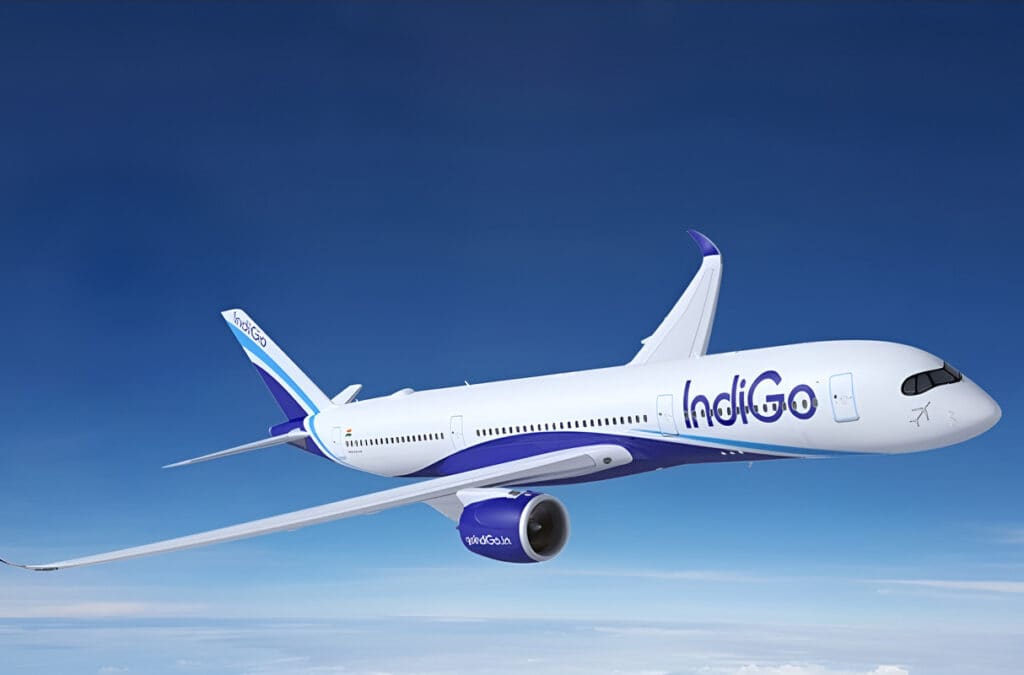
Walsh's priorities are clear. He will focus on accelerating international growth, tightening operational performance, strengthening the network and commercial strategy, and improving the customer experience. IndiGo has already signaled interest in long-haul routes and future wide-body aircraft, including the Airbus A350.
India's aviation market is one of the fastest-growing in the world, driven by a rising middle class and improving connectivity. Domestic traffic has rebounded strongly since the pandemic, and international demand is climbing. IndiGo wants to capture more of that outbound travel, particularly to Europe, the Middle East, and Southeast Asia.
Bhatia said Walsh's global experience and operational expertise will be vital as the airline enters its third decade. "I am confident that under his leadership, IndiGo will further strengthen its standing on the global aviation stage," he noted.
Walsh echoed that optimism, pointing to India's position as a high-growth market and the opportunities ahead for IndiGo. The airline has built a strong low-cost model focused on efficiency and volume, and Walsh's track record in navigating complex, competitive markets should help push that model beyond India's borders.
The Challenges
Expanding internationally is not simple. IndiGo will face established carriers on key routes, higher fuel costs, and the need to maintain the operational reliability that took a hit last December. Long-haul flying requires different aircraft, different crew training, and different pricing strategies. The low-cost model that works for two-hour domestic hops does not always translate to eight-hour international flights.
Walsh's experience at IAG, where he managed both full-service and low-cost brands, may prove useful. He knows how to balance cost control with the service expectations of international travelers. He also knows how to build partnerships and negotiate with airports, regulators, and suppliers.
What This Signals
Bringing in a figure of Walsh's stature is a statement. IndiGo is not content to remain a regional giant. It wants to compete on a global scale, and it is willing to invest in leadership that can make that happen.
The move also aims to restore confidence after last year's disruptions. Passengers and regulators need to see that IndiGo is serious about operational discipline, and Walsh's reputation for getting airlines back on track should help.
Industry watchers will be watching how quickly Walsh moves on international expansion and whether he can maintain the cost discipline that made IndiGo successful at home. The airline has grown fast, and sustaining that growth without losing efficiency will be the test.
A Pivotal Moment
Walsh takes over at a time when IndiGo is strong but also at a crossroads. The domestic market is crowded, and further growth there will be incremental. Real expansion lies overseas, in markets where IndiGo is still a minor player.
His leadership will shape how the airline navigates that shift. If he succeeds, IndiGo could become a genuinely global carrier, not just a dominant domestic one. If the expansion stumbles, the airline risks overextending itself while competitors catch up at home.
For now, the pieces are in place. The fleet is growing, the network is expanding, and the new CEO has the experience to guide it all. The next few years will show whether IndiGo can translate its domestic dominance into international relevance.