A Long-Awaited Return
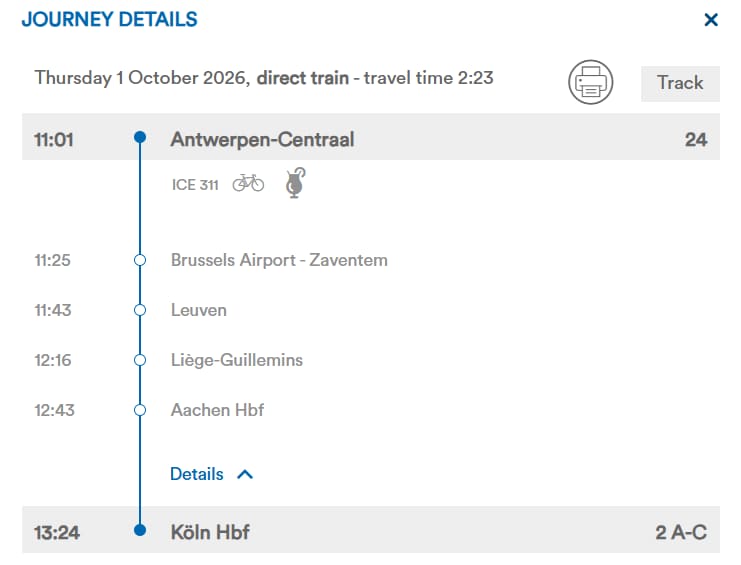
Brussels Airport saw its first direct high-speed train from Germany pull in this week, ending an eleven-year gap in international rail connections. The ICE service now runs twice daily between Cologne and Antwerp, stopping at Zaventem along the way.
The timing matters for more than nostalgia. Brussels Airlines and Deutsche Bahn announced a partnership earlier this year that lets travelers book train and plane as one ticket. According to Brussels Airlines, more than a thousand people have already bought combined journeys since February.
The setup is straightforward: passengers flying with the Belgian carrier from cities in western Germany can now add the train leg when they book. They earn Miles & More points on both portions, get a reserved train seat, and benefit from a guaranteed connection if delays happen. Premium flyers can use the DB Lounge at Cologne's main station.
What the Numbers Show
Two trains arrive at Brussels Airport each day from Cologne, at 8:29 a.m. and 4:28 p.m. Departures heading back to Germany leave at 11:29 a.m. and 2:29 p.m. The route includes stops in Aachen, Liège, and Leuven.
Brussels Airport currently handles 330 train arrivals on weekdays, linking it to eighty stations across Belgium and beyond. The airport connects to more than 180 destinations worldwide by air. Early booking data from Brussels Airlines shows New York, Accra, and Alicante as the top picks for passengers combining train and plane.
Nina Öwerdieck, the airline's chief financial officer, noted that the partnership allows the carrier to bring more passengers onto its network without adding flights. She said the hope is for this to be the beginning of a broader high-speed rail network at the airport, with smoother intermodal options ahead.
An Old Idea, New Life
Brussels Airport opened in 1958 with a railway station built directly into the terminal, the first of its kind anywhere. Arnaud Feist, the airport's chief executive, pointed to that legacy when he welcomed the new Cologne service. The train has always been part of the airport's identity, he said, and the ambition now is to make this connection stick and build on it.
Michael Peterson, who oversees long-distance passenger transport at Deutsche Bahn, said the direct service makes international rail travel easier and more attractive. The language echoes what other European transport operators have been saying as cross-border train travel gains momentum, but the mechanics still matter: one ticket, one booking system, and a fallback if something goes wrong.
The Broader Context
The return of direct high-speed rail to Brussels Airport fits into a wider European push to link air and rail networks. Intermodal travel has grown as airlines and rail operators look for ways to reduce short-haul flights and offer passengers more flexibility. France has led the way with mandatory train replacements for some domestic routes, while Germany and the Netherlands have expanded train-plane partnerships in recent years.
Belgium sits at a geographic crossroads, and Brussels Airport's rail infrastructure gives it an edge. The question is whether the Cologne service will prompt other operators to add routes. Feist's comments suggest the airport is ready to support more connections, and the early ticket sales indicate demand exists.
For now, the service is a test case. If it works, other German cities and neighboring countries may follow. If it doesn't, Brussels Airport will still have its original claim as the first airport with a train station, even if the network around it stays modest.