Riding Up, Not Climbing Up
The Swiss Alps have long held a reputation as the domain of serious mountaineers, those willing to tackle steep ascents and thin air. But in Engelberg, a different approach has taken hold. A web of cable cars, gondolas, and even post buses ferries visitors up mountainsides, bypassing hours of vertical slog. The result is a kind of lift safari, where the transport itself becomes part of the experience, and the high-altitude trails open up to anyone with sturdy shoes and curiosity.
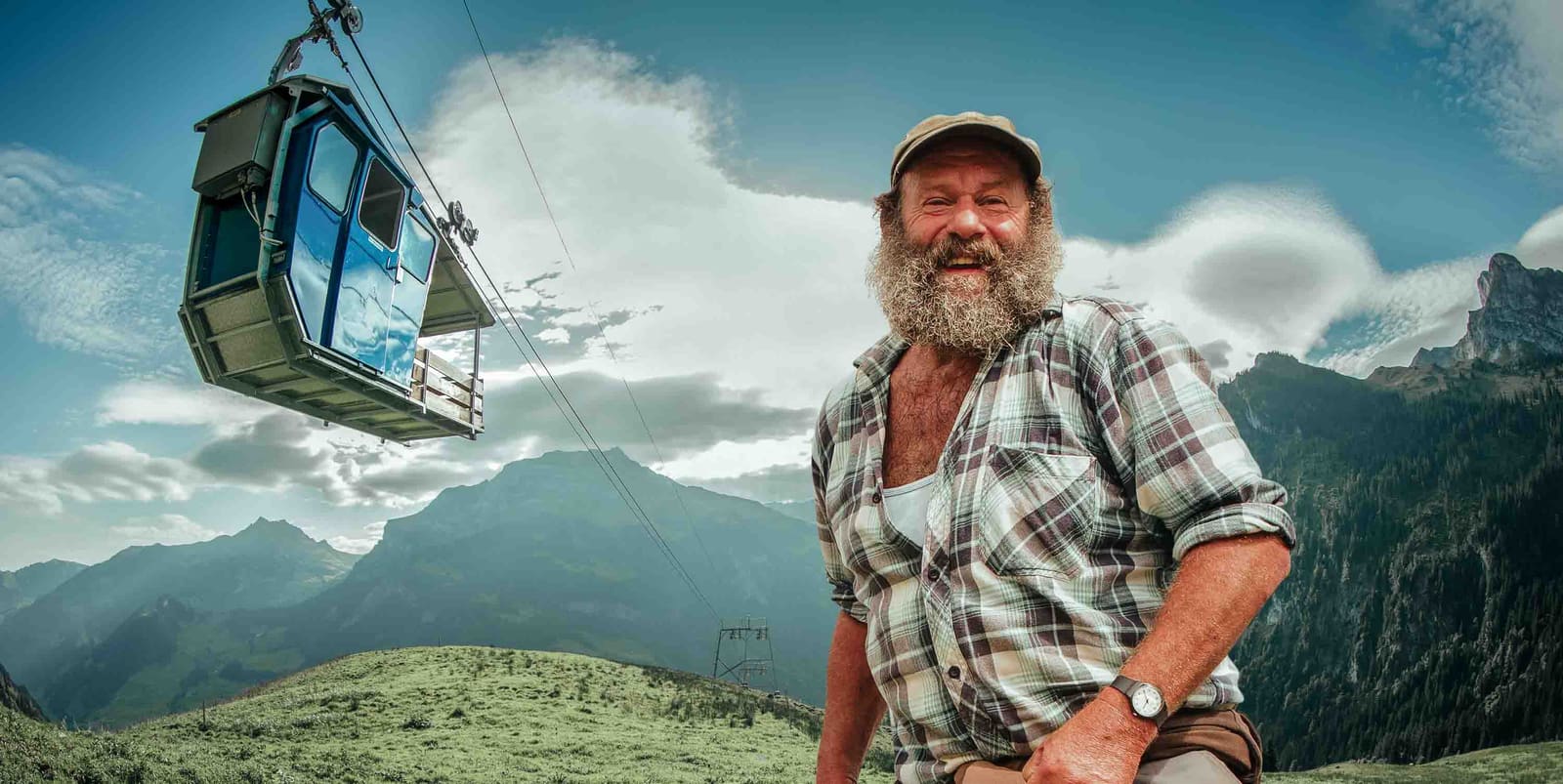
The Buiräbähnli, a diminutive cable car locals call by its affectionate nickname, is one piece of this patchwork. It hauls passengers in small cabins up gradients that would otherwise demand crampons and stamina. The machinery creaks, the cables hum, and within minutes, hikers step out onto terrain that might have taken half a day to reach on foot. It is not a shortcut in the laziest sense. It is infrastructure that democratizes elevation.
A Landscape Built for Access
Engelberg sits in central Switzerland, surrounded by peaks that rise sharply from valley floors. The town has spent decades refining its lift network, not just for skiers in winter but for walkers year-round. Some of these systems date back decades, their design reflecting an era when Swiss engineering married pragmatism with a tolerance for the quirky. The gondolas sway gently. The post buses, bright yellow and improbably punctual, wind up narrow roads to trailheads that would otherwise require private transport or a long trudge.
This infrastructure does more than save time. It reshapes who can participate in alpine walking. Families with young children, older hikers, visitors unfamiliar with mountain navigation, all find themselves standing at 2,000 meters or higher, ready to explore terrain that remains challenging but no longer gatekept by fitness alone. The trails themselves vary, from gentle ridgeline strolls to rockier paths that still demand attention and balance. But the elevation gain, the hardest barrier for many, has been outsourced to steel cables and electric motors.
The Character of Vintage Transport
There is something particular about riding aging cable cars and gondolas. They lack the polish of modern ski resorts, where lifts are designed for speed and volume. In Engelberg, some of the equipment feels almost handmade, with wooden benches, small cabins that fit four or five people, and operators who greet passengers by name. The Buiräbähnli itself is a local icon, its compact size and cheerful operation earning it a place in regional affection beyond its purely functional role.
These systems are maintained meticulously, safety inspections are rigorous in Switzerland, but they retain a charm that newer installations often lack. The ride becomes an event, not just a means to an end. Passengers peer down at meadows, forests, and eventually bare rock as the lift climbs. The sense of transition is gradual but unmistakable. By the time the doors open at the top station, the air is thinner, the temperature has dropped, and the landscape has shifted entirely.
Walking at Altitude Without the Slog
Once at elevation, the walking itself is still mountain walking. The trails require proper footwear, weather awareness, and respect for sudden changes in conditions. But the physical toll of gaining a thousand meters or more in a single morning has been removed from the equation. This changes the rhythm of a day. Hikers can spend more time covering horizontal distance, exploring ridges and valleys, rather than grinding upward for hours.
The trails around Engelberg offer variety. Some loop back to the same lift station, creating circuits that can be completed in a few hours. Others connect to different transport nodes, allowing hikers to descend via a different route or vehicle. The post buses, in particular, provide a safety net. Miss the last gondola down, and there is often a bus that will carry you back to town, albeit on a schedule that brooks no delay.
This flexibility appeals to a broad range of travelers. Solo hikers can push their pace without worrying about companions. Groups with mixed fitness levels can meet at the top rather than splitting up on the ascent. The lift network does not eliminate challenge, it redistributes it, placing the emphasis on navigation, terrain reading, and endurance over distance rather than sheer vertical gain.
A Model for Other Mountain Regions
Engelberg is not unique in Switzerland, the country has long invested in mountain transport, but it serves as a clear example of how infrastructure can expand access without diluting the experience. Other alpine regions, from the Dolomites to the Pyrenees, have adopted similar models, though few with the density and reliability of the Swiss system. The key lies in maintenance, frequency, and integration. A single lift is a novelty. A network of lifts, buses, and trails that connect seamlessly is a system.
The environmental question lingers. Cable cars and gondolas require electricity, construction, and ongoing upkeep. But they also reduce the need for private cars on mountain roads, consolidate foot traffic onto established trails, and lower the barrier to experiencing high-altitude landscapes without resorting to helicopters or off-road vehicles. The trade-off is not perfect, but it is arguably more sustainable than the alternatives.
Who This Serves
The lift safari model serves people who might otherwise never set foot on an alpine trail. It serves older hikers whose knees no longer tolerate steep descents. It serves families who want their children to see mountains without the risk of exhaustion or altitude sickness from rapid ascent. It also serves experienced hikers who simply want to cover more ground in a day, or who are recovering from injury and need to ease back into mountain travel.
But it does not replace traditional mountaineering. There are still peaks in Engelberg that require technical skill, early starts, and self-sufficiency. The lifts do not go everywhere, and the highest ridges remain the domain of those willing to carry ropes and ice axes. What the lift network does is create a middle ground, a way to engage with alpine terrain that is neither a casual valley walk nor a full expedition.
The Experience Beyond the Destination
Riding the Buiräbähnli and its counterparts is not just about reaching a trailhead. The journey itself offers perspective. From a swaying gondola, the scale of the landscape becomes clear in a way that is harder to grasp when you are head-down on a steep path. The forests give way to alpine meadows, the meadows to scree and rock. The villages below shrink to clusters of roofs. The air smells different at altitude, sharper and cleaner, and the light shifts as the day progresses.
This is slow travel in an unexpected form. The lifts move at a deliberate pace. There is time to watch, to think, to notice the engineering that makes the ride possible. The cables, the pylons, the stations perched on improbable ledges, all of it is a reminder that mountain access has been carefully constructed, not simply found.
For travelers who want to experience the Swiss Alps without committing to multi-day treks or technical ascents, the lift safari offers a viable path. It is not a gimmick or a shortcut. It is a different way of engaging with high places, one that prioritizes inclusivity and infrastructure over the mythology of suffering for the summit. And in a world where mountain landscapes are increasingly under pressure, making them accessible to more people, more safely, feels like a reasonable ambition.