A Home Unplugged
On the morning of 26 October 2026, passengers aboard Villa Vie Odyssey woke to news that upended the life they had built at sea. Operations were suspended. They had eight hours to pack and leave the ship while it sat docked in Sihanoukville, Cambodia.
Many had sold homes to live aboard. Lanette Canen, one of the residents, described the moment as heartbreak. "Our immediate reaction was a deep sense of heartbreak at having to leave the home and community we had built over the past two years," she said. "It was difficult to process the news while packing up our life and saying goodbye to the place we had come to love."
The reason given was fuel. Villa Vie Residences, the US-based company operating the ship, cited rising fuel prices linked to the Iran-US conflict. The company said it had tried slowing the itinerary and spending more time in port to cut consumption, but costs outpaced revenue. The ship entered what the company called "temporary layup."
The Promise
Odyssey was marketed as the first residential cruise ship designed for full-time living. Villa Vie Residences bought the 31-year-old vessel in 2023 and refitted it in Belfast. The pitch was a three-and-a-half-year circumnavigation touching 425 ports across 147 destinations. Passengers could buy cabins outright, with ownership guaranteed for up to 15 years, or pay as they went. Some chose to stay indefinitely.
Randy Cassingham and his partner Kit left Colorado, sold their house and cars, and moved aboard. "After 28 years in Colorado, I was ready for a change," Cassingham said. Both worked remotely and saw no reason their jobs needed land beneath them. They described their stay as open-ended, "for life unless we find something else we would rather do."
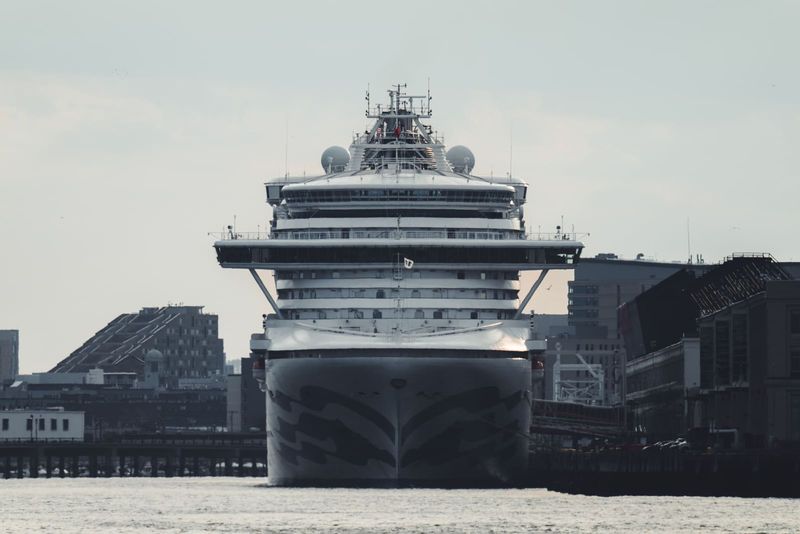
The ship itself was built in 1993 in Valencia, originally named Crown Dynasty. It passed through several operators before Fred Olsen Cruise Lines renamed it Braemar. Villa Vie took it over and transformed the eight-deck, 485-cabin vessel into a floating residence with a pub, pool, fitness centre, spa, and business hub.
Four Months in Belfast
The ship was supposed to leave Belfast on 15 May 2024. It did not. Refurbishment work overran. The departure slipped to 30 May, then 3 June after issues with a grey water tank. Then rudder stocks needed replacing. Then the gearbox failed certification. Summer passed. The ship stayed docked.
Passengers could use onboard facilities during the day but had to disembark each evening for shuttle buses to hotels. Some made the best of it. Angela and her partner Steve travelled to Spain and Greenland while repairs dragged on. Lesly Curtis, from Seattle, said she would miss Belfast and the people she met there.
By September 2024, four months in, patience was thin. According to passengers, the company asked residents to cover their own expenses for at least a week while final certifications were completed. Angela and Steve said the request was too much. "Seven days is a lot in Belfast. It's too much for us. It's cheaper for us to fly back to the States," they said in a YouTube update. The company later offered onboard credit of up to 200 US dollars per day as compensation.
One passenger, Jenny Phenix, 68, from Florida, was removed from the ship altogether. She had sold her possessions to join the voyage. In mid-September, her comments on WhatsApp about delays and cabin arrangements led the company to cancel her contract, citing impact on community morale. Other residents voted to suspend her. Phenix told media she had been asking questions many others privately thanked her for raising.
On 30 September 2024, exactly four months after the original departure date, Odyssey finally left Belfast at 23.30 with 125 residents aboard. Cassingham said he felt cautious. "I'm feeling cautious since we've been disappointed again and again for four months. But clearly, we have to leave sometime, and it looks like this is it."
Two Years Later
For a while, life aboard Odyssey settled. The ship visited ports. Residents built routines. Then, just over two years into the voyage, fuel costs began to squeeze. Lynn Montoya, another passenger, said residents were repeatedly asked to contribute extra money for fuel and other expenses. One request sought funds to leave Cambodia.
Villa Vie tried to adapt. The company slowed the itinerary and increased port time to reduce fuel consumption. It was not enough. On 26 October 2026, the company announced the suspension and coordinated disembarkation. In a statement, Villa Vie said it was "working with residents to coordinate disembarkation and identify temporary living arrangements" and recognised the period as "difficult and disruptive."
What It Means for Residential Cruising
The concept of living full-time at sea is not new, but Odyssey was positioned as a model for a growing market. The appeal is clear: no fixed address, continuous travel, a built-in community. The risk is equally clear. Operating costs for a 31-year-old ship are high and unpredictable. Fuel is the largest variable. When geopolitical events push prices up, margins vanish quickly.
Residential cruising depends on a delicate balance between revenue from cabin sales or fees and the cost of keeping a ship moving. Villa Vie's model assumed steady fuel prices and a predictable itinerary. The Iran-US conflict disrupted both. The company could not pass costs to passengers fast enough, and passengers could not or would not cover the gap indefinitely.
The suspension raises questions about the viability of long-term residential voyages on ageing vessels. Newer ships are more fuel-efficient, but they cost more to buy and refit. Older ships are cheaper upfront but carry hidden costs in maintenance, certification, and fuel consumption. Villa Vie chose the latter and bet that operational savings would offset the risks. They did not.
What Happens Next
Villa Vie has not announced whether Odyssey will resume operations or when. The company is helping residents find temporary accommodation. Some may choose to return home. Others, like those who sold everything, face a harder decision. They built a life around the idea of constant movement. Now they are stationary.
For the broader industry, the suspension is a test case. If residential cruising is to grow beyond niche experiments, operators will need either deeper reserves to weather shocks or more flexible contracts that shift risk to passengers. Neither is easy to sell.
The passengers who left Odyssey in Cambodia did not sign up for a short voyage. They signed up for a way of living. That way of living, it turns out, depends on fuel prices, geopolitics, and the structural integrity of a 33-year-old ship. When any of those fail, the dream docks.