When the Sea Came for the Museum
The Giant Squid Museum in Luarca had always been close to the water. Too close, as it turned out. On 2 February 2014, a severe storm sent waves crashing into the harbour, flooding the museum's lower floors and destroying much of the original building. For eight years, the collection remained in storage whilst the town searched for a safer home. Today, the museum has reopened in a more sheltered location, still dedicated to one of the ocean's most enigmatic creatures.
The irony is hard to miss. A museum devoted to animals that live in the deep abyss was undone by the surface. But the new space carries on with the same mission: introducing visitors to Architeuthis, the giant squid that has fuelled maritime legends for centuries yet remains poorly understood.
Why Luarca, and Why Now
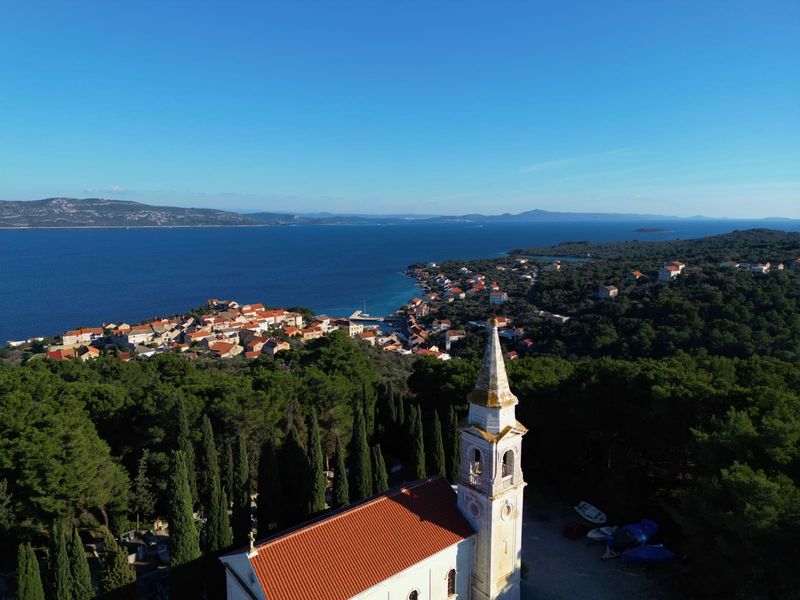
Luarca is a fishing town on Spain's northern Asturian coast, and giant squid turn up here with unusual regularity. The deep Carrandi fishing grounds and the Avilés Canyon lie offshore, creating conditions that seem to favour these animals. Fishermen occasionally haul them up by accident, and the museum has built its collection around these encounters.
Six giant squid are now on display, along with other specimens from the deep sea. The largest is a 176-kilogramme female caught unintentionally in 2015. It is rare to see these animals intact; most wash ashore in poor condition or are damaged during capture. The museum's specimens offer a chance to examine anatomy that is otherwise hidden kilometres below the surface.
Anatomy That Defies Expectation
Architeuthis can grow to around 20 metres in length and weigh up to a tonne, according to the museum. It has three hearts, two of which pump blood to the gills whilst the third supplies the rest of the body. Its eyes are among the largest in the animal kingdom, adapted to detect faint light in near-total darkness. Eight arms and two longer feeding tentacles are lined with suckers, and at the centre sits a beak resembling a parrot's, capable of tearing through flesh.
These features are not mere curiosities. They reflect a life spent in an environment where pressure is extreme, food is scarce, and predators include sperm whales. The giant squid's body is built for a world humans can barely access, let alone understand.
A Museum That Recreates the Abyss
The new museum uses atmospheric lighting and underwater soundscapes to evoke the deep ocean. Interactive exhibits walk visitors through the squid's life cycle, hunting behaviour, and the history of human encounters with the species. An anatomy laboratory allows closer inspection of preserved specimens, including dissected organs and tissue samples.
The design is intentionally immersive. Dim corridors and ambient noise replace the bright, clinical feel of traditional natural history displays. The aim is not to romanticise the deep sea but to convey its strangeness and the difficulty of studying it. Most of what scientists know about giant squid comes from dead or dying individuals; live footage is exceedingly rare.
From Kraken to Reality
For centuries, sailors reported sightings of enormous tentacled creatures capable of dragging ships beneath the waves. These accounts gave rise to the kraken myth, a staple of Norse and later European folklore. The giant squid is the likely source of many such stories, though its actual behaviour is far less dramatic. It is not a ship-swallower but a deep-sea predator that avoids the surface.
The museum does not shy away from this cultural history. Exhibits trace the evolution of the kraken legend and its intersection with scientific discovery. The first confirmed specimens of Architeuthis were not examined until the 19th century, and many details of its biology remain unresolved. How long does it live? How does it reproduce? What triggers its occasional appearances near shore? These questions are still being debated.
What the Museum Does Not Answer
The Giant Squid Museum is honest about the limits of current knowledge. Giant squid are found in oceans worldwide, but their population size, migration patterns, and ecological role are largely unknown. The Asturian coast may simply be a place where human activity and squid habitat overlap more than usual, or there may be environmental factors that draw them here. Researchers are still working to find out.
For visitors, the museum offers a rare chance to see an animal that most people will never encounter outside of fiction. It is also a reminder that large parts of the ocean remain unexplored, and that even well-known creatures can hold secrets. The giant squid is no longer a monster of myth, but it is still a mystery.