A Castle That Played Gothic
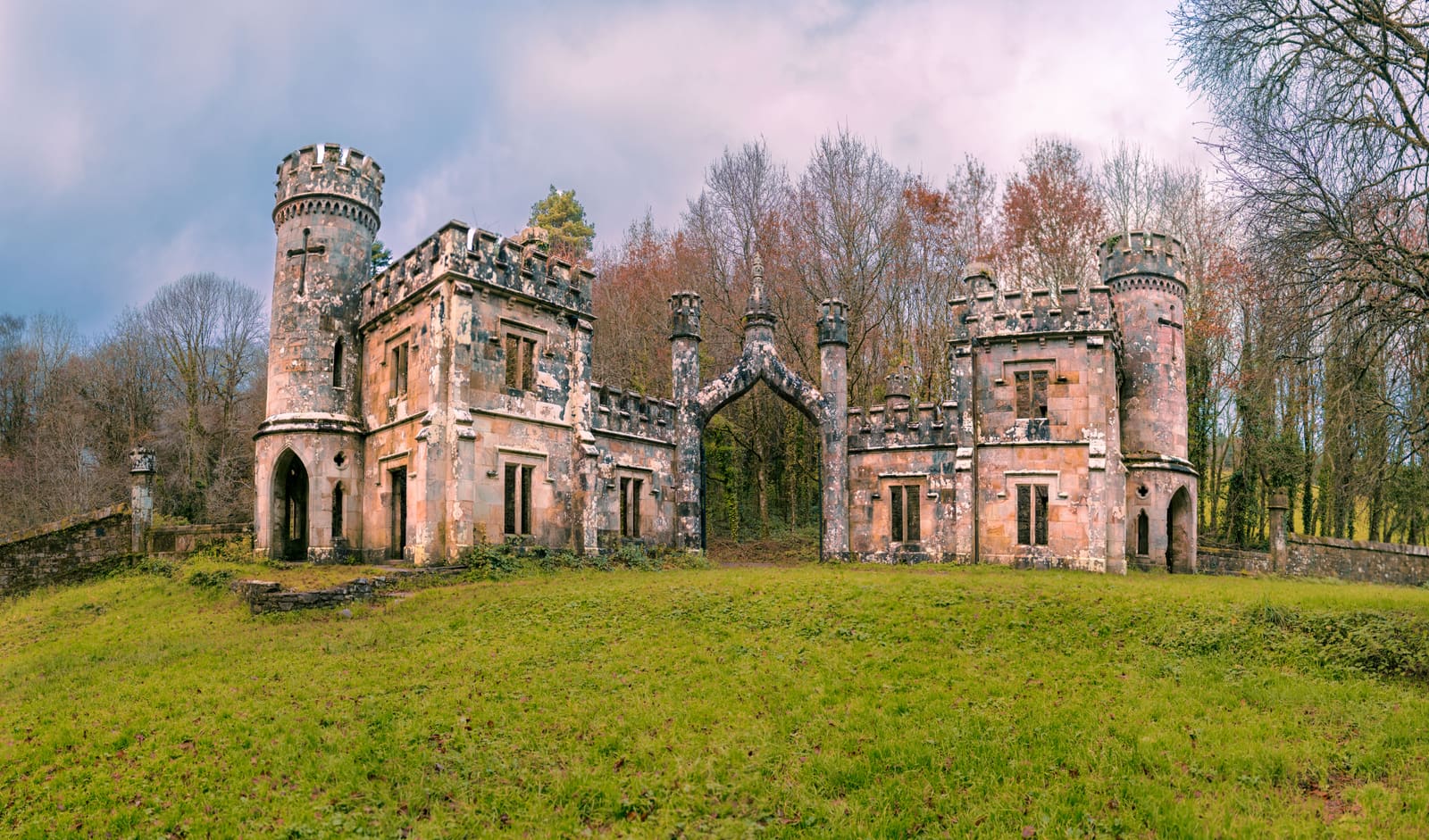
Lismore Castle sits an hour northeast of Cork, its towers rising above County Waterford. The Irish estate stood in for Northanger Abbey in the 2007 adaptation, the one where Catherine Morland arrives expecting dungeons and finds drawing rooms instead.
The production chose Ireland over England for practical reasons - tax incentives shifted the shoot across the Irish Sea. But Lismore delivered the Gothic grandeur the story required: Old Master paintings line the walls, tapestries hang in state rooms, staircases sweep upward in stone.
Today the castle operates as a venue hire. Fifteen bedrooms sleep up to 27 guests, available for weddings, reunions, occasions large enough to justify the booking minimum. For most travellers, the more accessible option is Ballyrafter, a ten-room bed-and-breakfast on a 15-acre farm nearby. From there, visitors can tour Lismore's gardens and contemporary art gallery, with castle tours led by butler Denis Nevin offering a look inside the rooms where Felicity Jones wandered as Catherine.
Estates That Became the Elliots' World
The 2022 adaptation of Persuasion, Austen's final completed novel, filmed across Bath and two country estates in the southwest. Dakota Johnson's Anne Elliot moved through Trafalgar Park in Wiltshire, which became Kellynch Hall, the Elliot family seat. Brympton House in Somerset stood in as Uppercross House, home to the Musgrove family.
Brympton now functions primarily as a wedding venue. Overnight stays require a full buyout - the house sleeps up to 80 - so casual Austen pilgrims will find it out of reach unless they're planning nuptials or a very large gathering.
Trafalgar Park offers a different model. Three holiday cottages sit on the estate grounds, formerly part of the main property. They sleep four, five, and eight guests respectively, surrounded by a walled cut-flower garden. The cottages provide a base within the landscape that appeared on screen, without requiring the commitment of renting an entire manor.
The Economics of Heritage Properties
These arrangements reflect a wider shift in how Britain and Ireland's historic estates sustain themselves. Maintenance costs run high; opening selectively to guests generates income without converting the property entirely into a hotel.
For film and television productions, these homes provide ready-made period settings. Tax incentives and location fees create another revenue stream. Ireland's tax credit system has pulled multiple UK-set productions across the border, a pattern Northanger Abbey followed nearly two decades ago.
For travellers, the appeal is straightforward: sleep where a favourite scene unfolded, walk the same staircases, look out the same windows. The experience differs sharply from a standard heritage-house tour. Staying overnight turns the visit from spectator event to temporary inhabitancy, however brief.
What the Experience Actually Entails
Expectations matter. These are working estates and heritage properties, not hotels. Amenities vary. Some cottages offer self-catering kitchens; others provide breakfast. Minimum stays often apply, especially during peak season. Prices reflect both the heritage value and the exclusivity of the setting.
Lismore Castle's 27-guest capacity and occasion-based model put it beyond the reach of solo travellers or couples. Trafalgar Park's cottages offer a more flexible entry point, though still at a premium compared to standard holiday rentals in the area.
The filming connection adds a layer of meaning for Austen admirers, but the properties themselves carry centuries of history unrelated to any screen adaptation. Lismore dates to the 12th century; Trafalgar Park to the 18th. The Austen link is recent, a footnote in a much longer story.
Why Austen's Settings Endure
Austen set her novels in the homes of the landed gentry, the class she knew intimately. The estates in her fiction - whether Pemberley, Kellynch, or Northanger Abbey - function as more than backdrops. They signal wealth, taste, social standing, the material stakes of the marriage plot.
Screen adaptations need buildings that can carry that weight. Grand enough to convey status, but lived-in enough to feel like homes rather than museums. The estates that filmmakers choose tend to have both scale and detail: the sweeping facade for exterior shots, the decorated interiors for close-ups.
When those locations then open to guests, they offer a tangible connection to the stories. Not the actual buildings Austen described - those existed only in her imagination - but the places that translated her words into images. For readers who have spent hours inside Austen's sentences, that's often close enough.