A Tiny Town Competing With Capitals
When a readers' poll ranks the best cities in Europe, you expect Paris, Rome and Lisbon. You don't necessarily expect a Croatian coastal settlement smaller than most university campuses. Yet Rovinj, home to roughly 13,000 people, landed in the top 20 this year, sitting alongside metropolises with populations in the millions.
The list featured mid-sized entries such as Genoa at number 19 and Zurich at number 13, plus Monte Carlo at number 10. But Rovinj's inclusion stands out. It suggests that travellers are weighing atmosphere and accessibility as heavily as museum counts or Michelin stars, and that a place needn't be large to feel complete.
Venetian Roots Across the Adriatic
Rovinj sits on the Istrian peninsula, facing Italy across a narrow stretch of the Adriatic. Centuries of Venetian rule left their mark: pastel-shuttered houses, cobbled alleys that twist uphill, and menus built around fresh pasta and seafood. The nickname "Little Venice" gets used often, and while no nickname survives close scrutiny, this one holds up when you walk the old town at dusk.
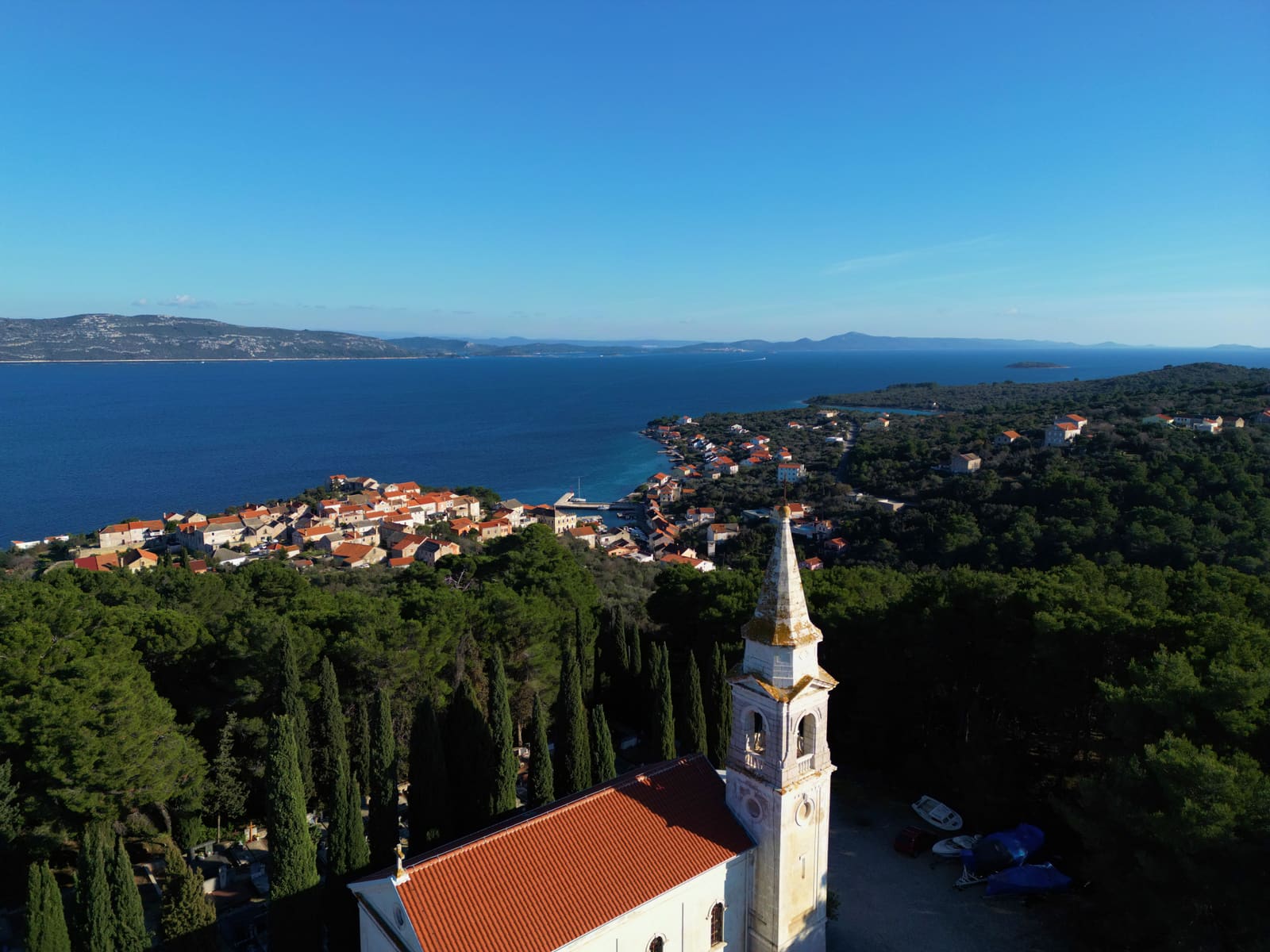
The Church of St Euphemia anchors the skyline with its bell tower, visible from the water and from the pine-shaded paths that ring the southern coast. Climb to the church and you get a clear view over terracotta rooftops to the bay, where fishing boats still use traditional batana craft, flat-bottomed wooden vessels that the local ecomuseum documents in detail.
A Food Scene That Outgrows Its Size
For a town this small, the restaurant density is notable. Monte became Croatia's first Michelin-starred restaurant, and Puntulina remains a fixture for locals who want Adriatic fish prepared without fuss. The food leans Italian in technique but Croatian in ingredient sourcing, a reflection of the peninsula's hybrid identity.
Accommodation options include Grand Park, a hotel with bay views, an infinity pool and a spa that draws weekend visitors from Zagreb and Ljubljana. For those willing to drive half an hour inland, Meneghetti Wine Hotel & Winery offers a Relais & Châteaux property set among vineyards, with rooms that open onto rows of vines and a restaurant that sources from its own land.
Wine production here benefits from limestone soil and a microclimate moderated by the sea. Kozlović Winery, a longer drive from town, runs tastings on a terrace that overlooks rolling hills striped with vines. The region's Malvazija whites and Teran reds have started appearing on lists beyond the Balkans, though distribution remains limited.
Doing Little, Deliberately
Rovinj rewards a slower pace. South of the old town, Zlatni Rt (Golden Cape) is a forest park where pine trees meet the rocky shoreline. Paths loop through the woods and lead to swimming coves where the water is clear enough to see the bottom several metres down. Sunbathers spread towels on flat rocks, and the absence of sand means less grit, though also fewer soft surfaces.
The town's compact scale makes it easy to cover on foot. Burek, a flaky pastry stuffed with cheese or meat, appears in bakery windows early in the morning. Cafés along the waterfront fill with people nursing espresso and watching boats come in. There's little pressure to tick off sights; the appeal lies in the rhythm of a place where fishing and tourism coexist without one overwhelming the other.
Why Istria Stays Quieter
Croatia's tourism boom over the past decade has concentrated heavily on Dubrovnik and Split, both of which now manage overcrowding during summer months. Istria, by contrast, draws fewer international visitors, in part because it lacks a Game of Thrones filming location or a Roman palace.
That relative anonymity works in Rovinj's favour. Peak season brings crowds, but they're manageable. Off-season, the town empties enough that restaurants close midweek and you can walk the harbour without navigating tour groups. The trade-off is fewer flights; most visitors arrive via Pula Airport, 40 kilometres south, or drive across the border from Slovenia or Italy.
What the Ranking Reflects
Polls like this one measure subjective experience rather than objective infrastructure, which explains how a town with a single traffic light can rank alongside cities with metro systems. Voters tend to reward places that feel coherent and human-scaled, where a two-day visit doesn't require a spreadsheet.
Rovinj fits that brief. It offers enough to fill a weekend without demanding a week, and its size means you're never far from either a restaurant or a swimming spot. Whether that makes it better than, say, Vienna or Copenhagen depends on what you're measuring. But it does make it different, and in a travel landscape increasingly tilted towards the familiar, difference carries weight.