A City Confronting Its Reputation
Kingston-upon-Hull knows what people say. For years, the Yorkshire port city has worn unflattering labels: Britain's "crap town", the "worst city in Yorkshire". Yet in 2017, it was named UK City of Culture, a designation that prompted questions as much as celebration.
Nearly a decade later, the answer is taking shape. Five heritage sites have reopened in 2026 under the Hull Maritime project, a £50 million lottery-funded initiative designed to turn the city's industrial waterfront legacy into a visitor draw. The question is whether fresh paint and new exhibits can overcome decades of mockery.
The city's past is worth examining. Hull was a key route in westward migration, its tidal waters shaping the movement of millions. William Wilberforce, the abolitionist MP, represented Hull and Yorkshire from 1780 to 1814. The fishing industry here employed thousands until tragedy struck in 1968, when three trawlers sank in quick succession, killing 58 men.
The Maritime Museum Reopens
The Maritime Museum, closed for six years, reopened following a £20 million renovation. The building itself is striking, a silhouette that draws photographers. Inside, the focus is on human stories alongside artefacts: the world's largest scrimshaw collection, a baleen skeleton suspended mid-air, sailors' clothing, preserved oars.
The exhibits avoid the trap of nostalgia. Sugar, coffee and rum all passed through Hull's docks, products of enslaved labour even though the city was not directly involved in the transatlantic slave trade. Wilberforce's work is presented not as a local hero story but as part of a broader reckoning with what flowed through the port.
Gillian Osgerby, the Hull Maritime project director, frames the challenge plainly: "We have the goods, but we're not very good at telling people about it." The project aims to close that gap, connecting sites with stories that have not reached a wider audience.
Stories the City Forgot
The Maritime Museum dedicates an entire room to the Headscarf Revolutionaries, four women who campaigned for better working conditions after the 1968 Triple Trawler Disaster. Lillian Bilocca, Christine Smallbone, Mary Denness and Yvonne Blenkinsop changed fishing industry standards in the UK and beyond.
Their reward was ostracism. Their husbands were blacklisted from ship work, neighbours avoided them, and only a dozen people attended their funerals. The industry they fought to reform turned its back.
That tension runs through Hull's heritage. The city was built on hard industries that enriched some and crushed others. A free guided walking tour, running every Thursday and Saturday, passes the Wharf and Northern Shipyard, where the Arctic Corsair, a trawler comparable to London's Cutty Sark, will soon be docked. The Mary Murdoch bridge, opened in 2021, honours the city's first woman GP, who was known for driving "fast like the devil". Not every pioneer was remembered so fondly.
A Neighbourhood Transformed
Humber Street was once a "dodgy dockside", in the words of locals. Now it is cobbled, lined with independent galleries, a micro-bakery, a Spanish tapas restaurant and a social club. Flour & Feast sells pollen and tangerine bakes; Humber Fish Co. serves a three-tiered Skipper's lunch sourced locally. Ambiente Tapas, a small local chain, offers sherry flights and Spanish plates.
The street hosts youth-led festivals: the Folk & Maritime Festival in July, Humber Street Sesh in August for emerging local artists. The transformation is real, but it is also narrow. Walk a few blocks in the wrong direction and the shine fades.
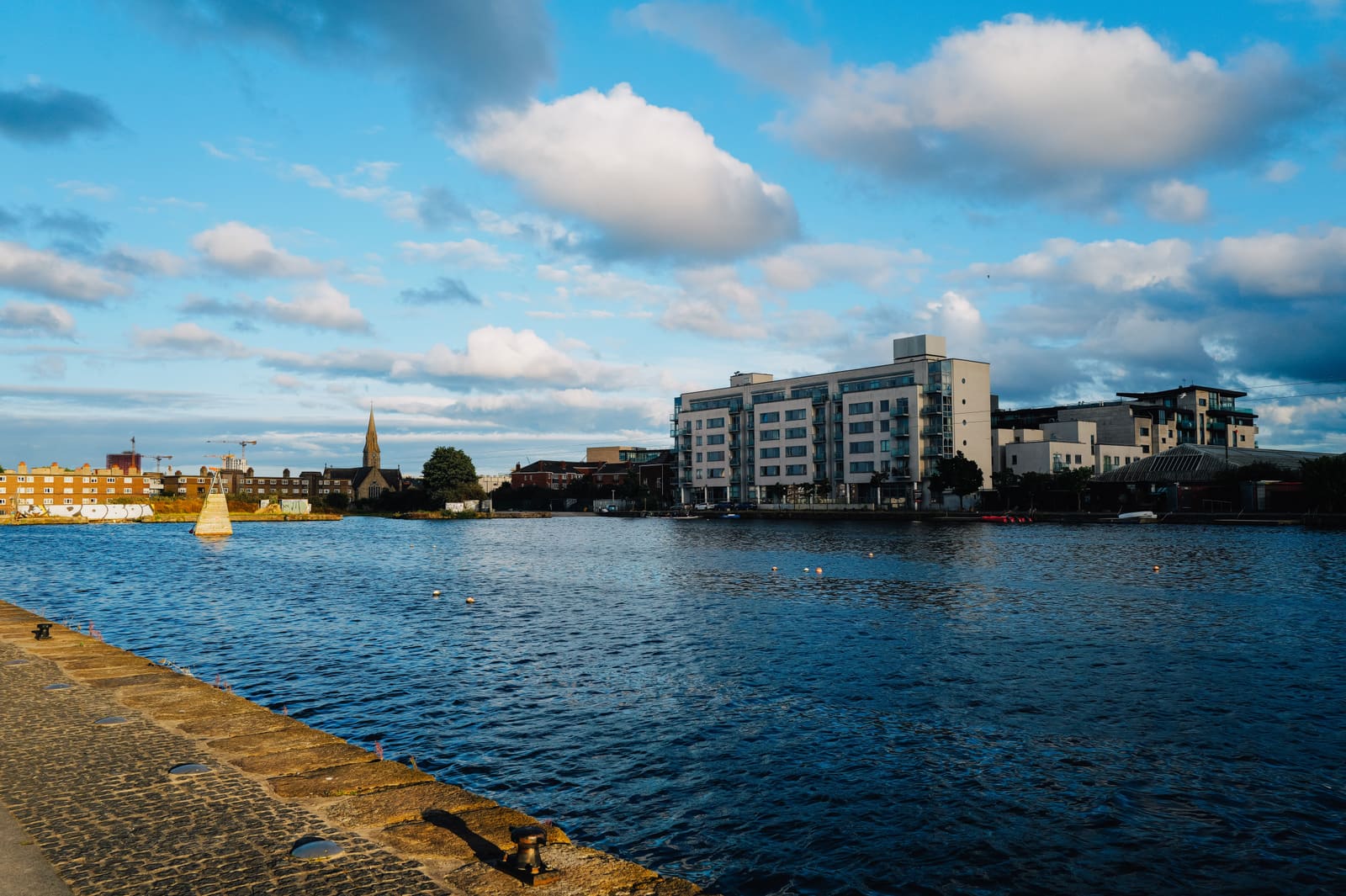
Princes Quay, near the Ferens Art Gallery, offers a glimpse of what the city is aiming for: deep turquoise water, a peaceful promenade, small restaurants facing the Humber Dock Marina. The contrast with the buzzing urban centre a few paces away is deliberate. Hull wants to be both a working city and a destination.
The Aquarium and the Nightclub
Hull's reputation as a party town has long overshadowed its cultural side. The Welly, a nightclub, closes at 3am on Saturdays. The Deep, a world-class aquarium, opens at 10am on Sundays. Locals joke that you can do both in one weekend.
The city's identity is still unsettled. "Hullywood", a tongue-in-cheek mural at the train station, nods to the dozens of film and TV productions shot here, with Victorian London often recreated on Hull's streets. Actor Timothée Chalamet once called the local accent "the sexiest in the UK", a claim that raised eyebrows but also pride.
The train station foyer itself makes a statement: waves of blue and gold swirl around compass routes on the ceiling, giving the space a cinematic quality. It is an attempt to shape first impressions, to signal that Hull is not what visitors expect.
What the Renovation Cannot Fix
A £50 million investment buys new exhibits, restored buildings, guided tours. It does not buy instant credibility. Hull's challenge is not just infrastructure but perception. Decades of ridicule do not vanish because a museum reopens.
The Spurn Lightship, tiny but intact, sits in the harbour. It was the last thing ships saw as they approached or left the city. Nearby, "Dead Bod", Hull's version of a cave painting on corrugated iron, memorialises a sailor's beloved bird. The image is surreal, a fragment of maritime folklore rendered in industrial materials.
Hull's stories are not polished. They are rough, often tragic, sometimes darkly funny. The city is betting that authenticity, not spin, will draw visitors. Whether that gamble pays off depends on whether people are willing to look past the headlines.
Getting There and Staying
Hull Trains operates daily services from London, with journey times of 2 hours 45 minutes starting from £60. LNER also serves the city. Self-catered apartments at The Hideout start from £100 per night for two people, located between the historic town and the nightlife district.
The renovation is complete. The sites are open. Now Hull waits to see if the rest of the country is ready to reconsider.