A Fortress Built Twice
In the rural expanse of An Nhon, a fortress rises from the landscape with a story written in two distinct chapters. Hoang De Citadel occupies ground that has served as an imperial seat not once but twice, first as Vijaya, the stone-walled seat of the Champa Kingdom in the eleventh century, then as the military headquarters of Emperor Nguyen Nhac's Tay Son movement in 1776. The result is a site where medieval Cham sculpture sits alongside the ruins of later Vietnamese palaces, a physical record of how power shifted across the same plot of earth.
The dual identity makes Hoang De unusual among Vietnam's historical sites. Most citadels reflect a single era or ruling power. Here, the layers tell a more complicated story: one empire's capital became another's stronghold, and the architectural remnants of both remain visible today.
The Cham Foundations
The earliest structures date to the eleventh century, when Vijaya functioned as the capital of Champa, a kingdom that controlled much of what is now central and southern Vietnam. The Cham built in stone, and fragments of that original construction endure. Elephant sculptures carved from rock, along with stone guardians, mark the site's oldest layer. These elements reflect the Cham aesthetic, which blended Hindu and Buddhist influences with local traditions.
Vijaya was not merely ceremonial. Its stone walls provided defence in a region where control over trade routes and agricultural land meant survival. The Cham held the site for centuries, and its strategic value did not diminish with their decline.
The Tay Son Transformation
In 1776, Emperor Nguyen Nhac chose the same location for his imperial base. The Tay Son movement, which began as a peasant rebellion, had grown into a force capable of challenging the established Nguyen and Trinh lords. Nguyen Nhac needed a fortified centre, and the old Cham site offered both symbolic weight and practical advantage.
The Tay Son built over and around the Cham remains. Earthen ramparts replaced or reinforced the earlier stone walls. Palace foundations were laid, and the citadel became the administrative and military heart of the Tay Son state. The decision to build atop Vijaya was likely pragmatic, the existing infrastructure reduced construction time and cost, but it also carried a message: the Tay Son were claiming continuity with the region's deeper past.
The Tay Son Dynasty lasted only a few decades. By the early nineteenth century, the Nguyen Dynasty had consolidated power, and the citadel's role shifted again. Nguyen Dynasty tombs were added to the site, further complicating its historical record.
What Remains Today
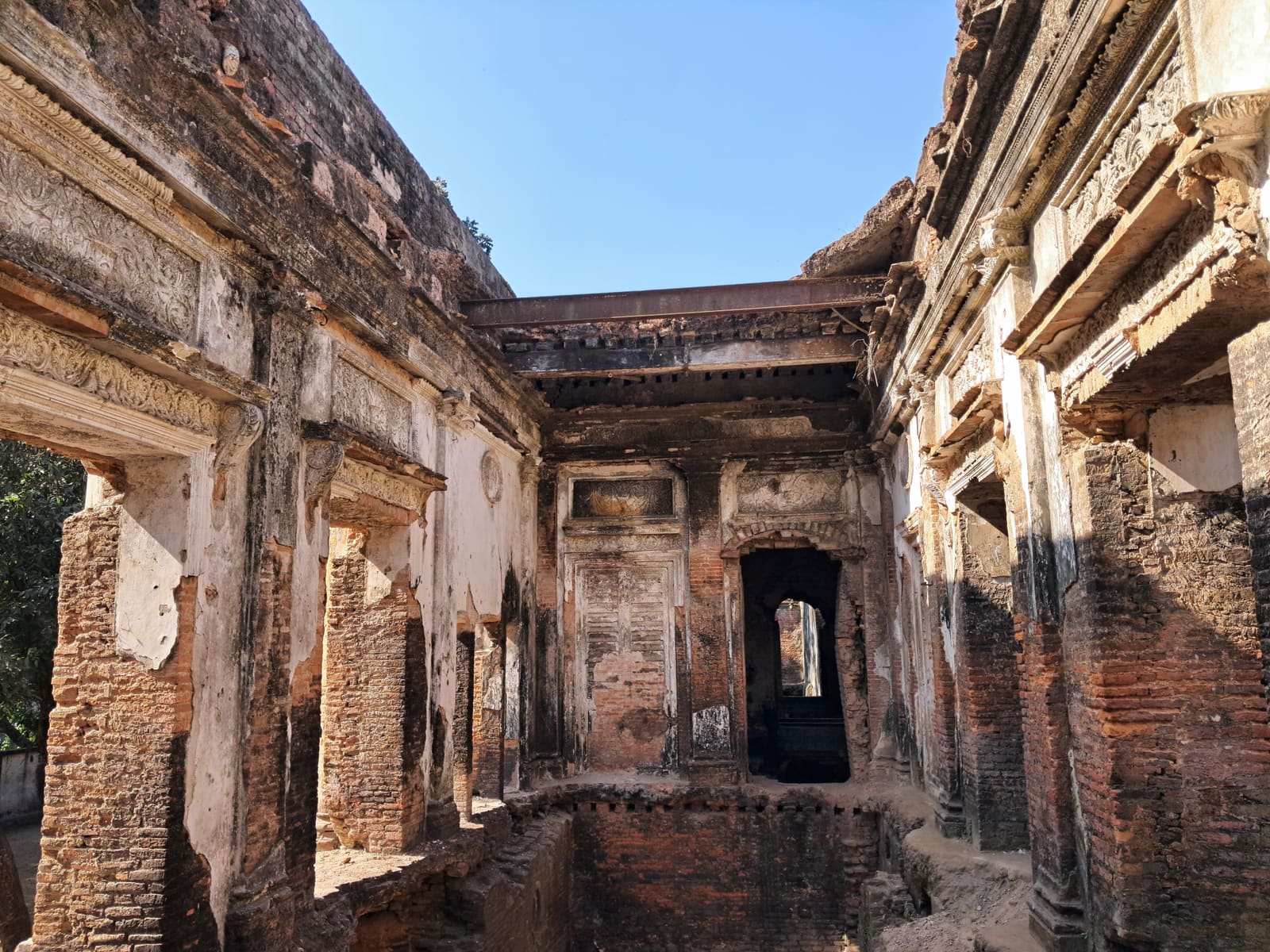
The citadel today is a mix of overgrown ramparts, weathered stone, and scattered ruins. The earthen walls that define its perimeter are Tay Son-era, but the stone gates and carved figures predate them by centuries. Walking through the site means moving between these layers, often without clear boundaries. A Cham elephant sculpture might stand a few metres from the foundation of a Tay Son palace hall, with a Nguyen tomb visible in the distance.
The atmosphere is quiet, almost abandoned. An Nhon is not a major tourist centre, and the citadel sees relatively few visitors. The lack of heavy restoration means the site retains a sense of age, but it also means that interpretation can be difficult. Signage is limited, and the physical evidence requires some historical knowledge to decode.
For those interested in how places accumulate meaning over time, Hoang De offers a clear example. The site is not a single monument but a sequence of them, each built with different intentions and each leaving its own mark.
The Broader Context
The layering at Hoang De reflects a broader pattern in Vietnamese history. The Champa Kingdom, which flourished from roughly the second to the fifteenth century, left a significant architectural and cultural legacy across central Vietnam. As Cham power waned, Vietnamese polities expanded southward, a process historians refer to as Nam Tien, or the "march to the south." The Tay Son movement emerged in the eighteenth century as a challenge to the existing order, and its brief ascendancy reshaped the political map before the Nguyen Dynasty unified the country.
Hoang De sits at the intersection of these shifts. The decision to reuse the Cham site was not unique, Vietnamese rulers often built on or near earlier structures, but the preservation of both layers at Hoang De is less common. Many sites were either fully rebuilt or abandoned. Here, the coexistence of Cham and Tay Son elements creates a physical dialogue between eras.
Visiting Practicalities
An Nhon is located in Binh Dinh Province, roughly 30 kilometres north of Quy Nhon city. The citadel is accessible by road, though public transport options are limited. Most visitors arrive by motorbike or private car. There is no entrance fee, and the site is open during daylight hours.
The lack of formal infrastructure means visitors should come prepared. There are no on-site facilities, and shade is scarce. The terrain is uneven, with loose stone and overgrown paths. Comfortable footwear and water are advisable.
The best time to visit is during the dry season, roughly from January to August, when the ground is firmer and the vegetation less dense. The wet season can make parts of the site difficult to navigate.
Why It Matters
Hoang De Citadel is not a showpiece. It lacks the polish of more famous Vietnamese heritage sites, and its historical complexity can be hard to parse without background knowledge. But that complexity is precisely what makes it valuable. The site offers a tangible record of how power moves across the same ground, how new regimes build on the ruins of old ones, and how history accumulates in layers rather than replacing itself cleanly.
For travellers interested in archaeology, military history, or the less-visited corners of Vietnam, Hoang De provides a counterpoint to the country's more heavily promoted destinations. It is a place where the past remains visible in multiple forms, where the stones tell more than one story, and where the quiet countryside holds evidence of empires that rose, clashed, and eventually faded.