Operations Grounded Across Sicily's Busiest Gateway
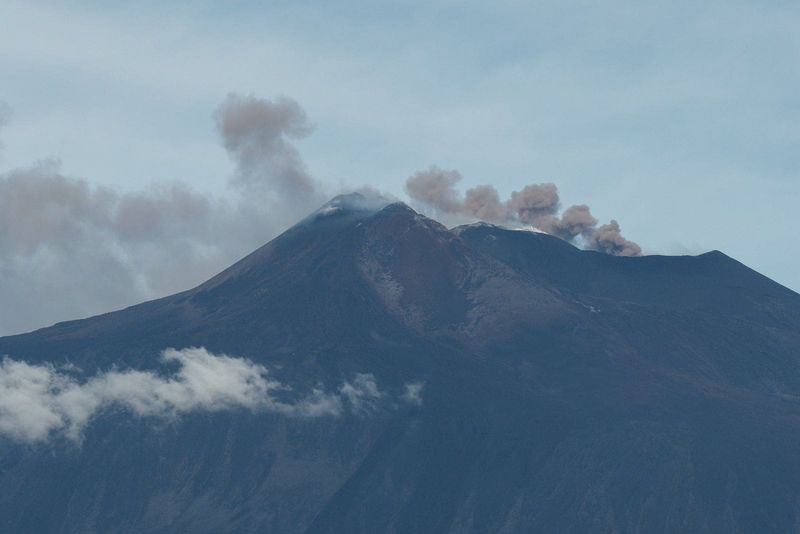
Catania Airport suspended all arriving and departing flights on 6 July 2026 after Mount Etna's renewed activity sent volcanic ash clouds climbing to approximately 4,500 metres, according to Italy's Volcano Observatory Notice for Aviation. The closure affected the island's busiest air hub, stranding passengers across a network that connects Sicily with dozens of European cities and a handful of long-haul destinations including New York and Montreal.
Roughly 130 flights were cancelled outright, while another 50 were redirected to alternate airports. Carriers operating the affected services included Ryanair, easyJet, British Airways, Wizz Air, ITA Airways, Lufthansa, KLM, Air France, Iberia, Jet2, SAS, Delta Air Lines and Air Canada. Aviation authorities issued a red-level alert for the sector, the highest tier, signalling that ash concentrations posed serious risk to engines and visibility. Volcanic particulate can melt inside turbine chambers at operating temperature, then resolidify on cooler components, choking airflow and potentially causing engine failure.
Diversions Funnel Traffic West to Palermo
With Catania out of action, most inbound aircraft were re-routed to Palermo Airport on Sicily's northwestern coast. Palermo handled dozens of extra movements on 5 July and was bracing for further waves while the eruption continued. Smaller volumes landed at Comiso and Trapani, and some flights pushed as far as Rome and Vienna when regional capacity tightened.
Several airlines arranged bus transfers for passengers who touched down in Palermo, shuttling them across the island to Catania and nearby towns. The overland journey spans roughly 200 kilometres and takes upward of three hours by coach, depending on traffic and routing. For travellers holding tight connections or same-day commitments, the diversion translated into delays measured in half a day or more.
The Eruption Timeline and Alert Escalation
Mount Etna's latest episode began on 5 July, when explosive activity from a vent near the Voragine summit crater launched ash and gas skyward. Lava flows that had been visible since late June ceased shortly before the explosive phase intensified, a pattern that volcanologists associate with rising gas pressure in the conduit. Once the lava pathway sealed, gas-rich magma fragmented violently at the surface, driving the ash column higher.
Italy's Department of Civil Protection had already raised Etna's alert status from green to yellow in late June after seismometers registered increased volcanic tremors. The yellow designation signals heightened unrest but stops short of an imminent eruption warning. Within days, the volcano moved from tremor to outright explosive activity, prompting the aviation-specific red alert that shuttered Catania.
Weather patterns became a critical variable. Prevailing winds can carry fine ash hundreds of kilometres from the vent, and even dilute concentrations remain hazardous to jet engines. Air-traffic coordinators monitor dispersion models in real time, adjusting flight corridors and clearance windows as plumes shift. The 4,500-metre altitude placed the ash squarely in the lower cruising envelope for regional jets and turboprops, forcing a blanket suspension rather than selective rerouting.
Passenger Rights in Force Majeure Events
Travellers whose flights were cancelled retain the right to choose between a replacement service on the next available departure and a full ticket refund. Airlines must also furnish meals, refreshments and hotel accommodation if an overnight wait becomes necessary. European regulation 261/2004 and parallel consumer-protection frameworks in other jurisdictions mandate this care-of-passenger duty.
Volcanic eruptions, however, fall under the "extraordinary circumstances" carve-out, meaning carriers are not obliged to pay the fixed monetary compensation that applies to delays or cancellations within the airline's control. The distinction hinges on whether the disruption could reasonably have been prevented. Because no operator can suppress an ash cloud, the financial liability stops at rebooking and subsistence, not the €250-€600 per-passenger sums that attach to crew shortages or technical failures.
Social-media posts from Catania's terminal painted a grimmer picture of the care obligation in practice. One widely shared video showed dozens of passengers, including families with young children and travellers with reduced mobility, spending the night on terminal floors after cancellations. The footage alleged that Ryanair cancelled services without arranging immediate assistance, leaving people to fend for themselves in an environment that lacked sufficient seating, blankets or food past midnight. While the regulatory framework is clear, enforcement during mass-disruption events often lags operational reality, and understaffed airport-service desks struggle to process hundreds of claims simultaneously.
Etna's Recurring Impact on Sicilian Aviation
Mount Etna ranks as Europe's most active volcano, with near-continuous activity punctuated by episodes intense enough to threaten aviation. Its location on Sicily's east coast places it directly under approach and departure paths for Catania, which handled more than 10 million passengers in recent pre-pandemic years and serves as a key leisure and diaspora gateway.
Previous eruptions have triggered similar suspensions, some lasting hours, others stretching across multiple days depending on wind direction and eruption intensity. The 2021 episode, for instance, forced repeated closures over a two-week span, shredding summer schedules and leaving thousands of holidaymakers stranded. Each event imposes costs that ripple through the tourism economy: lost revenue for hotels, car-hire agencies and tour operators, plus the knock-on scheduling chaos as aircraft and crew fall out of position across the network.
Comiso and Trapani offer limited relief. Neither airport approaches Catania's slot capacity or frequency, and both lie farther from the island's eastern resort clusters. Palermo provides more robust infrastructure, but the cross-island surface transfer eats time and adds logistical friction that deters some travellers from rebooking.
What the Numbers Mean for Summer Peak
The 6 July suspension landed in the early phase of Europe's peak summer travel window, when load factors on Sicilian routes routinely exceed 85 per cent. With 130 cancellations in a single day, the immediate passenger impact likely approached 25,000 to 30,000 people, assuming average narrow-body configuration. Knock-on delays and missed connections amplify that figure, as passengers scramble to rebook onward legs that were predicated on the original Catania arrival.
For airlines, the operational headache extends beyond the immediate grounding. Aircraft stranded on the wrong side of the closure must be ferried empty or swapped with reserve airframes, crew duty limits expire, and maintenance schedules slip. Low-cost carriers operating high-utilisation models - where each airframe flies multiple rotations per day - feel the pinch most acutely, because a single missed sector cascades into evening and next-day departures.
Sicily's tourism sector, meanwhile, braces for the reputational aftershock. Prospective visitors weighing Mediterranean options may baulk at the perceived unpredictability, even though Etna's eruptions are geographically confined and most of the island remains unaffected. The challenge for destination-marketing organisations lies in communicating that risk is localised and manageable, while acknowledging that ash-cloud disruption is an inescapable feature of the Catanian gateway.
Monitoring and the Path to Resumption
Aviation authorities continue to track seismic data, gas emissions and ash-plume height in coordination with Italy's National Institute of Geophysics and Volcanology. The decision to lift the red alert and reopen Catania hinges on sustained evidence that ash concentrations have dropped below thresholds hazardous to engines, and that no fresh explosive pulses are imminent.
Travellers planning trips to or from Sicily in the coming days should verify flight status directly with carriers before leaving for any airport. Schedule fluidity remains the norm during volcanic episodes, and rebooking windows can open and close within hours as conditions shift. Flexible ticket policies - increasingly common in post-pandemic fare structures - become valuable insurance when natural forces rewrite the timetable.