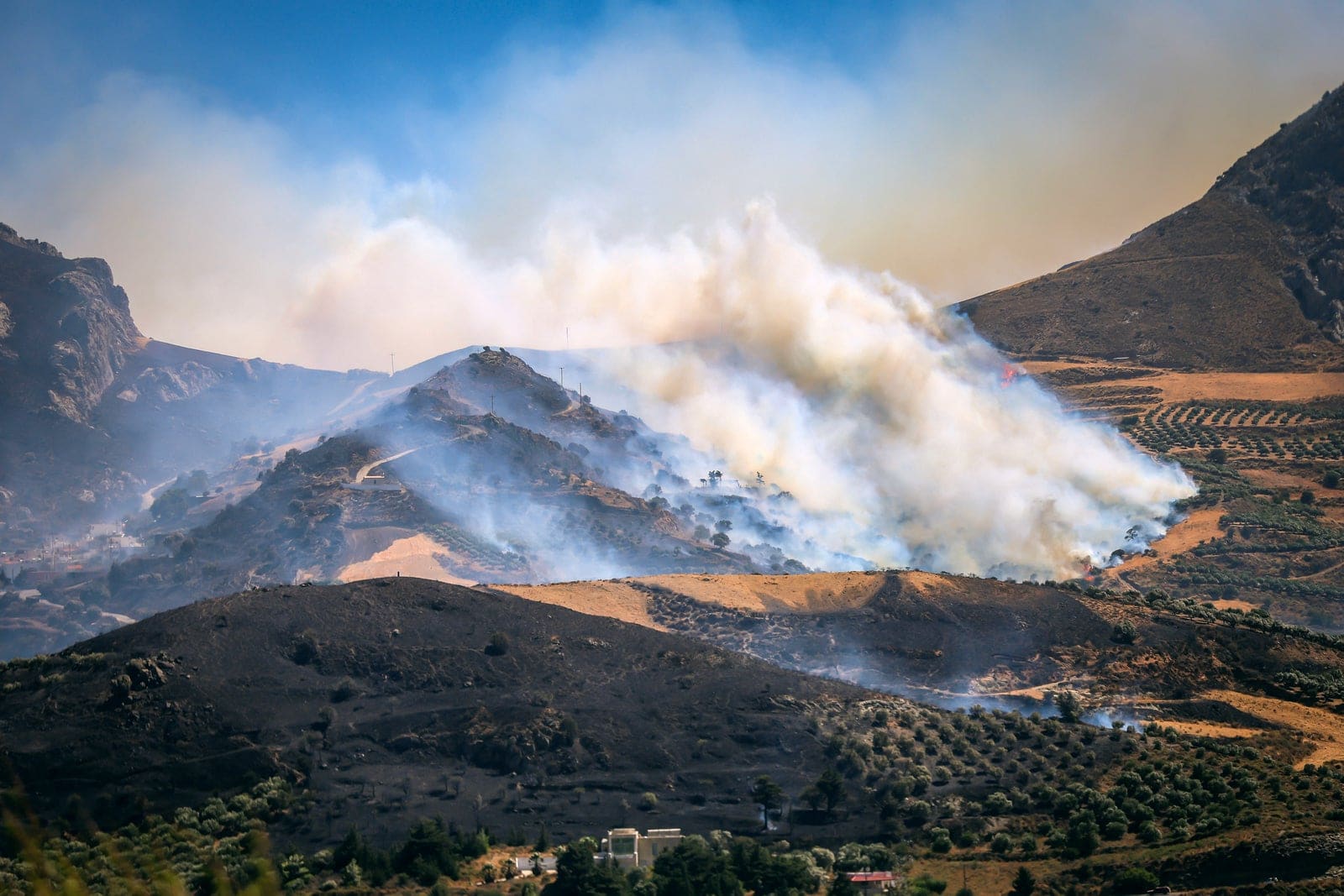
Fire Activity Across Two Islands
Wildfires burning across Crete and Paros have forced thousands of evacuations over the past several days, marking another intense chapter in the Mediterranean's summer fire season. On Crete, flames have spread through the Rethymno region since Wednesday, driven by strong northerly winds that have pushed the fire along the southern coast. Coastal settlements including Melambes, Agios Pavlos, and Agia Galini have been evacuated as crews work to contain the blaze.
Three firefighters died battling the Crete fires, underscoring the severity of conditions on the ground. The loss highlights the physical toll of containing fires in terrain that is dry, steep, and exposed to wind.
On Paros, more than 60 firefighters are working to control a separate wildfire in the Kampi area, now burning into its second day. Villages in the fire's path have been cleared as a precaution, though the scope of evacuations there remains smaller than on Crete.
Airports Operating, Travel Advisories Unchanged
Despite the active fires, both Heraklion and Chania airports on Crete continue to operate departures and arrivals largely on schedule. No official travel warnings have been issued by the UK Foreign Office specifically related to the current wildfires. The agency's standing guidance for Greece notes a high risk of wildfires from April through October and recommends travelers register mobile phones to receive emergency alerts.
The absence of a formal travel warning means travelers cannot cancel trips on exceptional grounds and expect automatic refunds. Cancellation terms depend on individual holiday providers, and those with travel insurance should check whether natural disaster coverage applies to situations that prevent reaching a destination.
Flight delays or cancellations remain possible as conditions evolve, and travelers heading to southern Crete should monitor updates from their airlines.
A Recurring Pattern
Greece experiences wildfires with regularity during the summer months, driven by high temperatures, low humidity, and seasonal winds that can turn small ignitions into fast-moving blazes. The country's topography, with steep hills and dense vegetation, complicates containment efforts. Coastal areas popular with tourists are not immune; proximity to settlements and infrastructure often raises the stakes when fires break out.
This year's fires arrive amid a broader pattern of heat and fire activity across southern Europe. While individual incidents vary in cause and scale, the underlying conditions remain consistent: prolonged dry periods and heat waves that stretch firefighting resources thin.
What Travelers Should Consider
For those already in affected areas, following local evacuation orders and staying informed through official channels is essential. The Foreign Office advises contacting airlines or tour operators for assistance with return travel if an evacuation becomes necessary.
For those planning trips to Greece in the coming weeks, the situation serves as a reminder that summer in the Mediterranean carries inherent risks tied to weather and fire. Travelers should monitor conditions in their specific destination, ensure they have access to emergency alerts, and understand their insurance coverage before departure.
The fires on Crete and Paros may be contained in the days ahead, or they may burn for longer depending on weather conditions. Either way, the episode reinforces the reality that wildfire season in Greece is not an anomaly but an annual event that shapes the landscape and, increasingly, the travel experience.