Stranded Without Supplies
Police in Bulgaria evacuated 186 cruise passengers on Tuesday after their river ship struck a shallow shoal near the port city of Vidin. The Viking Ullur had been scheduled to dock for resupply but couldn't reach port because of the low water, leaving guests without food and water. The 52 crew members remained on board, awaiting navigation assessments and possible refloating operations.
The incident is the most dramatic so far in a summer that has turned one of Europe's busiest waterways into an obstacle course of exposed rocks, sandbars, and half-buried wrecks. The Danube flows through ten countries from southwestern Germany to the Black Sea, and along much of that route it is now shallower than anyone has measured before.
A New Record in Budapest
Hungary's national water authority recorded the Danube at 23 centimeters on Wednesday morning in Budapest. That breaks the previous all-time low of 33 centimeters, set in 2018. The difference is more than four inches, and in a river context that matters enormously for vessels drawing even moderate depths.
Cruise ships that normally dock in the Hungarian capital for passenger excursions are now forced to moor far upstream. Cargo traffic has almost entirely halted, according to Hungary's Ministry of Transport and Investment. The economic knock-on effects are spreading, though the immediate pain is being felt most acutely in the tourism sector.
Boats Marooned in Serbia
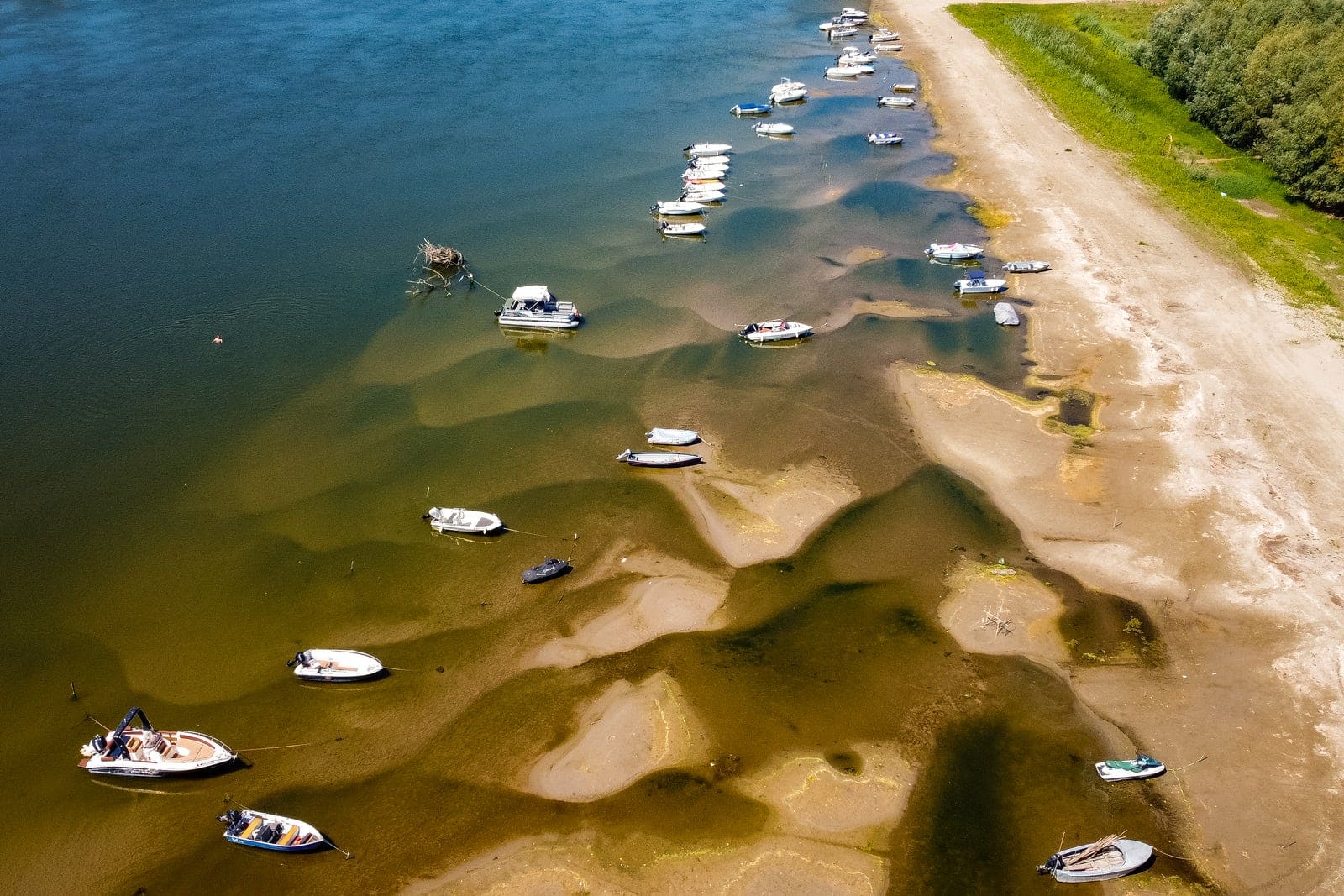
Hundreds of small craft and dozens of cargo vessels sit beached along the riverbank near Novi Sad in northern Serbia. Radovan Segrt, who operates a houseboat for river excursions, watched the waterline retreat 15 to 20 meters from shore. He told reporters the summer season for boat rides is effectively over.
The visible geography has changed. Stretches of river that were navigable channels a month ago are now exposed sand and gravel. Objects that spent decades underwater are suddenly in plain view, including ordnance from the Second World War. Authorities in Budapest closed the Margaret Bridge last week after a bomb from that era was discovered at its base, revealed by the receding water.
The Weather Behind It
Central Europe has been in drought for most of the year. Hungary's meteorological service reports that 90-day precipitation totals are 80 to 130 millimeters below the multi-year average across nearly the entire country. Successive heat waves have accelerated evaporation, and another is bearing down now. Forecasts predict temperatures above 38 degrees Celsius in the coming days, with no significant rain expected. The river is likely to drop further.
In Romania, Danube flow had fallen to 1,630 cubic meters per second, roughly a third of a typical July rate. That figure, released by Romanian authorities, underscores how widespread and severe the shortfall is.
Nuclear Plants Cut Output
The low water is also affecting electricity generation. The Danube supplies cooling water to several nuclear plants along its course, and when flow drops, so does their ability to operate safely at full capacity.
Romania shut down one reactor unit at the Cernavoda power plant on Tuesday, citing safety protocols, and announced a second unit would follow. In Hungary, the Paks nuclear plant, which supplies nearly half the country's electricity, began powering down a reactor on Wednesday. Two other reactors had already reduced output in the preceding two days because of restricted cooling-water availability.
These are not trivial interruptions. The plants are central to the grid in both countries, and prolonged shutdowns or reductions ripple through energy markets and household supply.
What This Means for River Cruising
River cruising on the Danube is a substantial business. Operators schedule itineraries months in advance, and passengers book with the expectation of docking at signature stops like Budapest, Vienna, and Bratislava. When water levels fall below safe navigation thresholds, ships either cancel, reroute, or attempt to continue with the risk of running aground, as the Viking Ullur did.
The industry has dealt with low water before, in 2018 and in isolated years prior, but this summer's conditions are more severe and more sustained. Some operators are switching passengers to buses for portions of the journey, turning what was sold as a river cruise into a hybrid land-and-water trip. Others are offering refunds or rebooking. None of these solutions preserves the experience guests paid for.
The challenge is not just logistical but reputational. When a ship runs aground and passengers run out of food, the story travels. It makes potential customers reconsider whether a Danube cruise is a safe bet in summer months.
Unexpected Finds
For a few people, the drought is opportunity. Zsolt Horváth, a Budapest-based treasure hunter, was on the exposed riverbank on Tuesday with a powerful magnet, pulling metal objects from the newly revealed sediment. He has found old radio amplifiers, bullet casings from both world wars, and other fragments of submerged history.
He acknowledged the contradiction: the conditions are ideal for his hobby, but otherwise they are a curse. The same receding water that lets him recover artifacts is strangling commerce, tourism, and energy production across the region.
What Comes Next
No one expects the Danube to return to normal levels soon. The forecast offers heat and no rain. The river will keep dropping, or at best hold steady, until weather patterns shift. That could be weeks away, or longer.
For the cruise industry, the immediate question is whether to keep running ships or suspend operations until conditions improve. For the passengers already booked, it is whether to go ahead with trips that may not reach their advertised ports, or to cancel and forfeit deposits. For the countries that depend on the river for transport and power, it is how to manage shortfalls that are only getting worse.
The Viking Ullur is still near Vidin, crew aboard, waiting for enough water to move.