A New Entry Point to Lie-Flat Seats
Delta Air Lines has started selling a cheaper version of its premium cabin. The carrier announced this week that it is introducing Basic Business, a fare option that delivers the core onboard experience of Delta One at a lower price while cutting several airport perks.
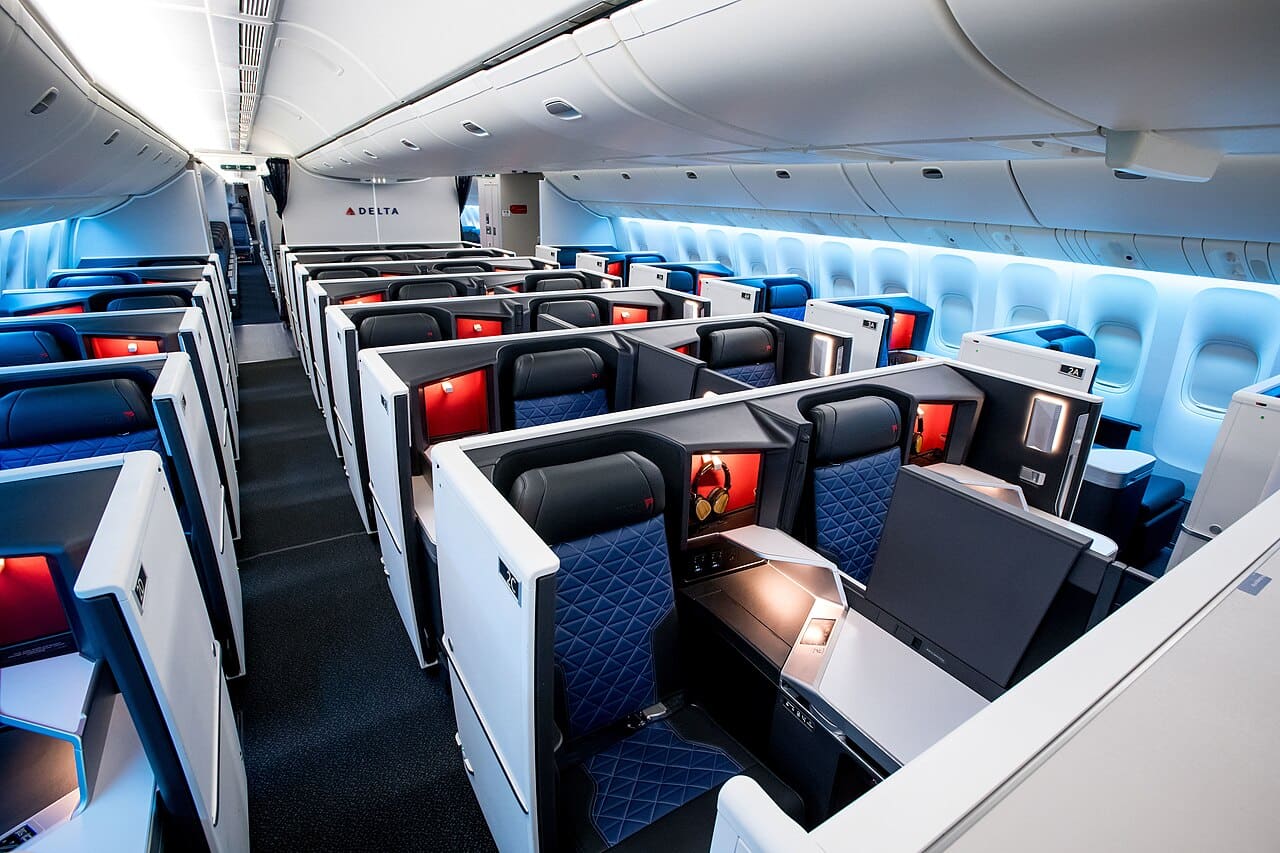
Passengers who buy Basic Business will still get the signature lie-flat seat on long-haul routes, Zone 1 boarding, and the chef-prepared three-course meals that define the Delta One product. What they will not get is lounge access, priority check-in, or some of the other ground-side amenities that come standard with a full-fare Delta One ticket.
The move is a bet that a segment of travelers exists who value comfort in the air but are willing to forgo extras before and after the flight in exchange for a lower fare. It also reflects a broader push across the industry to slice premium cabins into finer gradations, capturing customers who might otherwise book premium economy or simply skip business class altogether.
Unbundling Comes to the Front Cabin
For years, unbundling has been the norm in economy. Basic Economy fares have conditioned millions of travelers to accept trade-offs like no seat selection or overhead bin access in return for a lower ticket price. Now that logic is moving upmarket.
Delta is not the first carrier to experiment with tiered business-class fares, but it is one of the largest US carriers to formalize a stripped-down option for its flagship long-haul product. The question is whether enough travelers will see value in the trade-off. Premium passengers, especially those traveling for work, have historically expected a bundled experience. Lounge access, in particular, has become a defining perk of business-class travel.
By removing it, Delta is testing how much of the premium experience is really about the seat itself and how much is about everything else. If Basic Business succeeds, it could reshape expectations around what a business-class ticket includes.
Who This Is For
The target customer is likely someone who wants to sleep flat across the Atlantic or Pacific but does not need or want to pay for lounge time, fast-track security, or priority baggage handling. That could include leisure travelers stretching for a premium seat on a special trip, or corporate travelers whose companies are tightening travel budgets but still want employees to arrive rested.
It could also appeal to travelers who already have lounge access through credit cards or elite status with other programs. For them, paying full freight for perks they can access separately makes little sense.
Still, the strategy carries risks. Frequent flyers who earn elite status through loyalty to Delta may feel shortchanged if they see Basic Business passengers occupying the same seats for less money while they paid more for perks they assumed were tied to the cabin itself. And corporate travel managers, who often negotiate contracts based on fare class, may push back if Basic Business complicates their agreements or reduces the value proposition of premium tickets.
What It Means for the Cabin
One practical effect of Basic Business is that it may fill more Delta One seats that would otherwise go empty or be sold at a steep discount close to departure. Airlines have long struggled with the challenge of pricing premium cabins. Set the fare too high and seats go unsold. Drop it too low and you erode yield and alienate full-fare passengers.
A permanent lower-tier option gives Delta a tool to capture price-sensitive demand without having to resort to last-minute sales. It also allows the airline to segment its premium cabin more precisely, much the way it already does in economy with Basic, Main, and Comfort Plus.
But it also introduces complexity. Passengers may not always understand what they are giving up, especially if the fare difference is modest. And gate agents and flight attendants will need to manage expectations when a Basic Business passenger realizes at the airport that they cannot use the lounge or check in at the premium desk.
A Test Case for the Industry
Other carriers will be watching closely. If Delta can successfully sell a stripped-down business-class product without damaging its brand or cannibalizing full-fare sales, expect competitors to follow. United and American have both experimented with fare segmentation in their premium cabins, though neither has rolled out a formal basic business-class product at scale.
For now, Delta is moving first. Whether travelers embrace the trade-off or reject it as a step too far in unbundling remains to be seen. The answer will likely depend on how much cheaper Basic Business actually is and whether passengers feel they are getting a deal or just paying less for less.