Clearing Passport Control in Seconds
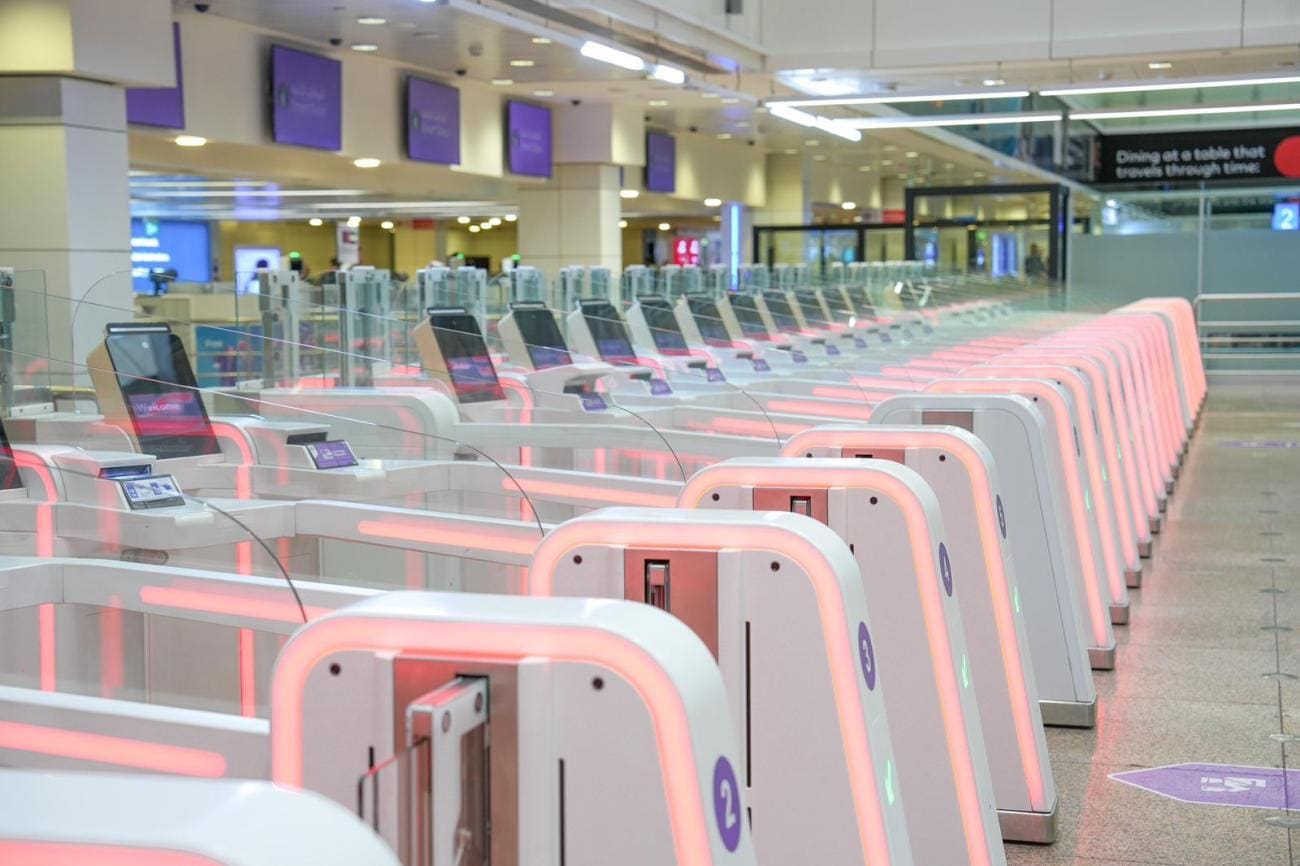
Dubai International has begun trialing a biometric clearance system that processes up to ten passengers at the same time, cutting terminal wait times by more than 60 percent, according to the General Directorate of Identity and Foreigners Affairs. The technology, which the airport calls its "red carpet" system, uses smart cameras and biometric recognition to verify travelers as they walk through, with some passengers cleared in as little as three seconds.
The system initially ran in Terminal 3 and is now being expanded to other areas of the airport. It builds on the existing Smart Gates infrastructure, which cleared more than 26 million travelers last year, but goes further by allowing multiple passengers to move through simultaneously without stopping at individual gates.
Paul Griffiths, chief executive of Dubai Airports, explained that the goal is to make security checks less intrusive while maintaining rigor. The system relies on camera technology that verifies passengers as they continue walking, with no need to present a physical passport or stop at a gate reader. It links to the airport's flight data and AI-powered passenger registration systems, creating what Dubai describes as a world-first integration.
Who Can Use It
The biometric gates are available to UAE and GCC nationals, UAE residents, and visa-on-arrival visitors with biometric passports. The system works at both arrivals and departures. Families with children and anyone under 1.2 meters tall cannot use the service, a limitation that affects a meaningful portion of travelers moving through a hub that handled tens of millions of passengers last year.
Passengers can check their eligibility before they travel using the Smart Gates Pre-Check tool, which is accessible globally. Registration requires scanning the photo page of a passport. For those already at the airport, QR codes displayed throughout passport control areas link to the same service.
The shift from individual gate readers to walk-through camera verification represents a practical leap. Traditional Smart Gates still require passengers to stop, scan a passport, and wait for biometric confirmation. The new system removes those steps entirely, letting people move through at a natural walking pace.
Timing and Context
Dubai International ranked as the world's second-busiest international airport in 2025, a position it has worked to maintain despite disruptions earlier this year. Aviation in the Middle East faced significant challenges in 2026 due to the Iran-US-Israel conflict, which affected passenger flows and flight schedules across the region. The biometric expansion comes as the airport looks for ways to improve throughput and retain its place at the top of global rankings.
The airport is also preparing to launch Joby air taxis, which are expected to speed up ground access to and from the terminals. Together, these moves reflect a broader push to reduce friction at every stage of the journey, from curb to gate.
What It Means for Passengers
Faster clearance times matter most during peak hours, when queues at passport control can stretch for dozens of meters and add significant time to journeys. A 60 percent reduction in wait times translates to minutes saved per passenger, which compounds across thousands of travelers moving through the airport each day.
But the technology also raises questions about privacy and data handling. Biometric systems rely on capturing and storing facial images, and the degree to which that data is retained, shared, or protected varies by jurisdiction. Dubai has not publicly detailed the data policies governing the new system, though the use of AI and integrated flight data suggests a high level of information aggregation.
The system's inability to accommodate children and shorter adults also points to design limitations. While the majority of travelers may benefit, families and individuals who fall outside the parameters will still need to use traditional passport control desks, creating a two-tier experience within the same terminal.
Broader Industry Shifts
Dubai is not alone in experimenting with biometric clearance. Airports in Europe, Asia, and North America have rolled out similar systems in recent years, though few have attempted to process multiple passengers simultaneously. Most biometric gates still operate on a one-at-a-time basis, which limits throughput even when individual clearance times are fast.
The walk-through model Dubai is testing could become a template for other high-volume hubs, particularly those facing space constraints or looking to avoid the cost and disruption of expanding physical infrastructure. If the system proves reliable at scale, it may shift expectations around what passport control should look like, moving from a checkpoint model to a more fluid, continuous verification process.
For now, the trial remains limited in scope. Expansion to all terminals and passenger categories will depend on performance data, regulatory approval, and the airport's ability to address edge cases where the technology struggles or fails. But the initial results suggest that the bottleneck at passport control, long a source of frustration for international travelers, may not be a permanent feature of air travel.