A Practical Concession
European Union officials have indicated they may adopt a more adaptable stance when implementing the bloc's biometric Entry/Exit System, acknowledging that rigid application could worsen congestion at key arrival points. The statement comes as airports across the continent continue to report extended processing times, with travellers from outside the Schengen zone facing waits that stretch well beyond pre-pandemic norms.
The Entry/Exit System, designed to replace manual passport stamping with digital fingerprint and facial recognition records, was introduced to tighten oversight of non-EU visitors and reduce document fraud. Yet the rollout has encountered persistent friction. Terminals at major hubs including Amsterdam Schiphol, Frankfurt, and Paris Charles de Gaulle have seen queues snake through arrivals halls during peak periods, frustrating passengers and airline schedules alike.
An official involved in the system's oversight suggested that enforcement would not follow a one-size-fits-all model. The term used was "flexibility," a signal that border agencies may be granted discretion to adjust procedures when passenger volumes spike or technical issues arise. The remark stops short of announcing concrete changes, but it marks a shift in tone from earlier assurances that the system would be applied uniformly across all entry points.
Why the System Struggles
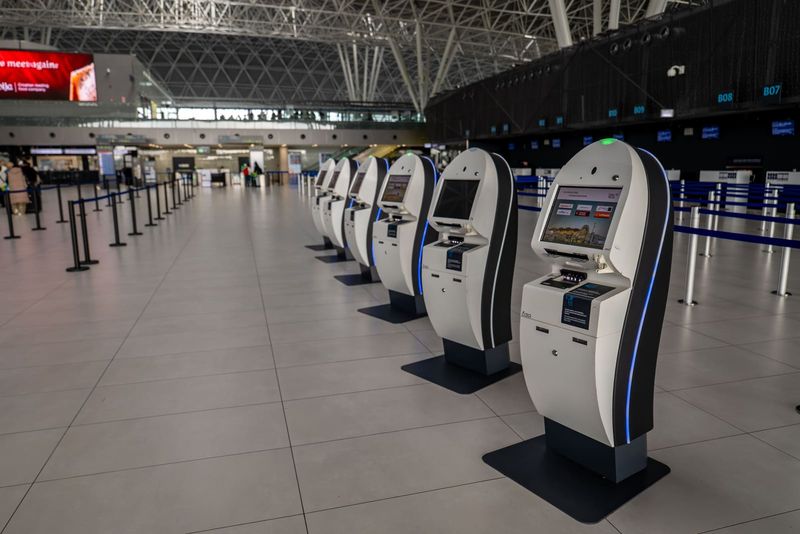
The Entry/Exit System requires every non-EU national entering the Schengen area to provide biometric data at the border. For first-time visitors, that means a full enrolment: fingerprints from both hands and a facial image captured at a kiosk or staffed counter. Repeat visitors are meant to pass through more quickly, with their stored data verified against live scans. In theory, the process should take under a minute per person.
In practice, bottlenecks appear when equipment malfunctions, when passengers are unfamiliar with the procedure, or when staff numbers fall short of demand. A single kiosk failure can divert dozens of travellers to manual desks, where processing slows to several minutes per person. Families travelling together often require assistance, and elderly passengers or those with mobility challenges may need extra time. During morning arrival waves, when multiple long-haul flights disembark within the same hour, the system can buckle.
The issue is compounded by uneven infrastructure investment. Smaller airports that handle seasonal charter traffic often lack the kiosk density of major hubs, yet they face the same regulatory requirements. A coastal gateway serving summer holiday routes may have only two or three biometric stations for an entire terminal, creating pressure points that ripple through the day's schedule.
What Flexibility Might Look Like
The official's remarks did not specify which aspects of the system might be relaxed, but several scenarios are plausible. One option would be to allow manual passport stamping as a fallback during periods of high congestion, effectively reverting to the old method when digital infrastructure cannot keep pace. Another would be to exempt certain categories of travellers from biometric capture on specific journeys, such as transit passengers who do not formally enter the Schengen zone.
A third possibility involves adjusting the frequency of biometric renewal. Current rules require that stored data be refreshed periodically, but if that interval were extended, repeat visitors could pass through with less frequent re-enrolment. Border agencies might also be permitted to operate express lanes for pre-vetted travellers, though that would require coordination with third-country governments to establish trusted-traveller programmes.
None of these measures has been confirmed, and any changes would likely require approval from multiple EU institutions. The European Commission sets the broad policy framework, but individual member states control how borders are staffed and equipped. A decision to ease requirements at one country's airports could create inconsistency, complicating enforcement and potentially undermining the system's original purpose.
The Wider Context
The Entry/Exit System is part of a broader push to digitise border management across Europe. It runs parallel to the European Travel Information and Authorisation System, a pre-travel clearance mechanism for visa-exempt visitors that is scheduled to launch in stages over the next two years. Together, the two systems aim to create a layered security framework that tracks arrivals and departures in real time, flagging individuals who overstay their permitted duration.
The ambition is sound, but execution has lagged. IT procurement delays, budget constraints, and disagreements among member states over data-sharing protocols have all slowed progress. Meanwhile, passenger numbers have rebounded sharply since the pandemic, with many routes now operating at or above 2019 levels. The mismatch between rising demand and incomplete infrastructure has left airports scrambling to manage flows without the tools they were promised.
Other regions face similar challenges. The United Kingdom introduced an Electronic Travel Authorisation scheme for certain nationalities in late 2024, and early reports suggest processing at Heathrow and Gatwick has been uneven. The United States has operated biometric exit systems at select airports for several years, but coverage remains patchy and manual checks are still common. Canada plans to expand its biometric requirements for visa-exempt travellers starting in 2027, though details on implementation remain sparse.
Passenger Impact
For travellers, the immediate effect is unpredictability. A journey that clears immigration in 20 minutes on one visit may take an hour on the next, with no obvious explanation for the difference. Business passengers with tight connection windows face heightened anxiety, and tour operators have begun building extra buffer time into itineraries to account for border delays. Some airlines have reported an uptick in missed connections, though it is difficult to isolate how much of that stems from biometric processing versus broader operational issues.
The uncertainty also affects travel planning. Families booking holidays to Europe now routinely check online forums for recent wait-time reports at their intended port of entry, and some adjust their flight choices to avoid known congestion points. Budget carriers that schedule quick turnarounds have less margin for delay, and a slow-moving immigration queue can cascade into missed slots and schedule disruptions later in the day.
What Comes Next
The official's comments suggest that policymakers recognise the system's current limitations, but whether recognition translates into meaningful adjustment remains to be seen. Any relaxation of requirements would need to balance operational pragmatism with the security objectives that motivated the system in the first place. A patchwork approach, where some airports apply strict biometric capture while others revert to stamps, risks creating confusion and undermining public confidence in the process.
The broader question is whether Europe's digital border ambitions are realistic given the infrastructure and staffing constraints that many airports face. Technology can streamline immigration, but only if the hardware works reliably, the software integrates smoothly, and enough personnel are on hand to assist passengers when things go wrong. Until those conditions are met consistently across the network, flexibility may be less a policy choice than a practical necessity.