A New Look for Cross-Channel Rail
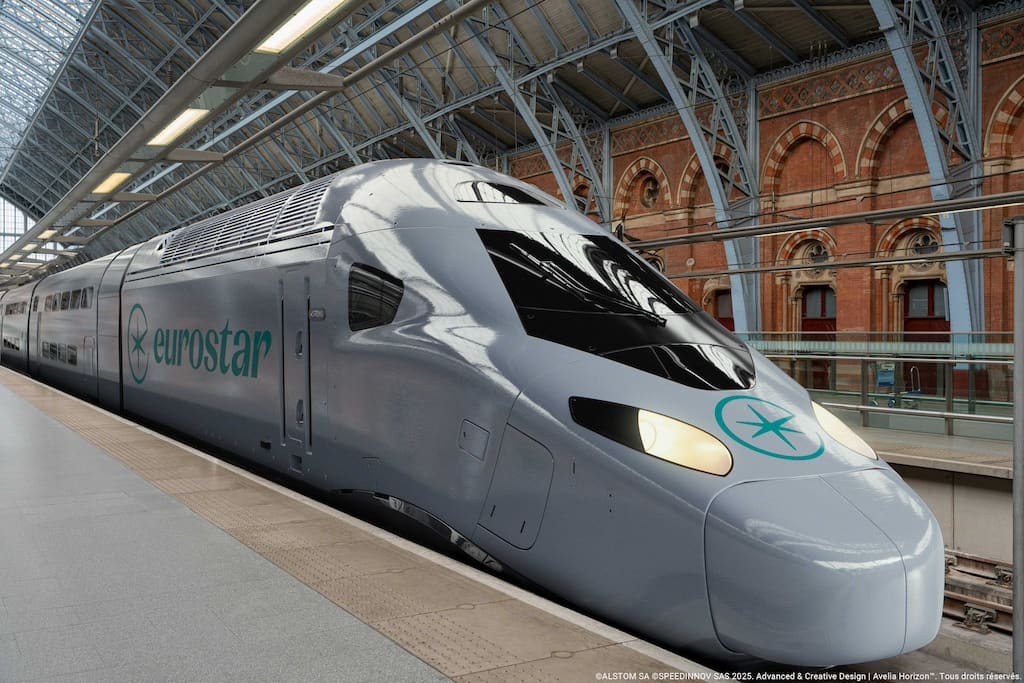
Eurostar has revealed that its forthcoming double-decker trains will include a two-storey cocktail bar, a design feature intended to set the service apart as competition for trans-Channel passengers intensifies. The Celestia fleet, ordered from Alstom for €2 billion and announced in autumn 2025, is scheduled to enter service by 2031. These will be the first double-decker trains to operate regularly in Britain since a short-lived experimental service ended in the early 1970s.
The new trains are designed to carry 20 per cent more passengers than the current fleet whilst remaining within the height restrictions of the Channel Tunnel and high-speed rail infrastructure. Eurostar has also emphasised that the carriages will be equipped with air conditioning systems capable of handling temperatures up to 55°C, a nod to the increasingly hot summers experienced across Europe in recent years.
What the Bar Offers
The two-storey cocktail bar is being positioned as a centrepiece of the Celestia design. According to Eurostar, the upper and lower levels will each have their own atmosphere, taking advantage of the double-decker configuration to offer passengers different perspectives and settings. The company described the bar as a "star attraction" that would provide "something really special" for travellers.
Unlike the exclusive lounges Eurostar operates at major stations, the cocktail bars will be open to all ticket holders, regardless of class. That accessibility may help the feature appeal to a broader range of passengers, though it also means the bars will need to manage demand carefully during peak travel periods.
The decision to highlight the cocktail bar in promotional material suggests Eurostar is looking beyond pure capacity gains and operational efficiency. The emphasis on ambience and experience signals an attempt to make the journey itself more memorable, particularly as the operator faces the prospect of sharing its routes for the first time in three decades.
New Rivals on the Horizon
Eurostar's focus on passenger experience comes at a moment when its long-standing monopoly on Channel Tunnel services is about to end. In August 2026, the Office of Rail and Road approved Virgin Trains' application to operate cross-Channel services. Virgin Trains plans to run up to 20 return trips daily between London St Pancras and cities including Paris, Brussels and Amsterdam, with services expected to begin by 2030.
Italy's state rail operator, Trenitalia, is also preparing to enter the market. The company has committed €2 billion to new rolling stock from Hitachi and is building an €80 million depot south of Paris to house its trains overnight. Trenitalia intends to operate 10 return services each day and, according to rail analyst Mark Smith, is "in pole position" with a planned start date of 2029.
The arrival of these competitors will fundamentally alter the dynamics of cross-Channel rail travel. For passengers, the changes could mean more frequent departures, greater price competition and a wider range of onboard offerings. For Eurostar, it means the end of an era in which it was the sole provider of high-speed rail links between London and the Continent.
Capacity and Comfort in a Crowded Market
The Celestia trains are being delivered at a time when demand for cross-Channel rail is expected to grow, driven by increasing environmental awareness, convenience and the expansion of high-speed rail networks across Europe. The 20 per cent increase in seating capacity will help Eurostar accommodate more passengers per service, potentially improving frequency and reducing ticket prices during off-peak periods.
However, capacity alone may not be enough to retain market share once Virgin Trains and Trenitalia begin operations. The two-storey cocktail bar, along with other design elements yet to be fully revealed, represents Eurostar's attempt to differentiate its service on the basis of experience rather than simply price or schedule.
The challenge will be ensuring that these features translate into a tangible advantage. Passengers choosing between operators will weigh factors including punctuality, ticket cost, seat comfort and the overall journey experience. A well-designed bar may enhance the trip for some travellers, but it is unlikely to be the sole deciding factor for most.
A Shift in Strategy
The emphasis on design and passenger amenities marks a shift for Eurostar, which has historically focused on speed, convenience and connectivity. The Celestia fleet's air conditioning, lower floor design and increased capacity are all practical responses to operational and environmental challenges. The cocktail bar, by contrast, is a statement about the kind of service Eurostar wants to provide.
Whether that strategy pays off will depend on how the new trains are received once they enter service, and how effectively Eurostar can communicate the value of its onboard offerings to passengers comparing multiple operators. The double-decker configuration, with its promise of different views and atmospheres across two levels, offers a visual and experiential distinction that may prove difficult for competitors to replicate.
As the 2029 and 2030 launch dates for rival services approach, Eurostar's investment in the Celestia fleet will be tested in a newly competitive market. The two-storey cocktail bar is a bold gamble on the idea that passengers will value experience as much as efficiency, and that a memorable journey can be as important as simply getting from one city to another.