Engineering for a Hotter Future
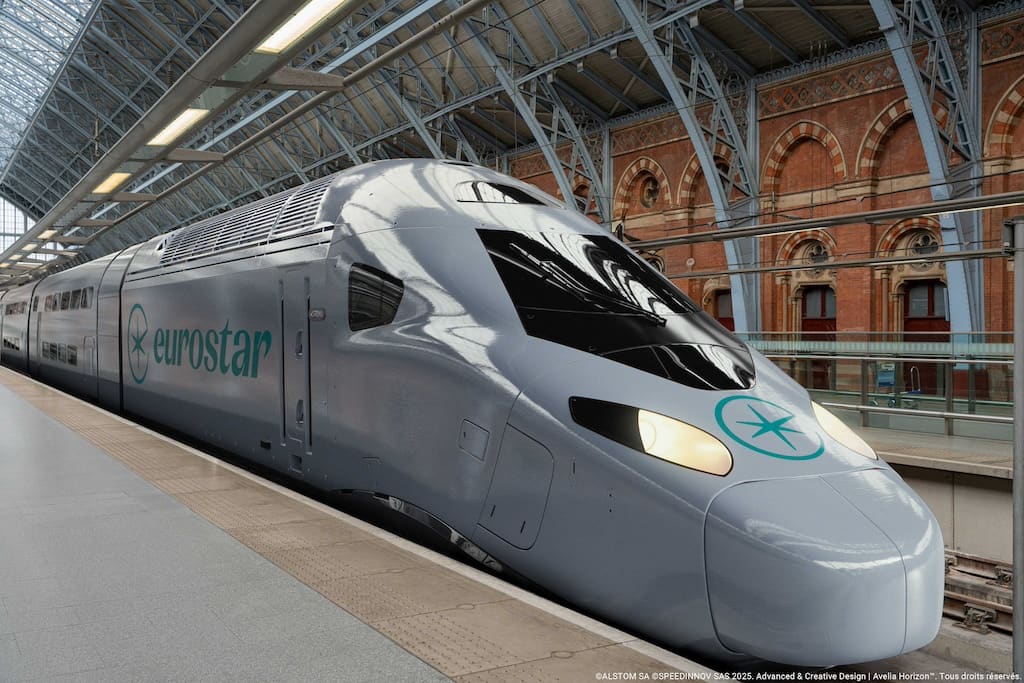
When Eurostar placed a €2-billion order with Alstom for 30 new double-decker trains back in 2023, most attention landed on the novelty: double-deckers had never run through the Channel Tunnel before. But buried in the technical specifications was a detail that tells a different story about the future of European rail travel. The new Celestia trains will be equipped with air conditioning capable of operating in temperatures up to 55°C, rivalling the heat found in Tunisia's Kebili desert and Ethiopia's Danakil Depression.
It sounds like overkill for trains that will spend most of their service lives shuttling between London, Paris, Brussels, and Amsterdam. But the summer of 2026 made the case for this kind of forward planning. On 25 June, temperatures in parts of France hit a record 44°C. Eurostar cancelled four trains that day. One service carrying hundreds of passengers sat immobilized for hours in what riders later described as hellish conditions. The company now carries bottled water on board during heat waves and has introduced daily air conditioning checks across its existing fleet.
Chief executive Gwendoline Cazenave told the Financial Times she never anticipated needing to specify desert-grade cooling systems for trains operating in northern Europe. But the numbers have shifted. The 2026 heat wave arrived earlier, lasted longer, and pushed temperatures higher than anything in recent memory. Cazenave compared the conditions to Saudi Arabia, a reference point that would have seemed absurd a decade ago.
A 10-Degree Upgrade
When Alstom first announced the Celestia model, the trains were designed to handle temperatures up to 45°C. Eurostar has since pushed that threshold another 10 degrees higher. The decision reflects a longer time horizon: these trains will enter service in 2031 and are expected to remain operational into the 2060s. Planning for equipment that will run for three decades means accounting for climate scenarios that may seem extreme today but could become routine by mid-century.
The 55°C specification puts the trains on par with rolling stock designed for the Middle East and North Africa, regions where rail operators have long contended with extreme heat. For Europe, it represents a quiet acknowledgment that the continent's climate is shifting in ways that demand infrastructure built for resilience, not just current conditions.
More Seats, More Routes
The Celestia trains will do more than just withstand heat. At 200 metres long and configured across two levels, each train will carry up to 540 passengers, a 20% increase over current capacity. The double-decker format is standard in France and common across much of continental Europe, but it will be a first for the UK rail network when the trains begin running through the Channel Tunnel.
Eurostar has an option to purchase an additional 20 trains beyond the initial 30-unit order. The expanded fleet is part of the company's plan to reach 30 million passengers per year. New routes are also on the horizon: Geneva will join the network via connections through Amsterdam and Brussels, adding Switzerland to a map that already includes Belgium, France, Germany, and the Netherlands.
The Cost of Keeping Trains Running
The move to upgrade cooling capacity comes at a time when European rail operators are grappling with the cascading effects of extreme weather. Heat warps tracks, stresses electrical systems, and puts pressure on components that were never designed to operate outside a narrower temperature band. Cancellations and delays have become more frequent during summer months, eroding reliability and passenger confidence.
Eurostar's decision to over-engineer its next fleet carries a clear trade-off: higher upfront costs in exchange for operational continuity over the long term. The alternative, retrofitting trains mid-life or accepting more frequent service disruptions, comes with its own price tag, both financial and reputational.
A spokesperson for Eurostar framed the decision in straightforward terms: the trains will run into the 2060s, and preparing for the future is essential. That future, at least in the view of the company's planners, includes summer temperatures that once belonged only to the world's harshest climates.
What It Means for Passengers
For travellers, the immediate benefit is continuity. Trains that can operate in extreme heat are less likely to be pulled from service during the hottest days of summer, when demand for cross-border travel often peaks. The expanded capacity should also ease pressure on popular routes, though whether that translates to lower fares or simply more availability remains to be seen.
The broader implication is that climate adaptation is no longer an abstract planning exercise. It is becoming embedded in the metal and circuitry of the infrastructure people rely on to move across Europe. Eurostar's 55°C threshold may look like an outlier today, but it could just as easily become the baseline for the next generation of European rolling stock.