A Startup Betting on Connectivity
Northwest Spain is getting a dedicated airline. Fly2Galicia will begin scheduled service on 1 December from Santiago de Compostela's Rosalia de Castro airport, operating flights to eight destinations across Spain and central Europe. The network includes three domestic points - Zaragoza, Alicante, and Granada - alongside Milan, Venice, Munich, Prague, and Brussels. One-way fares start at €21.50, with return legs priced from €19.
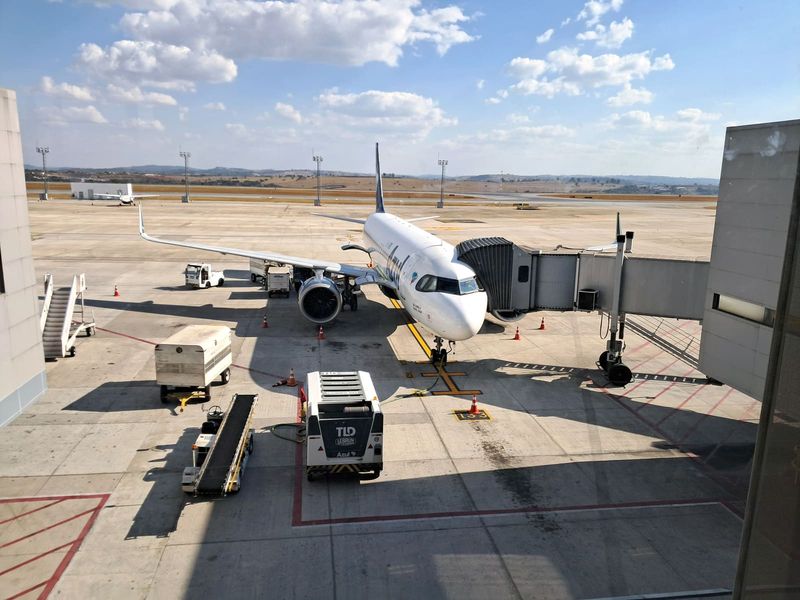
The carrier is launching with a single aircraft wet-leased from an unnamed European operator, a setup that lets it avoid the capital outlay of buying or dry-leasing planes. Wet leases, which bundle aircraft and crew, are standard practice for startups testing demand and for established carriers covering peak seasons or route experiments. Fly2Galicia has advertised for its own cabin crew, though it remains unclear whether cockpit and ground staff will also come from the leasing partner.
The Economics of Entry-Level Fares
The cheapest tickets are on domestic legs. A round trip between Alicante and Santiago de Compostela in mid-December costs €40.50 under the Economy Go fare, which includes an eight-kilogram cabin bag. Three higher tiers - Economy Plus, Economy Premium, and Business Premium - add checked luggage, seat selection, catering, and in the top bracket, lounge access, free cancellation, and a blocked middle seat.
That tiered structure mirrors the unbundling strategy of most European low-cost carriers, where the headline fare covers only a seat and a small bag. For travelers willing to travel light, the base price is competitive with bus and rail on longer domestic routes within Spain. For those needing flexibility or comfort, the upcharges add quickly.
Filling a Gap in the Northwest
Galicia has long complained of limited direct air links, especially to business hubs and secondary cities. The region's main gateways - Santiago de Compostela, A Coruña, and Vigo - have historically depended on connections through Madrid or Barcelona for most European destinations. Fly2Galicia's network targets that gap, offering point-to-point service to cities that see steady tourist and business traffic but have lacked nonstop options from the northwest.
Santiago de Compostela also sits at the terminus of the Camino de Santiago, a pilgrimage network that draws hundreds of thousands of walkers each year. Many pilgrims fly into Porto or Madrid and take ground transport to their starting points, then face the same journey in reverse. A low-fare option from Santiago itself could capture return traffic, especially for walkers on tighter budgets or those who want to extend their stay in Galicia without backtracking.
The Risks of Reliance
Wet-lease arrangements offer flexibility, but they also introduce dependencies. If the leasing carrier faces operational trouble - crew shortages, maintenance delays, or financial stress - the lessee's schedule can unravel quickly. Fly2Galicia will need to demonstrate reliable service in its first season to build the repeat bookings and corporate contracts that sustain regional carriers beyond the novelty phase.
The airline is also rolling out a loyalty program, the Fly2Galicia Miles Programme, which suggests ambitions beyond a single winter season. Points-based schemes require scale to be attractive; frequent flyers typically consolidate their travel with carriers that serve a broad network or belong to an alliance. For a startup with eight routes, the program may be more about signaling longevity than delivering immediate value.
What Comes Next
Spain's airport operator Aena has yet to comment publicly on the launch, and Fly2Galicia has not disclosed passenger targets or breakeven load factors. The carrier's survival will hinge on whether it can fill seats through the slower winter months and convert early adopters into regular customers by spring. If demand holds, the single leased plane could be joined by additional aircraft and routes. If not, the wet-lease model makes it easier to wind down operations without the albatross of owned or long-term contracted fleet.
For now, travelers in and out of Galicia have a new option. Whether it becomes a fixture or a footnote depends on execution, pricing discipline, and whether the market for direct regional flights proves as robust as the airline's founders believe.