Four More Aircraft by December
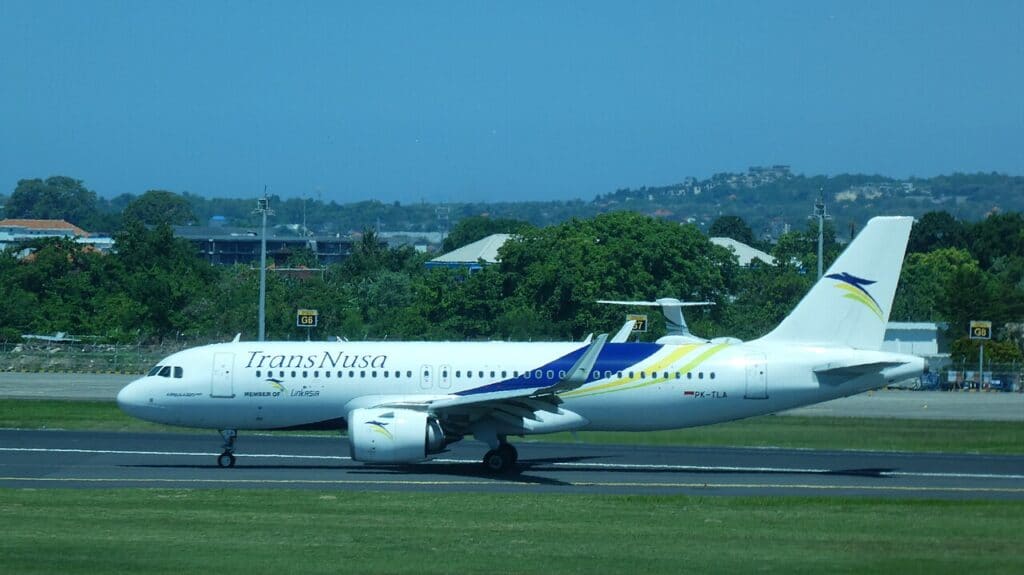
TransNusa will take delivery of four additional aircraft before the end of 2026, bringing its total fleet to 23. The Indonesian carrier currently flies a mix of Airbus A320s, A321s, and COMAC C909 regional jets from hubs in Jakarta, Bali, and Manado. The airline announced the expansion as it prepares to boost capacity on routes where demand is already robust rather than scattering resources across untested markets.
The move reflects a deliberate preference for consolidation over sprawl. Instead of opening a dozen new destinations, TransNusa is deepening service where it already has a foothold. That means higher frequencies, better connectivity for passengers, and a more efficient use of slots and crew.
Bangkok and Phuket Join the Network
TransNusa will launch twice-daily flights between Jakarta and Bangkok starting August 6. A month later, in September, the airline will introduce a Denpasar-Phuket route. Both services target leisure and business travelers moving within Southeast Asia's busiest corridors. Thailand remains one of the region's most visited destinations, and the new links give Indonesian passengers more direct options without routing through Singapore or Kuala Lumpur.
The airline is also working to secure additional slots at Singapore Changi Airport, aiming to lift daily frequencies from three to five. The Singapore-Indonesia corridor sees heavy traffic in both directions, driven by tourism, family ties, and corporate travel. More flights mean more flexibility for travelers and stronger positioning against competitors who already dominate the route.
Frequency Over Footprint
Rather than chase headline-grabbing launches, TransNusa is betting on the unglamorous work of adding a third or fourth daily departure. Higher frequency improves yield management, lets the airline capture early-morning and late-evening demand, and builds loyalty among business travelers who value schedule choice.
The strategy also offers a cushion against volatility. Fuel prices, while down roughly 15 to 20 percent since the first half of the year, remain unpredictable. Fare competition across Southeast Asia is fierce, and economic headwinds in key source markets have crimped consumer spending. By sticking to routes that already perform, TransNusa limits exposure while keeping load factors healthy. The carrier reports an average load factor of around 80 percent and year-on-year passenger growth approaching 20 percent.
Domestic Fares Ease as Fuel Costs Drop
Lower jet-fuel prices have translated into roughly 10 percent cheaper domestic fares across Indonesia. That relief comes at a critical time: disposable income in some segments has weakened, and travelers are more price-sensitive than they were a year ago. Cheaper tickets should stimulate demand, particularly for leisure travel within the archipelago, where price elasticity is high.
TransNusa operates an extensive domestic network alongside its international services to Malaysia, Singapore, China, Australia, and Thailand. The airline has also expressed interest in resuming international flights from Bandung's Husein Sastranegara Airport, which would decentralize traffic from Jakarta and Bali and open up West Java as a gateway.
A Measured Bet on Growth
The fleet addition and network enhancements position TransNusa to capture a larger share of Southeast Asia's recovering travel market without overextending. The airline's mix of narrowbody Airbus jets and smaller COMAC regional aircraft gives it flexibility to serve both high-density trunk routes and thinner secondary markets.
Indonesia's role as an aviation hub continues to grow, driven by a large domestic population, rising incomes, and the archipelago's geographic spread. For carriers willing to balance ambition with operational discipline, the opportunity is real. TransNusa's approach - modest fleet growth, frequency over novelty, and a focus on proven corridors - suggests it understands the trade-offs. Whether that discipline holds as competition intensifies will determine how much of the growth story the airline can claim for itself.