Testing Begins Across the Alps
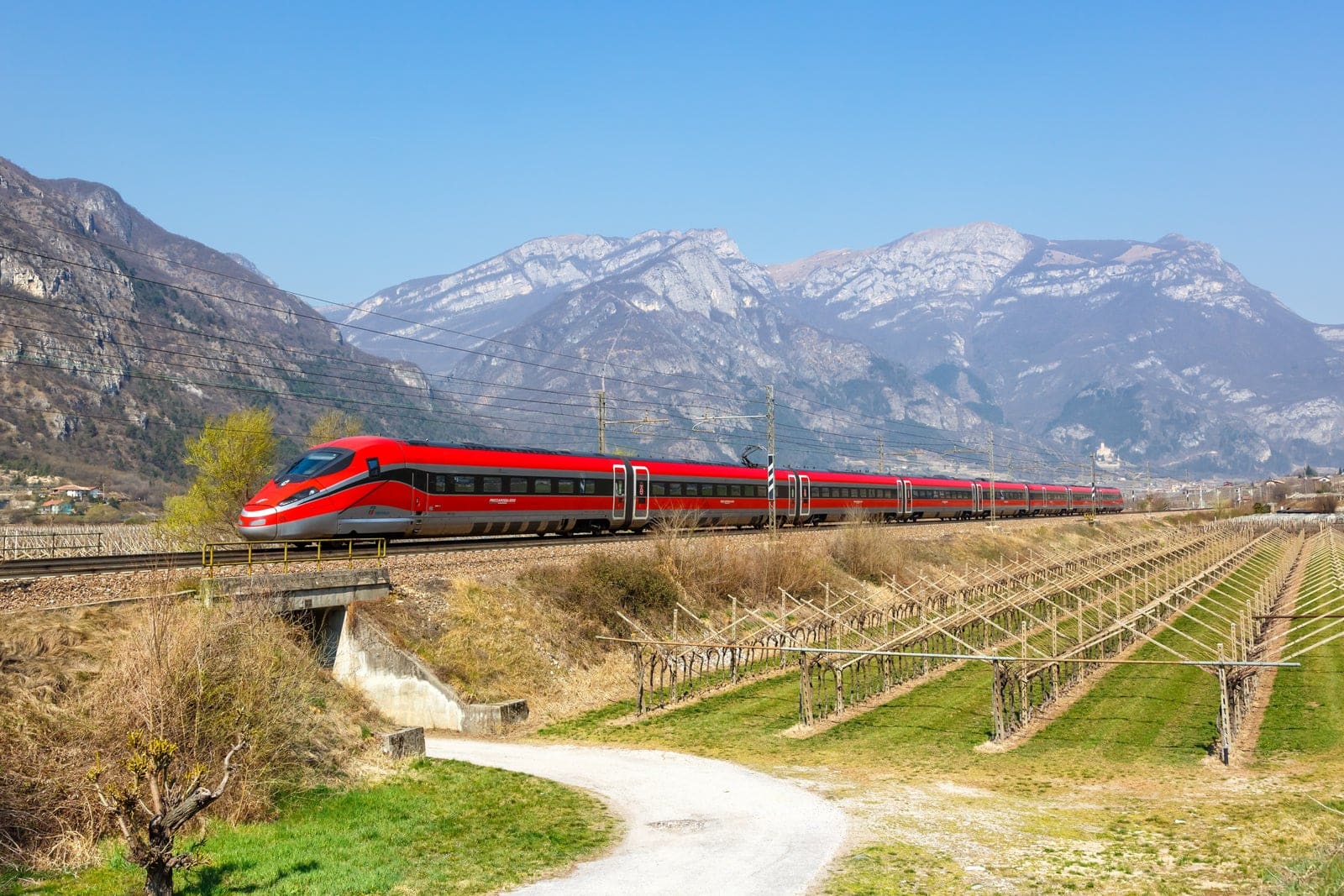
Italy's state railway Ferrovie dello Stato has begun trial runs of its Frecciarossa 1000 high-speed trains on routes connecting Munich, Berlin, Salzburg and Vienna. The tests, conducted in partnership with Deutsche Bahn and ÖBB, represent the first operational phase of a long-discussed plan to stitch together southern and central European cities through faster rail.
The Frecciarossa 1000 series was built to run on multiple national networks, a technical requirement that has historically slowed cross-border rail in Europe. Different voltage systems, signaling standards and regulatory frameworks have long made it easier for airlines to move passengers between countries than for trains to do the same. These trials are testing whether the Italian trains can handle the mix of infrastructure they will encounter once commercial service starts.
Four Routes, Two Journey Times
Commercial service is scheduled to begin ahead of summer 2027, according to Ferrovie dello Stato. Initially, four connections will run on existing lines between Milan and Munich, and Rome and Munich. The Milan route will take around six and a half hours, stopping in Brescia, Verona, Rovereto, Trento, Bolzano and Innsbruck. The Rome service will take roughly eight and a half hours, adding Florence and Bologna to the list of stops.
Those journey times put the trains in direct competition with short-haul flights, which typically take 90 minutes gate to gate but require additional time for security, boarding and airport transfers. The rail option also appeals to travelers who prefer to avoid the carbon footprint of flying or who value the ability to work or move around during the trip.
Trenitalia and Deutsche Bahn are collaborating on driver training and technical knowledge-sharing to support the new service. That coordination reflects the operational complexity of running trains across multiple jurisdictions, each with its own safety protocols and labor rules.
Expansion Plans Through 2028
Ten additional connections are planned for December 2028, extending the network to include Naples and Berlin. Ferrovie dello Stato said the expanded service will also serve demand for other European destinations, including Frankfurt and Krakow, though details on those routes have not been released.
The phased rollout suggests the railways are taking a cautious approach, starting with proven demand corridors before adding less-tested city pairs. It also reflects the lead time required to secure track access, coordinate schedules with other operators, and train staff across multiple countries.
Gianpiero Strisciuglio, CEO of the FS Group, framed the project as part of a broader ambition to position trains as the default mode of travel within Europe. The railway has separately ordered 19 trains through its French subsidiary as part of a plan to compete with Eurostar on the Paris-London route starting in 2029.
What It Means for Cross-Border Travel
The entry of Italian high-speed trains into the German and Austrian markets adds a new competitor to a landscape that has been dominated by national carriers. For travelers, that could mean more departure times, lower fares on some routes, and a wider choice of onboard service standards.
It also tests whether the European Union's push for greater rail competition can deliver the kind of seamless, frequent service that exists within individual countries. France, Spain and Italy have all built extensive high-speed networks over the past three decades, but cross-border links have lagged. The technical and regulatory barriers that made that difficult are gradually being addressed, but operational coordination remains a challenge.
For now, the focus is on getting the initial four routes running reliably. If those prove successful, the model could extend to other parts of the continent where air travel currently dominates mid-distance trips.