A Bold Shape Returns to the Strip
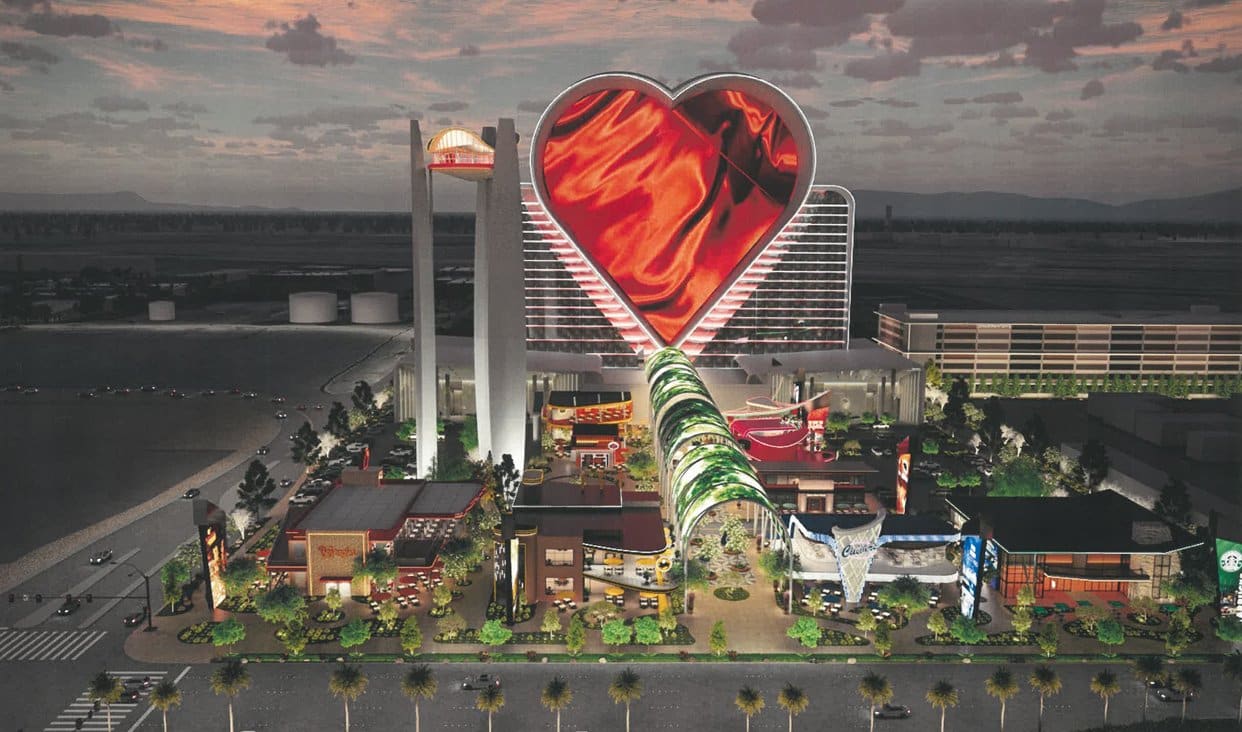
Clark County's Zoning Commission unanimously approved a 29-story hotel and casino on 22 July that would bring back the kind of bold, whimsical architecture Las Vegas spent years moving away from. The tower, planned for a site near Mandalay Bay that has sat mostly empty for more than a decade, features a giant heart-shaped void running through its center. Developer Eli Applebaum, working through Kulik River Capital, plans to wrap the entire facade in LED screens programmed to display animated content.
The approval clears a major regulatory step for a project that would include roughly 752 guest rooms, a casino floor, over 42,000 square feet of convention space, restaurants, retail, a pool deck, and a pedestrian plaza modeled after the downtown Fremont Street Experience, according to the county.
The site itself carries baggage. It's home to the unfinished concrete columns of SkyVue, a Ferris wheel project that collapsed in the early 2010s after burning through more than 100 million dollars. Rather than demolish the remnants, the new design incorporates them into a restaurant suspended about 265 feet above ground. What was once considered an eyesore on the Strip's southern edge would become part of the structure.
Scaling Back for the Airport
The approved design is smaller than what was initially proposed. Project representatives told the commission that the building's height was reduced by roughly 60 feet to meet Federal Aviation Administration requirements, given its proximity to Harry Reid International Airport. That reduction also trimmed the number of planned hotel rooms.
The changes reflect a common tension in Las Vegas development: ambitious designs often collide with airspace restrictions, zoning limits, and budget realities. Whether this project proceeds as drawn remains an open question, especially given the site's troubled history.
Split Reactions Online
The heart motif and LED-heavy exterior sparked immediate reactions once renderings circulated online. Social media users described the design as "atrociously tacky," with some comparing it to an oversized Valentine's Day ornament. On Reddit, one commenter quipped that the project belonged in a category of "things that won't actually get built," while another suggested a consultancy had been paid millions to produce the concept.
Not everyone dismissed it. A number of users welcomed the return of themed architecture after years of sleek, interchangeable glass towers. "I love the cheesy Vegas vibes," one person wrote. Another argued that theme hotels are staging a comeback after the city leaned into a more corporate aesthetic for much of the past two decades.
The debate touches on a broader question about what Las Vegas should look like. The Strip once defined itself through outsize spectacle: a pyramid, a castle, a miniature New York skyline. Many of those properties have since rebranded or toned down their themes. This project would reverse that trend, at least visually.
A Tough Moment for Visitor Numbers
The approval comes as Las Vegas faces headwinds in its core business. Visitor numbers dropped 7.5 percent to around 38.5 million in 2025, according to the Las Vegas Convention and Visitors Authority. Rising travel costs, international travel complications, and competition from online gambling all contributed to the decline.
New developments are often framed as solutions to slumping demand, but they also add supply to a market that's already adjusting. The southern end of the Strip, where this project would sit, has seen less foot traffic than the central corridor. Whether a heart-shaped tower can pull visitors south, or simply add another property competing for the same pool of guests, will depend on execution and timing.
What Comes Next
Zoning approval doesn't guarantee construction. Financing, permitting, and market conditions all play a role in whether a project moves forward. Las Vegas has a long list of announced resorts that never broke ground or stalled partway through.
If built, the hotel would join a Strip landscape that's increasingly fragmented between legacy properties, new luxury brands, and attempts to recapture the campy energy that once defined the city. The heart shape is a gamble, both aesthetically and commercially. It signals a willingness to stand out, even at the risk of being mocked. That's always been part of the Las Vegas formula, though the city has spent years trying to outgrow it.
For now, the project moves forward on paper. The real test will be whether the developer can turn renderings into steel and glass, and whether visitors respond to a design that's as divisive as it is distinctive.