A Film That Refuses to Fade
Some films lodge themselves in the collective memory and refuse to budge. The Holiday, released in 2006, is one of them. The rom-com starring Cameron Diaz, Kate Winslet, Jude Law, and Jack Black may have been dismissed by critics as formulaic at the time, but audiences thought otherwise. It performed well at the box office and has since cemented itself as a seasonal ritual for many viewers, watched annually against the glow of Christmas lights.
The film's appeal lies partly in its dual-location structure. It toggles between glossy Californian sunshine and the kind of English countryside that looks plucked from a postcard. As the film approaches its twentieth anniversary, interest in its real-world settings has only grown. For some, visiting these places is a way to step inside the story. For others, it is simple curiosity about what is real and what was manufactured for the camera.
The Surrey Countryside
Most of the UK sequences were shot in Surrey, a county south-west of London known for its rolling hills and villages that feel frozen in an earlier century. The stone bridge that Diaz's character crosses at a run is real. It spans the River Tillingbourne in Shere, a village that has appeared in other films and television programmes over the years. The bridge is accessible to the public, and visitors can walk the same path.
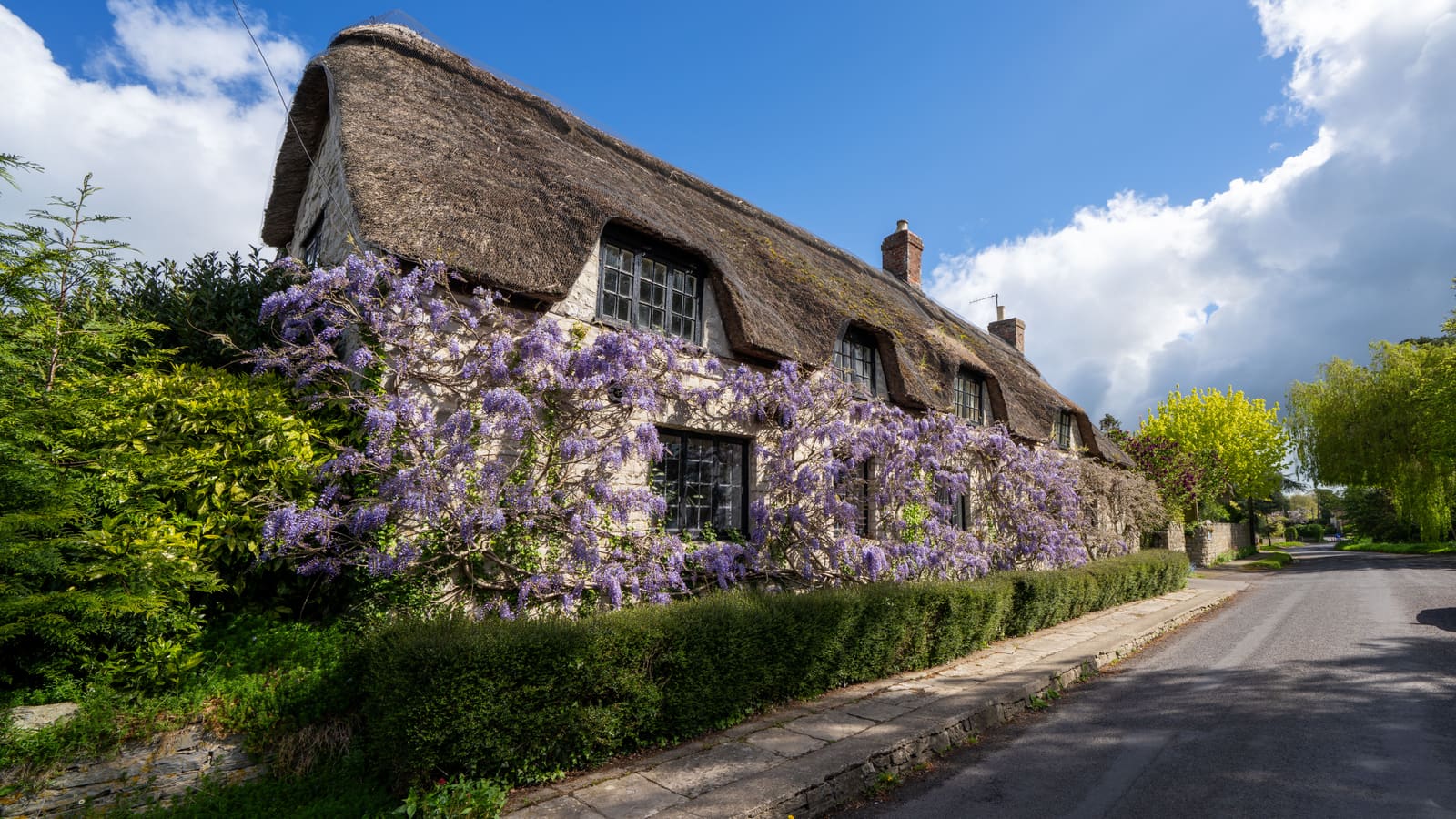
But the cottage itself - the cosy, rose-covered Rosehill Cottage where Winslet's character Iris lives - was not a permanent structure. It was a temporary set built in a field near St. James's Church in Shere. After filming concluded, it was dismantled. Interior scenes were not shot on location in England at all. They were filmed on a soundstage in California, a detail that underscores the artifice involved in creating the film's sense of place.
The Disappointment of Artifice
For fans hoping to visit the cottage, this is a letdown. The image of Rosehill Cottage has become iconic, a shorthand for a certain kind of English rural charm. It represents the fantasy of escape that the film's premise hinges on - two women swapping homes across continents to reset their lives. But the cottage was only ever a façade, built to look convincing from the outside and then taken apart.
This is not unusual in film production. Sets are often constructed for a specific purpose and then removed. But it does complicate the experience of visiting a filming location. What remains in Shere is the landscape, the church, the river. The cottage itself exists only in the film and in the collective imagination of its viewers.
What You Can Still See
Shere is worth visiting in its own right. The village has a history that stretches back to the Norman period, and its architecture reflects centuries of slow change. St. James's Church, dating to the twelfth century, sits at the centre. The River Tillingbourne runs through the area, and footpaths wind through the surrounding countryside.
The stone bridge is there, as is the general topography that frames the film's UK scenes. Visitors can walk the same streets and lanes that appear on screen. The village has become accustomed to fans of The Holiday arriving to take photographs and retrace the movements of the characters. It is a quiet form of tourism, driven by affection for the film rather than any dramatic event that took place there.
The Broader Appeal of Film Tourism
The Holiday is part of a broader trend in which films and television programmes drive interest in specific locations. This phenomenon has accelerated over the past two decades, aided by social media and the ease of sharing images from places seen on screen. Destinations that might otherwise attract modest visitor numbers can see a surge in attention if they feature prominently in a popular production.
Surrey has benefited from this to some extent, though the effect is diffuse. The county is already accessible from London and draws visitors for reasons unrelated to film. The Holiday adds another layer of interest, particularly during the weeks leading up to Christmas when the film is most often watched.
The Limits of Replication
There is something inherently melancholic about seeking out a location that was never fully real. The cottage in The Holiday is a reminder that what we see on screen is often a composite - elements of real places stitched together with constructed sets and digital effects. The film creates a sense of place that feels coherent and whole, but the reality is more fragmented.
This does not necessarily diminish the value of visiting. Even if the cottage is gone, the landscape that inspired it remains. The river, the bridge, the village - they are all genuine. They offer a connection to the film, even if it is not the exact connection that some visitors might hope for.
Twenty Years On
As The Holiday reaches its twentieth anniversary, its appeal shows no sign of waning. It has become a seasonal fixture, watched by people who were not yet born when it was released. The film's blend of romance, comedy, and picturesque settings continues to resonate, even as tastes in cinema evolve.
The filming locations are part of that enduring appeal. They offer a tangible link to the story, a way to inhabit the world of the film, however briefly. For those who make the journey to Shere, the experience is less about finding an exact replica of what appears on screen and more about stepping into the atmosphere that the film evokes. The cottage may be gone, but the landscape that framed it is still there, waiting.