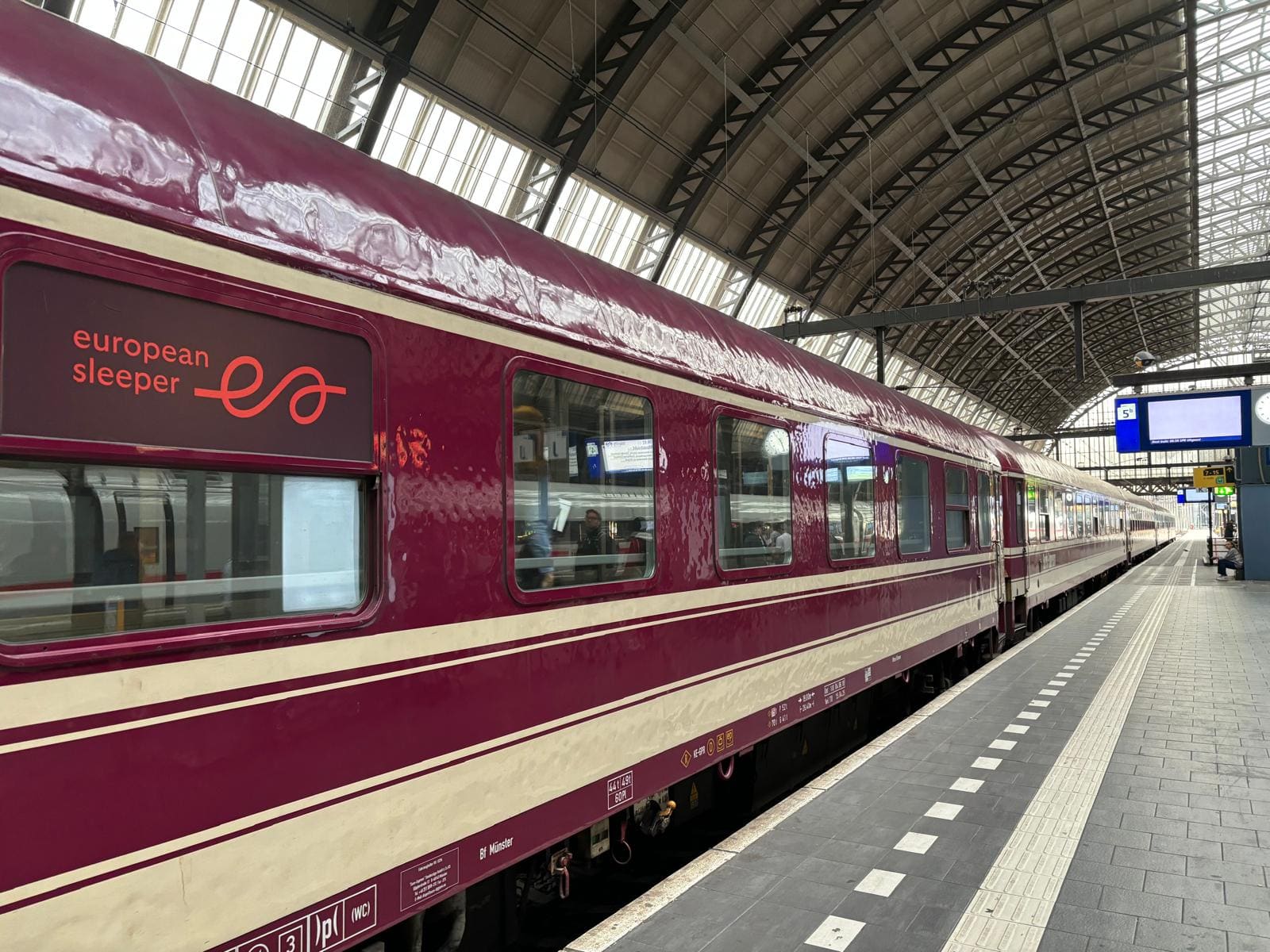
A New Overnight Option
European Sleeper launched its Paris-Brussels-Hamburg route in mid-July, running three departures per week in each direction. The service follows a straightforward path: passengers board in Paris or Hamburg in the evening, travel through the night, and arrive at the other end the following morning. Intermediate stops include Aulnoye-Aymeries, Mons, and Liège.
The Monday, Wednesday, and Friday trains depart Hamburg, while the Sunday, Tuesday, and Thursday services leave Paris. Travel time hovers around twelve hours, depending on the specific leg.
What It Costs
Base tickets start at €69.99 for a spot in a classic shared compartment, which fits five people in compact couchette beds with bedding. Solo travelers, families, and small groups can book individual berths, or pay from €209 to reserve the entire compartment.
Cheaper seats in six-person compartments are available for those willing to skip the lie-flat option. At the other end, Comfort Class offers three-person compartments with upgraded bedding and a separate seating area; couples or solo travelers looking for more space tend to pick this tier. Women-only compartments are also part of the mix.
Hamburg as a Destination
Paris needs no introduction, but Hamburg often flies under the radar despite being Germany's second-largest city. The port city has traded with the world since medieval times, and that history shows up in its architecture, neighborhoods, and food scene. The Speicherstadt warehouse district, with its red-brick buildings and canals, sits alongside contemporary structures in the HafenCity quarter.
Live music venues dot the city, and the waterfront runs for miles. Parks, markets, and hidden courtyards break up the urban grid. The vibe is less polished than Munich or Berlin, which tends to appeal to travelers tired of high-gloss tourism.
Connections North
The Hamburg stop matters beyond the city itself. Existing rail lines run from Hamburg to Copenhagen, Stockholm, and Oslo, turning the new night train into a bridge to Scandinavia for travelers starting in Paris or Brussels. That routing avoids the hassle of budget airline schedules and airport transfers, though it does require an extra connection and more time.
Michael Otremba, CEO of the Hamburg Tourist Board, noted earlier this year that the addition reinforces the city's role in Europe's rail network, particularly as a link between Scandinavia and the continent's southern and western cities.
Expansion and Competition
The Paris-Hamburg service builds on European Sleeper's Paris-Brussels-Berlin route, which started in March. The company is gradually stitching together a network of overnight trains across central and western Europe, betting that enough travelers prefer rail to flying or driving.
Austrian rail operator ÖBB runs competing Nightjet services from Brussels to Vienna, and other operators are adding or restoring sleeper routes across the continent. The market is still small compared to short-haul flights, but it is growing, driven by travelers who value the convenience of waking up in a new city without losing a day to transit.
Practicalities
European Sleeper operates with a straightforward booking system. Tickets can be purchased online, and passengers choose their class and compartment type at the time of reservation. Bikes can be brought on board for an additional fee, though space is limited and advance booking is required.
The trains themselves are refurbished rolling stock, not new builds. That means amenities are functional rather than luxurious. Compartments are clean and reasonably comfortable, but travelers expecting hotel-quality sleep may need to adjust expectations. The trade-off is the ability to cover long distances without taking time out of the day.
For now, the three-times-weekly schedule keeps capacity in check. Whether European Sleeper will add more frequencies depends on demand and the availability of additional train sets and track slots, both of which are in short supply across Europe's rail network.