A New Overnight Link
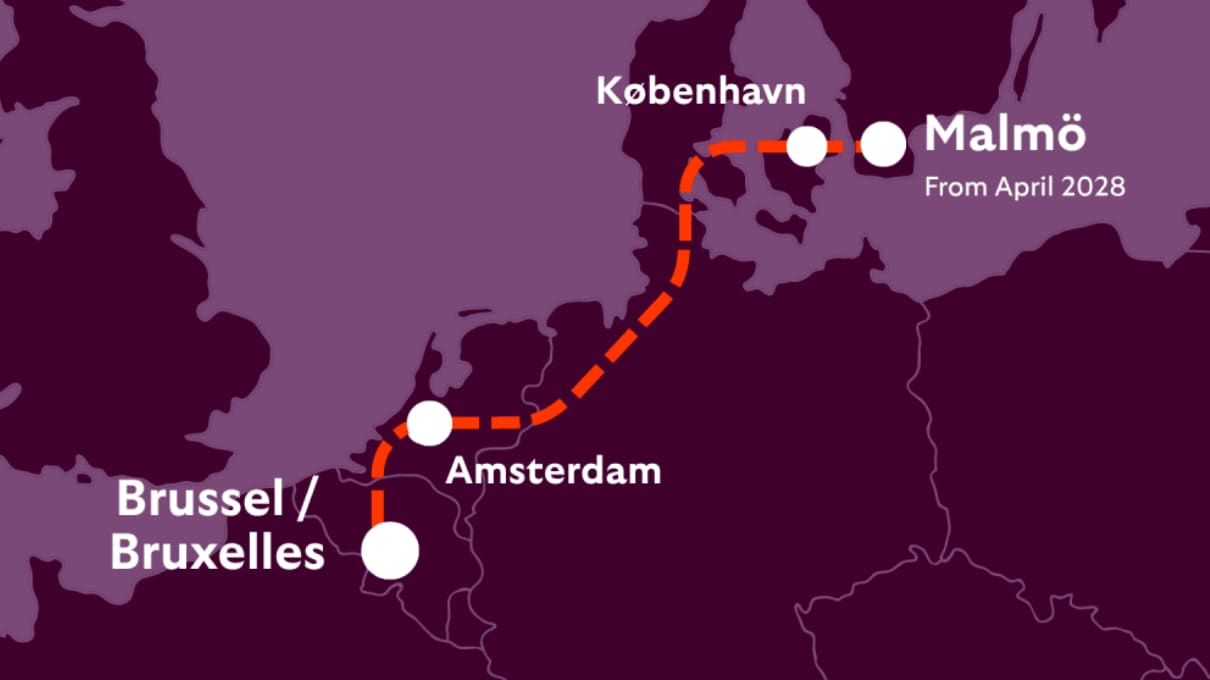
By spring 2028, travelers will be able to board an evening train in Brussels or Amsterdam and wake up in Copenhagen the next morning. European Sleeper announced plans for a new night service connecting the Benelux region with Denmark and Sweden, marking the operator's first route into Scandinavia.
The train will stop in Brussels, Antwerp, Rotterdam, The Hague, Amsterdam, and Copenhagen, with departures from both Brussels and Malmö scheduled three times a week at around 7:00 pm. Passengers will arrive at their destination by roughly 10:00 am the following day, according to European Sleeper.
It is a practical schedule for anyone who values a full day at either end, whether that means meetings in Copenhagen or a morning walk along the canals in Amsterdam. The timing also reflects a broader shift in how people are choosing to move across Europe: less hurried, more deliberate, and increasingly conscious of the carbon cost of short-haul flights.
What to Expect on Board
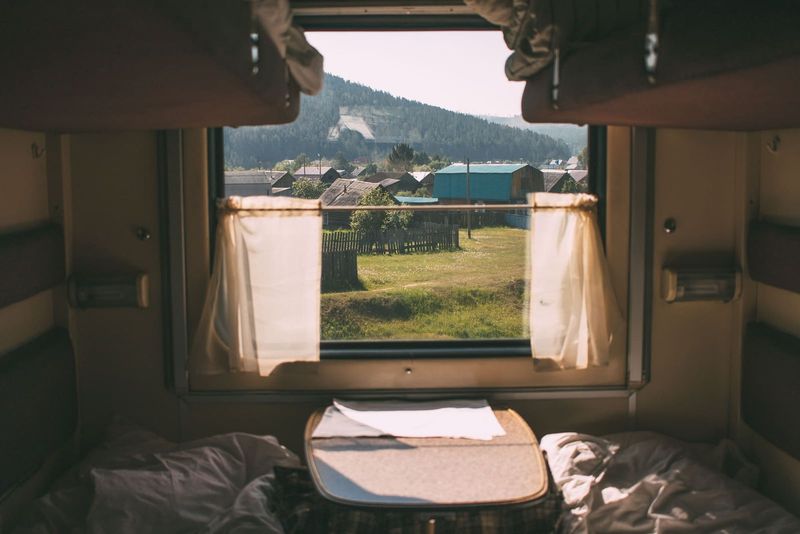
European Sleeper typically offers a mix of seating, couchettes, and sleeping compartments. For this route, the company is considering more upscale options, including double beds and private en-suite bathrooms. The move aligns with what the industry calls premiumization, a trend that has seen everything from airlines to hostels add higher-end tiers to capture travelers willing to pay more for comfort and privacy.
Whether these premium cabins materialize will likely depend on demand and the realities of fitting upgraded interiors into existing rolling stock. But the fact that they are under consideration suggests European Sleeper is reading the room: overnight trains are no longer just for backpackers on a budget.
Building on Experience
The new service will rely on a partnership with RDC, a German rail operator that already collaborates with European Sleeper on routes to Paris, Berlin, and Milan. RDC has years of experience running night trains between Germany and Scandinavia, which should help smooth the operational and regulatory complexities that come with crossing multiple borders.
Markus Hunkel, chief executive officer of RDC, noted that the partnership combines RDC's operational expertise with European Sleeper's expanding network and customer base. For European Sleeper, which already runs night trains to Hamburg, Berlin, Dresden, and Prague, Scandinavia represents a logical next step.
The operator has been moving quickly. A new route to Milan via Switzerland launched in September 2026, delayed by a few months due to track works and regulatory hurdles. A Brussels-Barcelona connection is also in the pipeline. Each new line extends the reach of a network that, until recently, barely existed.
Why Overnight Rail Is Having a Moment
Cross-border night trains nearly disappeared from Europe a decade ago, victims of aging equipment, poor coordination between national rail operators, and competition from budget airlines. What has changed is a combination of policy support, environmental awareness, and a willingness among some operators to take on the complexity.
Subsidies and legislative backing have made it easier to launch routes that would not pencil out on their own. At the same time, travelers are increasingly factoring emissions into their decisions. A night train from Brussels to Copenhagen produces a fraction of the carbon of a flight, and it saves a hotel night in the process.
There are still friction points. Different infrastructure standards, rail gauges, ticketing systems, and safety regulations mean that running a train across five or six countries is far more complicated than running a domestic service. But the momentum is real. One recent example: a new 5,000-kilometer itinerary from Portugal's Algarve to Kolari in northern Finland, now being promoted as the longest continuous train journey in Europe.
What It Means for Travelers
For anyone based in the Benelux or Scandinavia, the new route offers a straightforward alternative to flying. It also opens up the possibility of slower, more scenic trips that take in multiple cities along the way. A traveler could, for instance, spend a few days in Rotterdam, board the northbound train, and continue on to explore Copenhagen and Malmö without ever stepping into an airport.
The trade-off, of course, is time. A flight from Amsterdam to Copenhagen takes about an hour and a half. The train will take roughly fifteen hours. But that comparison misses the point for many travelers, who see the journey itself as part of the experience, not dead time to be minimized.
The success of the route will depend on pricing, reliability, and whether the premium cabins live up to their promise. If European Sleeper can deliver on those fronts, the Brussels-Copenhagen train could become a model for other long-distance night services across the continent.