A First for Cross-Channel Shipping
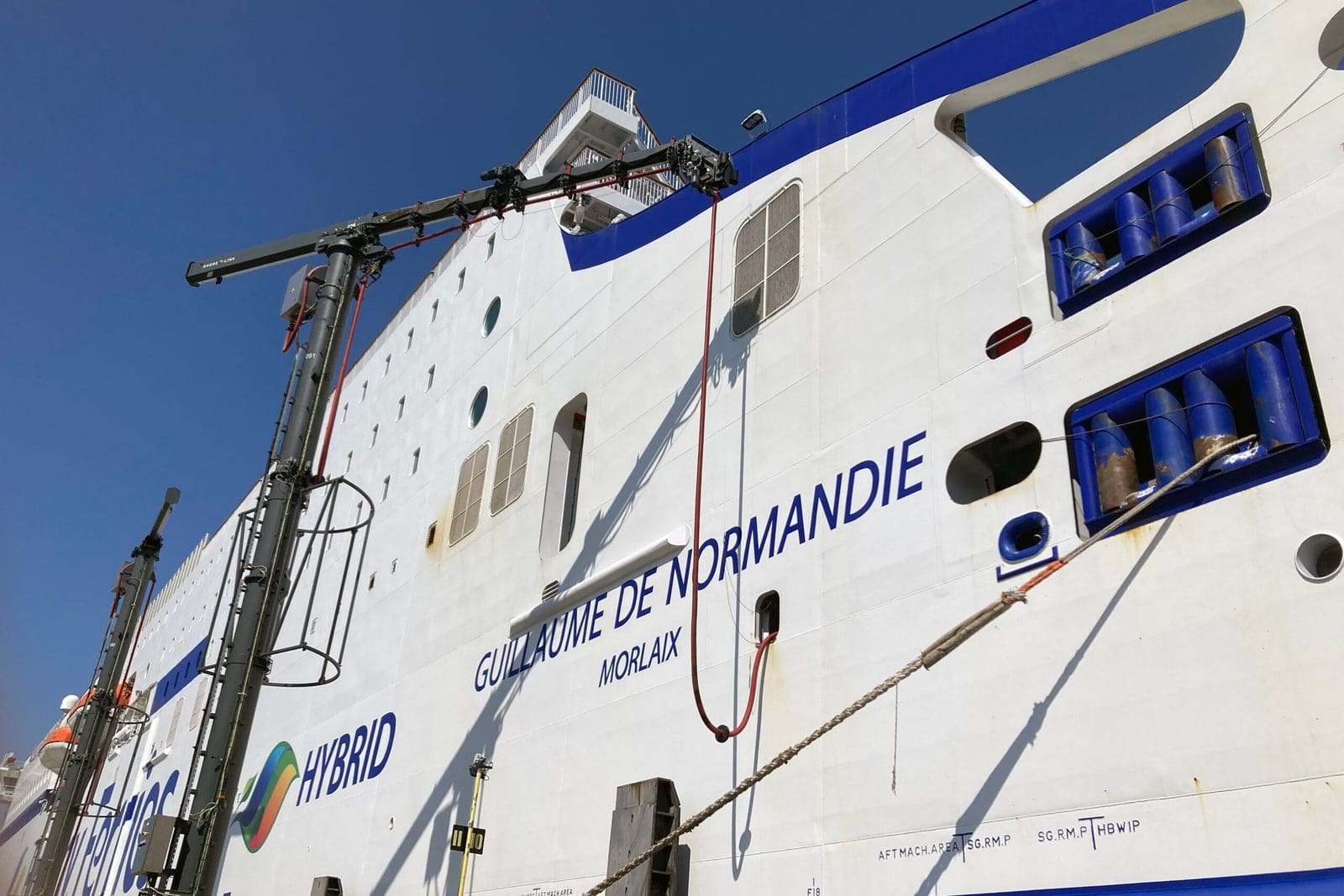
A ferry has left Portsmouth for France after drawing power from the quayside rather than its own engines, marking the first time a cross-Channel vessel has used shore-based electricity before departure. The Guillaume de Normandie, a liquified natural gas-electric hybrid operated by Brittany Ferries, spent two hours charging at Portsmouth Port's new shore power installation before sailing to Caen on a Monday morning in early August.
The facility, which cost £24.4 million, allows ships to shut down onboard engines while docked and plug directly into the city's grid. The idea is straightforward: recharge batteries during turnaround, cut carbon emissions and noise, then use stored electric power to manoeuvre out of the harbour. Once clear of the port entrance, the vessel switches back to its hybrid LNG-electric propulsion for the crossing to Normandy.
A second ship in the fleet, the Saint-Malo, will also use the facility after two months of testing. The installation can handle three large vessels simultaneously, drawing electricity equivalent to roughly half the consumption of the entire city of Portsmouth.
The Economics Don't Add Up Yet
The environmental logic is clear, but the financial case is more complicated. Brittany Ferries confirmed that plugging into shore power currently costs more than running the ship's own engines, a result of high electricity prices and connection fees. The ferry operator reached a 12-month agreement with Portsmouth International Port to offset some of the added expense, making the pilot viable for now.
Christophe Mathieu, the company's chief executive, acknowledged the milestone but pointed to the cost barrier. He called the achievement a team effort and said it allows the company to unlock the full potential of its greenest ships while being a better neighbour to Portsmouth. At the same time, he urged the UK government to introduce tax breaks or other support to make shore power economically sustainable. Without that, he suggested, the example set by Portsmouth and Brittany Ferries is unlikely to be replicated elsewhere in the push toward net zero.
Why Shore Power Matters
Shore power is one of the more tangible ways to reduce emissions from shipping, an industry responsible for a significant share of global carbon output. Vessels idling in port with engines running contribute not only to air pollution but also to noise that affects nearby communities. The technology to plug ships into the grid has existed for years, but adoption has been slow, largely because of infrastructure costs and mismatched incentives.
Portsmouth's investment signals a willingness to build the hardware. The challenge now is whether the policy environment will catch up. Electricity in the UK is expensive compared to marine fuel, and without subsidies or tax relief, operators face a choice between doing the right thing environmentally and managing their bottom line.
The Guillaume de Normandie and its sister ship are among the most advanced in the Brittany Ferries fleet, designed with hybrid propulsion specifically to take advantage of shore power when available. That design choice only pays off if ports install the infrastructure and if the economics make sense once ships plug in.
What Happens Next
The 12-month deal between Brittany Ferries and Portsmouth Port is essentially a test case. If the arrangement proves workable and other ports follow suit, shore power could become a standard feature of ferry operations across the Channel and beyond. If costs remain prohibitive, the technology risks becoming a showcase rather than a scalable solution.
Other European ports, particularly in Scandinavia, have moved faster on shore power, often supported by national policies that favour electrification. The UK has been slower, and the gap between ambition and implementation is now visible in Portsmouth. The infrastructure is in place, the ships are capable, but the price signal is working against adoption.
For travellers, the immediate impact is minimal - crossings continue as scheduled, and the onboard experience remains unchanged. For the industry, though, Portsmouth's shore power facility represents a fork in the road. One path leads to widespread adoption, cleaner ports, and quieter communities. The other leads to a well-intentioned experiment that fails to scale because the numbers don't work.
The UK government has been asked to weigh in. Whether it does, and how quickly, will determine whether this first crossing from Portsmouth becomes a footnote or a turning point.