A Decade to Wait, Billions More to Spend
The gateway Portugal has been planning for years keeps getting more expensive and further away. The latest figures from ANA - Aeroportos de Portugal put the price tag for the Luís de Camões Airport somewhere between €7.9 billion and €8.9 billion, measured in 2024 euros. That range replaces an earlier ballpark estimate of around €8.5 billion floated in 2025.
The timeline has stretched too. Under the current schedule, final agreements would be signed in April 2029, ground would break around mid-2030, and the last beam would go up near the end of 2036. Passengers could start moving through the terminal in 2037, eleven years from now. Infrastructure and Housing Minister Miguel Pinto Luz wants to shave two years off that target, aiming for a 2035 launch with construction wrapping in 2034 instead, but no binding commitments have been made.
ANA, which operates under the French infrastructure group Vinci, has warned that even the upper estimate may not hold. Supply chain bottlenecks, geopolitical friction and swings in commodity markets could all push the final bill higher.
What the Money Buys
The new airport will sit at Campo de Tiro de Alcochete, more than fifty kilometers from central Lisbon on the south side of the Tagus. At first it will be designed to move roughly 56 million passengers a year, with room to grow to 85 million later. The plan includes two runways, 120 spots for aircraft on the apron, 64 boarding gates and 76 jet bridges.
Getting people to and from the site will require its own infrastructure layer. A high-speed rail link is expected to make the trip in about 26 minutes, running every two hours. A conventional rail service from Entrecampos would take closer to 45 minutes and run every quarter hour. Infraestruturas de Portugal has also proposed a direct shuttle from Oriente station with a 20-minute journey time and departures every half hour, though ANA has pushed for more frequent service and stressed that fares need to stay affordable if public transport is going to work at that distance.
Road connections are part of the package too: a new 17-kilometer spur to the A33 motorway plus links to several national and local roads.
Bridging the Gap With What Already Exists
Because the new airport remains so far off, Portugal is pouring more than €400 million into the network it already has. The investment spans airports in Porto, Faro, Lisbon, Madeira and the Azores, according to the government's recently unveiled airport strategy. The goal is to add capacity, smooth the passenger experience and keep infrastructure from becoming the bottleneck as visitor numbers climb.
The pressure is real. In 2025, tourist accommodations across Portugal logged 32.5 million guests and 82.1 million overnight stays, up 3 percent and 2.2 percent respectively. International visitors alone accounted for 57 million of those nights. The first five months of 2026 brought around 12 million guests and 28.7 million overnight stays. May saw 3.3 million arrivals, a 3.9 percent year-on-year increase, and eight million overnight stays, up 2.8 percent.
Porto's Francisco Sá Carneiro Airport, which currently handles about 17 million passengers annually, is getting runway work, terminal upgrades and a new operations control center. The long-term target is to ready the airport for as many as 30 million passengers a year.
Faro Airport, the main entry point for the Algarve, moved around 10 million passengers in 2025. Work there focuses on expanding the terminal, operational zones and supporting infrastructure to handle continued growth in beach and golf tourism.
On the islands, Madeira Airport processed more than five million passengers last year, nearly double the 2.6 million it handled a decade earlier. Its terminal and passenger areas are now being renovated. In the Azores, João Paulo II Airport in Ponta Delgada saw close to three million passengers in 2025, up from roughly one million in 2015. Its terminal is also being modernized to improve capacity and connections for the archipelago.
The Arithmetic of Delay
The upgrades are intended to carry Portugal through the years before the new Lisbon hub opens. They also represent a hedge: if construction timelines slip further or costs force another round of rethinking, the existing network will need to shoulder even more traffic than currently forecast.
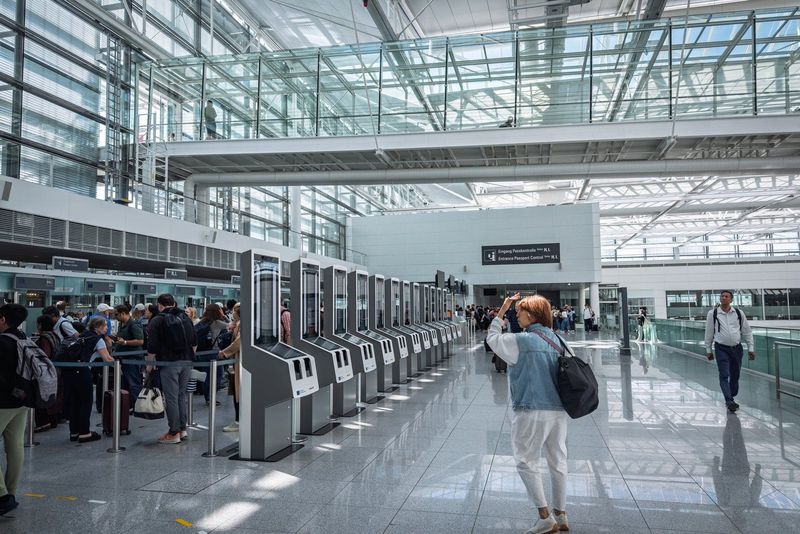
For travelers, the practical effect is that Portugal's aviation infrastructure will remain spread across several mid-sized airports rather than consolidated around a single large hub. That may suit some itineraries, especially for visitors heading directly to Porto, the Algarve or the islands. For others, particularly those connecting through Lisbon, the current Humberto Delgado Airport will remain the gateway for at least another decade, with all the constraints that come with an older facility hemmed in by the city around it.
The government has framed the €400 million spending program as a way to keep pace with tourism and economic growth while the replacement project takes shape. Whether that investment proves sufficient will depend on how quickly visitor numbers continue to rise and whether the 2037 opening date holds or slips again.