A Marathon in the Sky
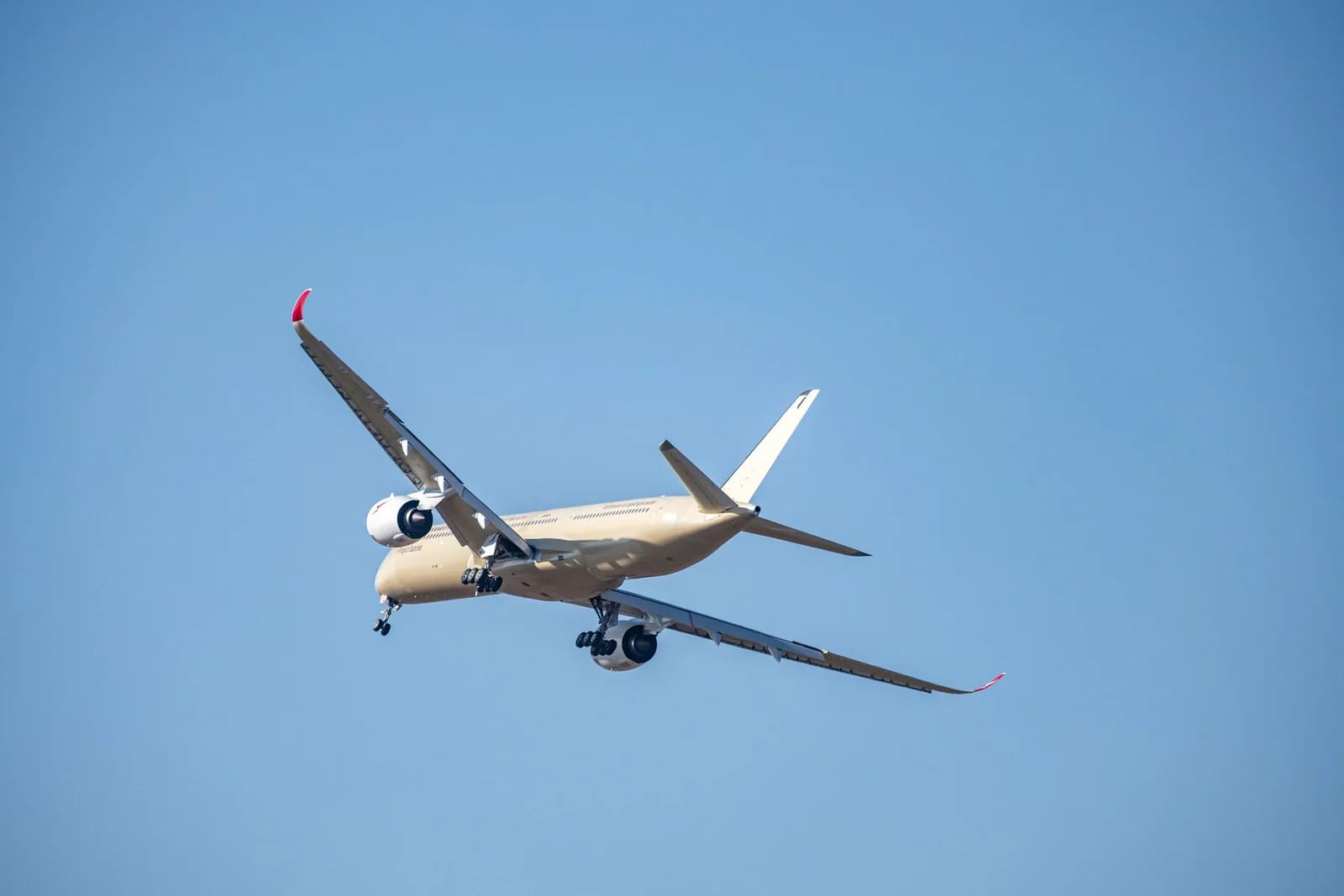
An empty Airbus A350 took off from Melbourne on a July morning and didn't touch ground again until it reached southern France more than a full day later. The flight covered 12,460 nautical miles, crossed three continents and two oceans, and saw two sunsets and two sunrises from the cockpit. It lasted 24 hours and 24 minutes.
The aircraft, designated MSN707, was running trials for Project Sunrise, the name Qantas has given to its plan to connect Sydney and London without stopping. The test on 28 July appears to be the longest direct commercial flight ever attempted, even if no passengers were aboard.
The route itself was deliberate. Rather than taking the shorter path back to Toulouse, where Airbus builds the A350-1000ULR variant, the crew flew east across the Pacific toward Los Angeles, then continued over the United States and Canada before crossing the Atlantic south of Greenland. The plane passed over the United Kingdom before descending into France.
Rotating Pilots Every Two Hours
Xavier Pepin, the Airbus test pilot who captained the flight, outlined how the crew managed the marathon. Each pilot worked in four-hour shifts, but the handovers happened every two hours. That meant the incoming pilot overlapped with the outgoing one for two hours at a time, a staggered system designed to keep fatigue at bay during flights that stretch past 20 hours.
The same aircraft had flown from Toulouse to Melbourne a few days earlier, a journey that took just over 19 hours. The return leg was longer by design, testing the plane's endurance under a more demanding flight path.
What Project Sunrise Is Testing
Qantas intends to launch non-stop flights between Sydney and London in October 2027. The distance, 10,573 miles, will make it the longest commercial route in the world. Right now, that title belongs to Singapore Airlines, which flies 9,537 miles between Singapore and New York JFK in roughly 19 hours.
The Australian carrier's planned service will take 21 hours and 40 minutes, assuming everything goes to plan. To make that work, the A350-1000ULR carries an additional 20,000-liter fuel tank. The test flights are meant to prove the aircraft can handle a 23-hour block time, giving Qantas a buffer beyond the scheduled duration.
During the trials, crews also evaluated the air conditioning systems and the rest compartments built for long-haul crew rotations. Both the Toulouse-to-Melbourne leg and the return flight were powered by two Rolls-Royce Trent XWB-97 engines.
Four Hours Saved, No Layover
For passengers, the appeal is straightforward. Qantas says the non-stop service will shave up to four hours off the fastest current option, which requires at least one stop. That's a meaningful difference on a route where even the quickest connections involve waiting in Singapore, Dubai, or another hub.
Tickets for the inaugural Sydney-to-London flights are expected to go on sale in February 2027, about eight months before the first departure. Pricing and cabin configuration details have not yet been released, though the airline has previously indicated that the ultra-long-haul planes will carry fewer passengers than a standard A350 to accommodate the extra fuel and extended crew rest areas.
The Bigger Picture
Ultra-long-haul flying has been a moving target for years. Airlines have pushed the boundaries of range and endurance as engine technology and aerodynamics have improved. But there are limits. Crew duty time regulations, passenger comfort, and the simple physics of fuel weight all constrain how far a plane can fly without stopping.
Qantas is betting that the market for non-stop flights from Australia to Europe and North America is large enough to justify the investment. The airline has framed Project Sunrise as a solution to what it calls the "tyranny of distance," the geographic reality that has long required Australians to make multiple stops when flying to major cities in Europe or on the US East Coast.
Whether passengers will embrace spending nearly a full day in the air remains to be seen. The test flights are about proving the plane can do it. The harder question is whether enough people will want to.