A Plane Built for the Longest Haul
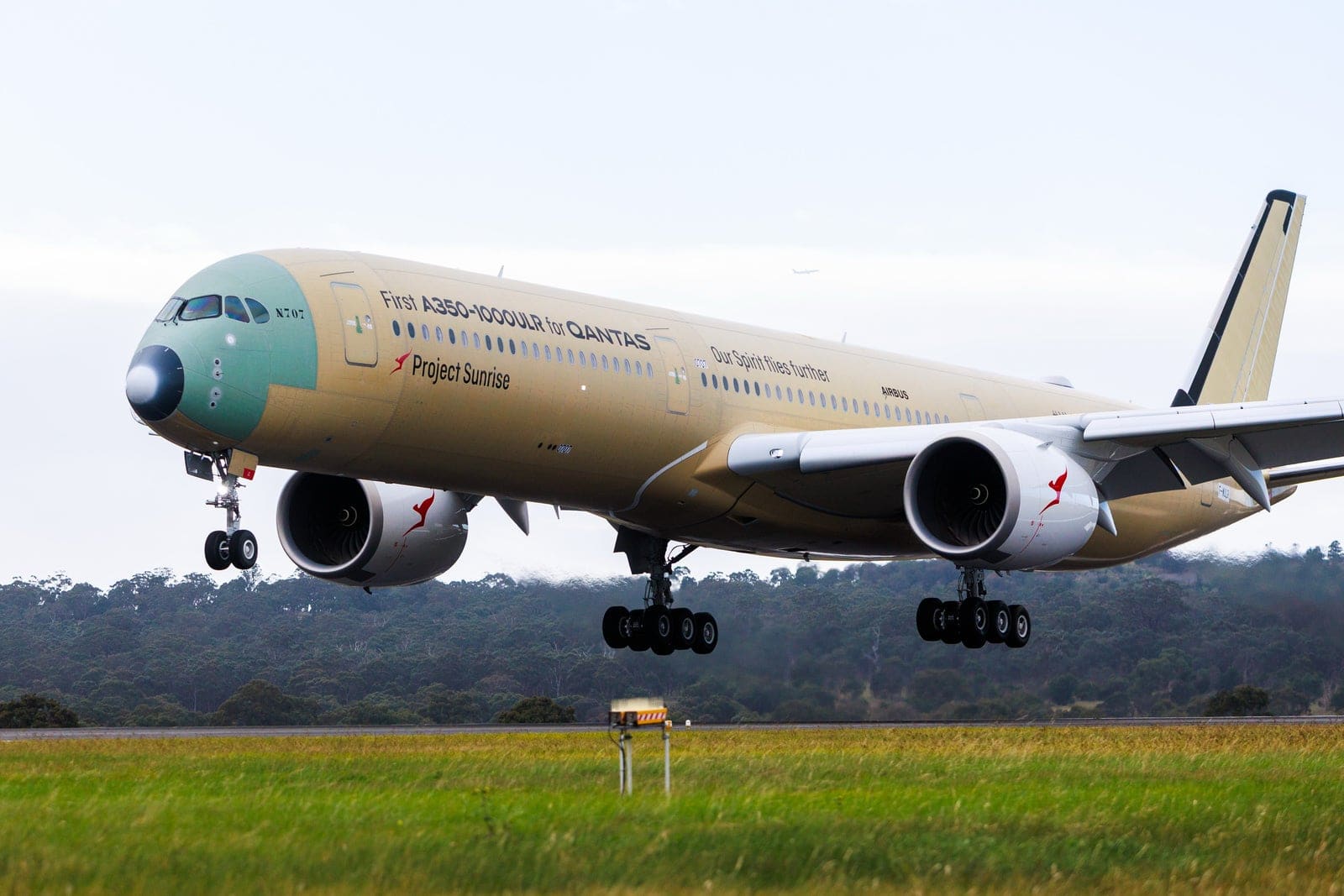
The aircraft touched down in Melbourne on Friday after departing from Airbus facilities in Toulouse, France. Four Airbus pilots and five engineers operated the delivery flight, using the journey to validate the jet's expanded fuel system. The plane carries an additional 20,000 litres of fuel capacity, designed to support commercial flights of up to 22 hours without refuelling.
This is the first of twelve A350-1000ULR aircraft Qantas has ordered for what it calls Project Sunrise, an effort to connect Australia's east coast with Europe and North America without stops. The Sydney-to-London route, slated to begin in October 2027, will cover 10,573 miles and claim the title of longest nonstop commercial flight. Singapore Airlines currently holds that distinction with its Singapore-to-New York JFK service at 9,537 miles.
The Melbourne arrival marks a tangible step in a project that has been years in the making. Two Qantas pilots will join the Airbus test crew on the return flight to Toulouse, scheduled to depart on Monday. That leg will give the airline's own flight crew hands-on experience with the aircraft's systems and handling over an ultra-long sector.
Space Over Density
Qantas has configured the A350-1000ULR with just 238 seats, less than half the type's maximum capacity. The decision reflects the constraints of ultra-long flying: fewer passengers mean lower weight, which translates to the range needed to complete these routes. It also means more space per traveller, a trade-off the airline is betting will appeal to passengers willing to endure nearly a full day aloft.
The cabin will feature a new galley cooling system, according to Qantas, with lighter and more efficient refrigeration units. Weight savings matter when every kilogram affects fuel burn on sectors this long. The airline has not yet detailed the full cabin layout, but the seat count suggests a mix of premium and economy zones with more generous pitch than standard configurations.
Shaving Hours Off the Journey
For passengers, the appeal is straightforward: time. Qantas says the nonstop Sydney-London service will save up to four hours compared to the fastest one-stop options available today. That assumes no delays, of course, but it eliminates the need to transit through hubs in the Middle East or Asia, where layovers can stretch and connections can slip.
The carrier already operates nonstop flights from Perth to London and Sydney to Singapore, with onward service to London. Project Sunrise extends that network strategy, aiming to make Australia's largest city a direct gateway to Europe. Whether demand will sustain a dozen aircraft on these routes remains an open question, but Qantas is moving ahead with confidence.
Tickets for the inaugural Sydney-London flights are expected to go on sale in February 2027, eight months before the first departure. Pricing has not been announced, but ultra-long sectors typically command a premium, especially in the forward cabins where most of the revenue is generated.
The Physics of Flying Longer
Ultra-long-haul aviation is less about breakthroughs than about incremental gains in efficiency. The A350-1000ULR is not a fundamentally different aircraft from the standard A350-1000; it is an optimised variant with additional fuel tanks, minor aerodynamic tweaks, and weight reductions throughout. The engines are the same Rolls-Royce Trent XWB units, but they burn fuel more slowly when the plane is configured to carry fewer people and more kerosene.
The test flight validated the fuel system under real-world conditions, ensuring that the extra tanks feed correctly and that the aircraft handles as expected with the additional weight at takeoff. These are not glamorous tests, but they are essential before passengers board. Airbus and Qantas will continue testing over the coming months, refining systems and gathering data to support certification and operational approval.
The return flight to Toulouse will add another data set, this time with Qantas pilots in the cockpit for part of the journey. That cross-training is a standard part of introducing a new type, especially one that will operate in a niche as demanding as ultra-long-haul.
A Bet on Nonstop Travel
Project Sunrise is a gamble that passengers will pay for the convenience of skipping a stopover, even if it means sitting in an aircraft for nearly a full day. The economics are tight: fewer seats mean less revenue per flight, and the fuel cost on a 22-hour sector is substantial. But Qantas has long argued that time-sensitive business travellers and premium leisure passengers will value the directness enough to fill the cabins at prices that make the route viable.
The airline has not disclosed load factor targets or break-even thresholds, but industry analysts have noted that ultra-long routes tend to rely heavily on premium cabins to generate profit. The A350-1000ULR's 238-seat configuration suggests a significant portion of the aircraft will be devoted to business and premium economy, with a smaller economy section than on shorter routes.
Whether the model succeeds will depend on demand patterns that are still emerging. Business travel has not fully recovered to pre-pandemic levels, and remote work has reduced the urgency of some international trips. But Australia's geographic isolation has always created demand for faster connections to Europe, and Qantas is betting that demand will support a dozen jets flying the longest routes in the sky.