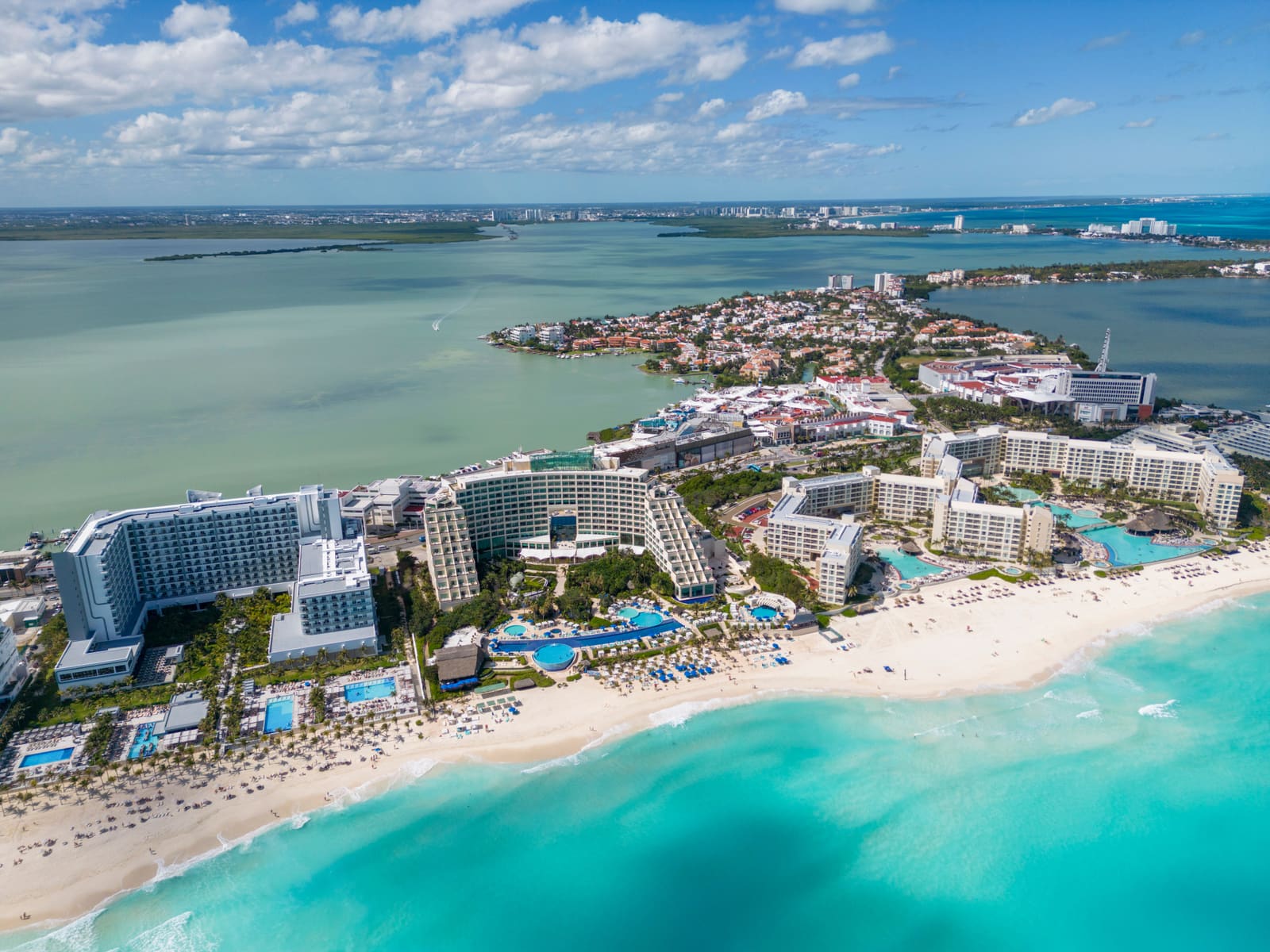
A Cruise Line Puts Down Roots
Royal Caribbean Group has spent the past decade building ever-larger ships and carving out private islands for its cruise passengers. Now it is buying into a different kind of real estate: all-inclusive resort hotels.
The Miami-based company announced a 50 per cent stake in Sandals Resorts International, a deal valued at approximately $3 billion, according to Royal Caribbean Group. The partnership brings 17 Caribbean properties under shared ownership, including both the adults-only Sandals brand and the family-focused Beaches Resorts.
It is the first time the cruise operator, which also runs Celebrity Cruises and Silversea, has moved directly into hotel ownership. The question now is whether the two businesses will remain separate or begin to blend into combined packages.
What the Deal Covers
Sandals Resorts International operates properties across Jamaica, Antigua, Saint Lucia, the Bahamas, Barbados, Grenada, Curaçao and the Turks and Caicos. All are all-inclusive, meaning room rates cover meals, drinks and most activities.
Royal Caribbean Group will share control through a joint board led by Jason Liberty, the cruise group's chairman and chief executive, and Adam Stewart, chief executive of Sandals. The immediate focus, both companies said, is on expanding the existing portfolio rather than launching new brands.
That cautious framing has not stopped industry observers from speculating. The structure of the deal leaves room for Royal Caribbean to offer combined cruise-and-resort itineraries, or to develop its own branded hotels using Sandals' operational expertise.
A Pattern of Vertical Integration
Royal Caribbean has been steadily building out its own infrastructure for years. The company opened Royal Beach Club Paradise Island in the Bahamas in 2024 and a second location on Santorini in mid-2026. Both are day-use facilities designed exclusively for passengers on Royal Caribbean and Celebrity sailings.
The group also owns CocoCay, a private island in the Bahamas that functions as a port of call on many Caribbean itineraries. Two more beach clubs are in development: one on Vanuatu in the South Pacific, branded as Royal Beach Club Lelepa, and another in Mexico under the Perfect Day banner, scheduled to open in 2027.
Those projects share a common thread. They keep guests within the Royal Caribbean ecosystem and generate additional revenue beyond the cruise fare. A stake in Sandals extends that logic onto land, where guests might spend several nights before or after a sailing.
Why Sandals Fits
Sandals is one of the few large resort operators still under private ownership. Founded by Gordon "Butch" Stewart in 1981, the company built its reputation on all-inclusive luxury in the Caribbean, a model that has insulated it from some of the price volatility that affects à la carte resorts.
Adam Stewart, who took over leadership after his father's death in 2021, framed the Royal Caribbean partnership as validation of that approach. He noted that his father believed a Caribbean-born company could compete with global hospitality giants, and the deal places Sandals alongside one of the world's largest vacation operators.
For Royal Caribbean, the appeal is partly geographical. Sandals' properties are concentrated in the same region where the cruise line already has the densest network of routes and private destinations. That overlap makes bundled offerings easier to coordinate.
It also diversifies revenue. Royal Caribbean derives almost all of its income from cruise operations, which are vulnerable to fuel costs, port restrictions and demand swings. Hotels offer a different risk profile and a different guest: some travellers prefer to stay in one place rather than move between ports every day.
What Comes Next
Neither company has outlined concrete plans for joint products, but the infrastructure is now in place. Royal Caribbean could offer pre- or post-cruise hotel stays at Sandals properties as part of a single booking, simplifying logistics for guests and capturing more of their travel spend.
There is also potential for the cruise line to apply Sandals' all-inclusive model to its own future resorts, or for Sandals to tap Royal Caribbean's scale in marketing and distribution. The joint board structure suggests decisions will be made collaboratively rather than imposed by one side.
The deal still requires regulatory approval in several jurisdictions, though neither party has indicated any expected obstacles. If it closes as planned, Royal Caribbean will become one of the largest hotel operators in the Caribbean overnight, even as it continues to launch new ships and expand its fleet.
For an industry that has long kept cruises and hotels in separate lanes, the move is a signal that the boundaries are starting to blur. Whether guests will want to book both through a single company remains to be seen, but Royal Caribbean is now positioned to find out.